
Understanding Order Types on WEEX Exchange

 Prefer us on Google
Mastering the various order types on WEEX Exchange is key to boosting your trading success and efficiency. Each order type has a distinct role, enabling traders to execute trades accurately, manage risks, and refine their strategies. This guide covers the order types available on WEEX, their purposes, and how to leverage them effectively.
What Are Trading Order Types?
Order types determine how trades are carried out in the market. They allow traders to control entry and exit points, mitigate risks, and automate strategies. Selecting the appropriate order type can enhance performance and avoid costly errors, particularly in the fast-moving crypto market.
Order Types on WEEX Exchange
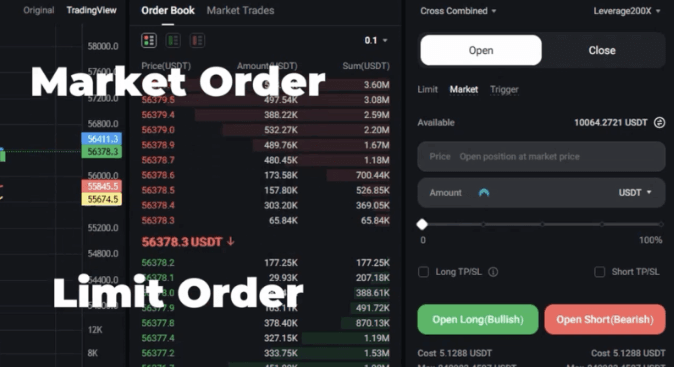
Market Order
A Market Order executes instantly at the best current price available. It’s the quickest way to enter or exit a trade, though the final price may vary slightly due to market volatility.
Best for: Traders prioritizing speed over exact pricing.
How to use: Select “Market Order,” input the amount, and submit the order.
Limit Order
A Limit Order lets traders buy or sell at a chosen price or better. It only executes when the market hits the set price, offering precise control over trade execution.
Best for: Traders aiming to define specific entry or exit prices.
How to use: Choose “Limit Order,” specify the price, enter the amount, and place the order.
Stop-Loss Order
A Stop-Loss Order automatically closes a trade at a preset price to limit losses, serving as a vital risk management tool.
Best for: Traders seeking to shield their funds from significant price drops.
How to use: Activate “Stop-Loss” during trade setup and set the stop price.
Take-Profit Order
A Take-Profit Order secures profits by closing a position once it reaches a target price.
Best for: Traders looking to lock in gains at a desired level.
How to use: Specify a Take-Profit price when placing the trade.
Stop-Limit Order
A Stop-Limit Order blends stop-loss and limit order features. When the stop price is hit, a limit order is triggered at a defined price.
Best for: Traders wanting precise stop-loss execution control.
How to use: Set both the stop price and limit price before submitting the order.
Selecting the Best Order Type for Your Approach
The ideal order type aligns with your trading goals:
Scalping & High-Frequency Trading: Use Market Orders or Limit Orders.
Risk Management: Opt for Stop-Loss or Trailing Stop Orders.
Passive Trading: Choose Post-Only or Iceberg Orders.
Profit Maximization: Employ Take-Profit or Stop-Limit Orders.
-- Price
Conclusion
WEEX Exchange offers a range of order types tailored to various trading styles and objectives. By grasping how each functions, you can streamline your trading, manage risks better, and elevate your performance in the cryptocurrency market.
Trade smarter on WEEX today by choosing the order types that match your strategy!
This content is provided for general informational purposes only and doesn't constitute financial, investment, legal, or tax advice. Any events, rewards, online promotions, or related information mentioned herein should not be considered a recommendation, solicitation, or invitation to purchase, sell, trade, or otherwise deal in any crypto assets. Crypto assets are highly volatile and may result in loss. The availability of WEEX services, products, and related events may vary by region. You are responsible for ensuring that your participation is in accordance with applicable local laws and regulations.
You may also like

How to Buy Crypto on WEEX Exchange 2026: Complete Guide
تحلیل تکنیکال نوسان پذیری و عمق دفتر سفارش در WEEX

What is Cryptocurrency Day Trading?
What Is a Stop-Limit Order?
What Is a Market Order?
WEEX P2P Trading FAQ
What is Mark Price?
How to Trade DOGE Futures on WEEX?

What is Stop Order?
What is Limit Order?

How to Trade ETH Futures on WEEX?
How to Trade Bitcoin Futures on WEEX?
A Complete Guide to Using Trigger Orders on WEEX
Guide to Take-Profit and Stop-Loss Orders on WEEX

How to Swiftly Open and Close Positions on WEEX:A Step-by-Step Guide

How to Trade Futures on WEEX: A Complete Guide for Beginners
What Are Spot Stock Tokens? How Synthetic Stock Trading Works

Should I Buy PONS Coin? Sep 2026 Price Prediction & Guide

Can PONS Reach $1? PONS Coin Price Analysis After WEEX
Can PONS Reach $1? PONS Coin Price Analysis After WEEX
What Is WEEX Stock Spot Trading? A Beginner's Guide to US Stock Trading with USDT
"牛来" Niu Lai Meme Coin Just Hit a New $120M High: Why This Rally Has Lasted Weeks, Not Days
SpaceX Stock Price Holds Near $141: Why Isn't a $100 Billion Spaceport Plan Moving It?
MU Stock Price Fell After Trump Praised Micron: What Actually Happened
"我的女友景甜" Days Later: What Happened to the Viral Meme Coin

XST Coin Price Bounced 19% Off a New Low in Hours: Is This the Bottom or Just Noise?
Is NVDA Stock Overvalued After Record Q2 Earnings?
NVDA Stock Pulls Back After Earnings: Is $250 Still Next?
WEEX Promo Code and Sign-Up Bonus: What You Need to Know

WEEX Welcome Bonus Explained: How New User Rewards Work


