
How to Trade DOGE Futures on WEEX?

 Prefer us on Google

What Are ETH Futures?
DOGE futures are standardized derivative contracts that obligate the buyer to purchase, and the seller to sell, DOGE at a predetermined price on a specified future date.
Unlike trading the actual cryptocurrency, DOGE futures do not involve immediate transfer of the asset. Instead, they represent an agreement to exchange either DOGE or its cash equivalent upon contract expiration or execution.
These contracts are commonly used for two primary purposes: hedging against potential price fluctuations in DOGE, or speculating on its future price direction. Traders may take a long position (buy) if they anticipate a price increase, or a short position (sell) if they expect the price to decline. This allows participants to either manage risk or seek profit from both upward and downward market movements.
Why Trade Futures on WEEX?
WEEX offers a range of features that make it an ideal platform for futures trading:
- Advanced Trading Tools: As covered in our previous article on spot trading, WEEX offers intuitive charts and market data, making it easier to analyze the markets and make informed trading decisions.
- Low Fees: Enjoy competitive trading fees for futures contracts, helping you maximize your profits.
- Leverage Options: WEEX allows you to trade with leverage, enabling you to open positions greater than your initial deposit (though it’s important to understand the risks involved with leveraged trading).
- Security Features: With advanced security protocols and the option to enable Two-Factor Authentication (2FA), WEEX ensures your account and funds remain safe.
Step-by-Step Guide: How to Trade DOGE Futures on WEEX
Now that you understand the basics, let's walk through the process of trading Bitcoin futures on WEEX. If you've already followed our guide on how to create an account on WEEX and set up 2FA for added security, you’re well-prepared to start futures trading.
Step 1: Log into Your WEEX Account
If you don’t already have an account, follow our step-by-step guide on creating an account on WEEX. Once you’re logged in, navigate to the Futures Trading section from your dashboard.
Step 2: Familiarize Yourself with the Futures Market Interface
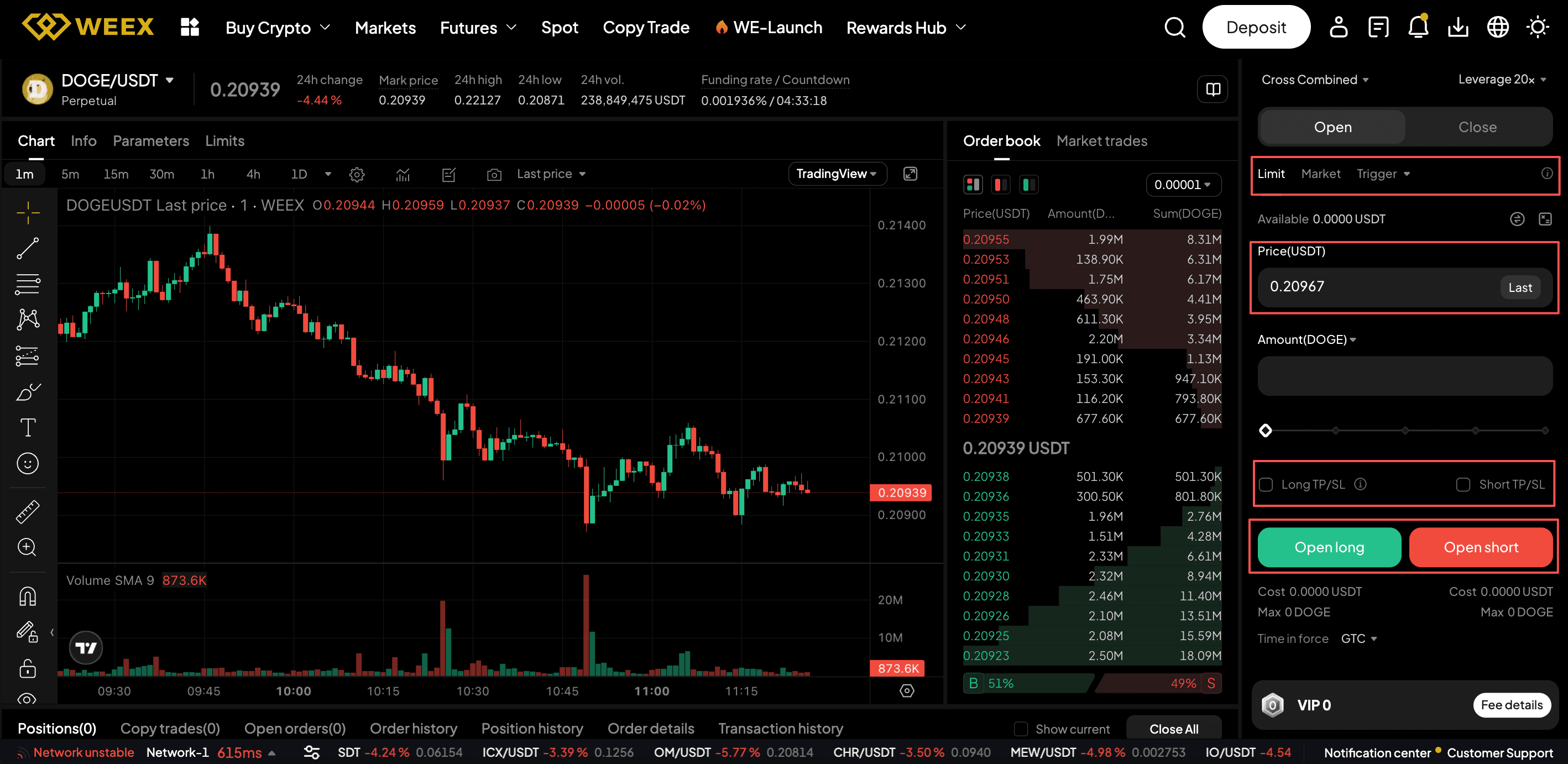
When you enter the futures trading section, you'll notice a more advanced interface compared to spot trading. Key features of the interface include:
- Order Book: Displays all open buy and sell orders for the selected futures contract.
- Position Information: Shows the details of your open futures positions, including leverage, margin, and unrealized profit/loss.
- Trading Pair: Select the crypto futures pair you want to trade (e.g., BTC/USDT).
- Charts & Data: Real-time price charts and indicators to help you analyze the market and make informed trading decisions.
-- Price
Step 3: Make Your First Trade
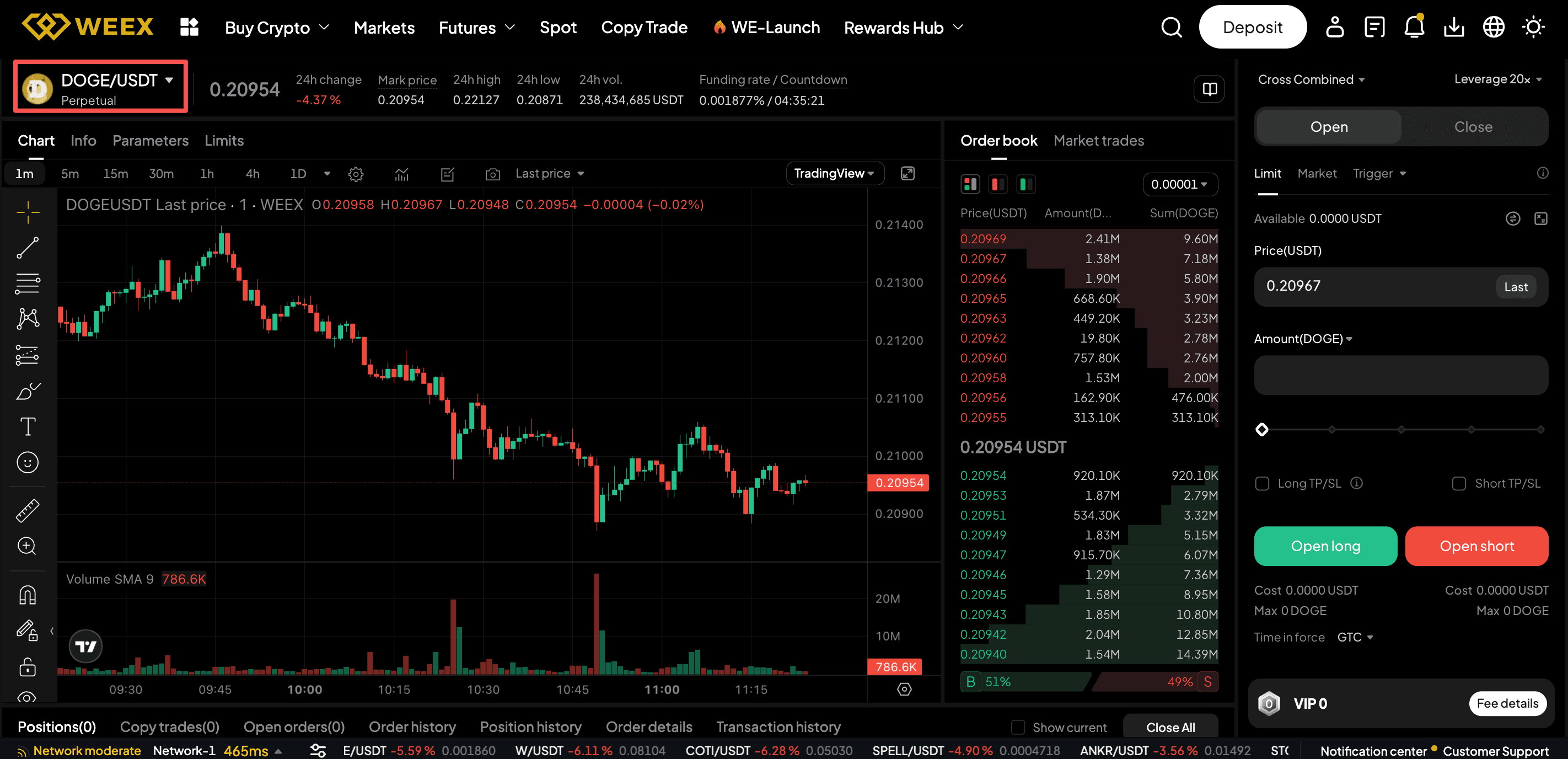
Select the DOGE/USDT Futures to trade at the top left side of the page.
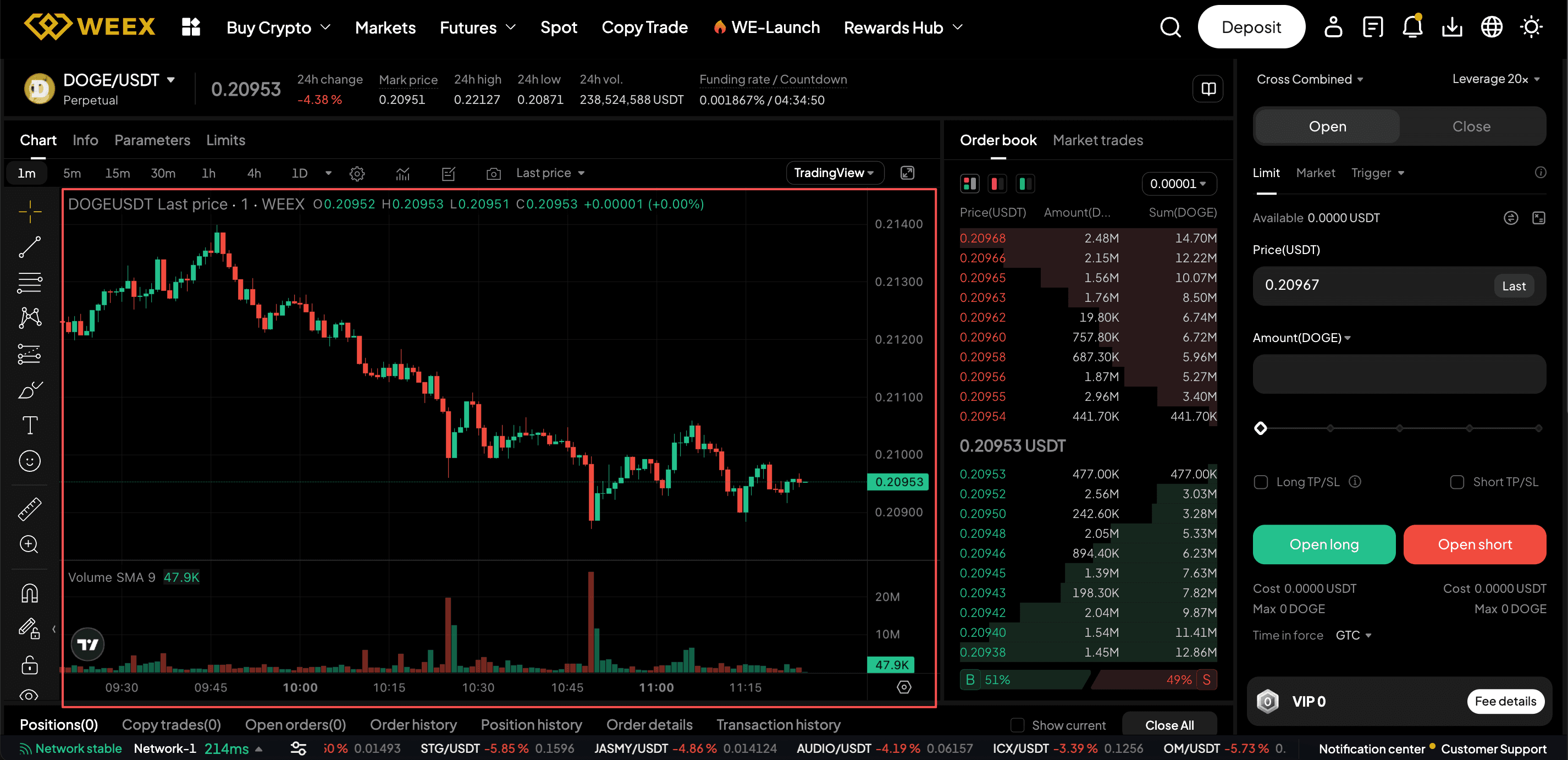
Use the [Price Chart] to identify potential trading setups based on patterns or any other technical indicator available on WEEX Futures.
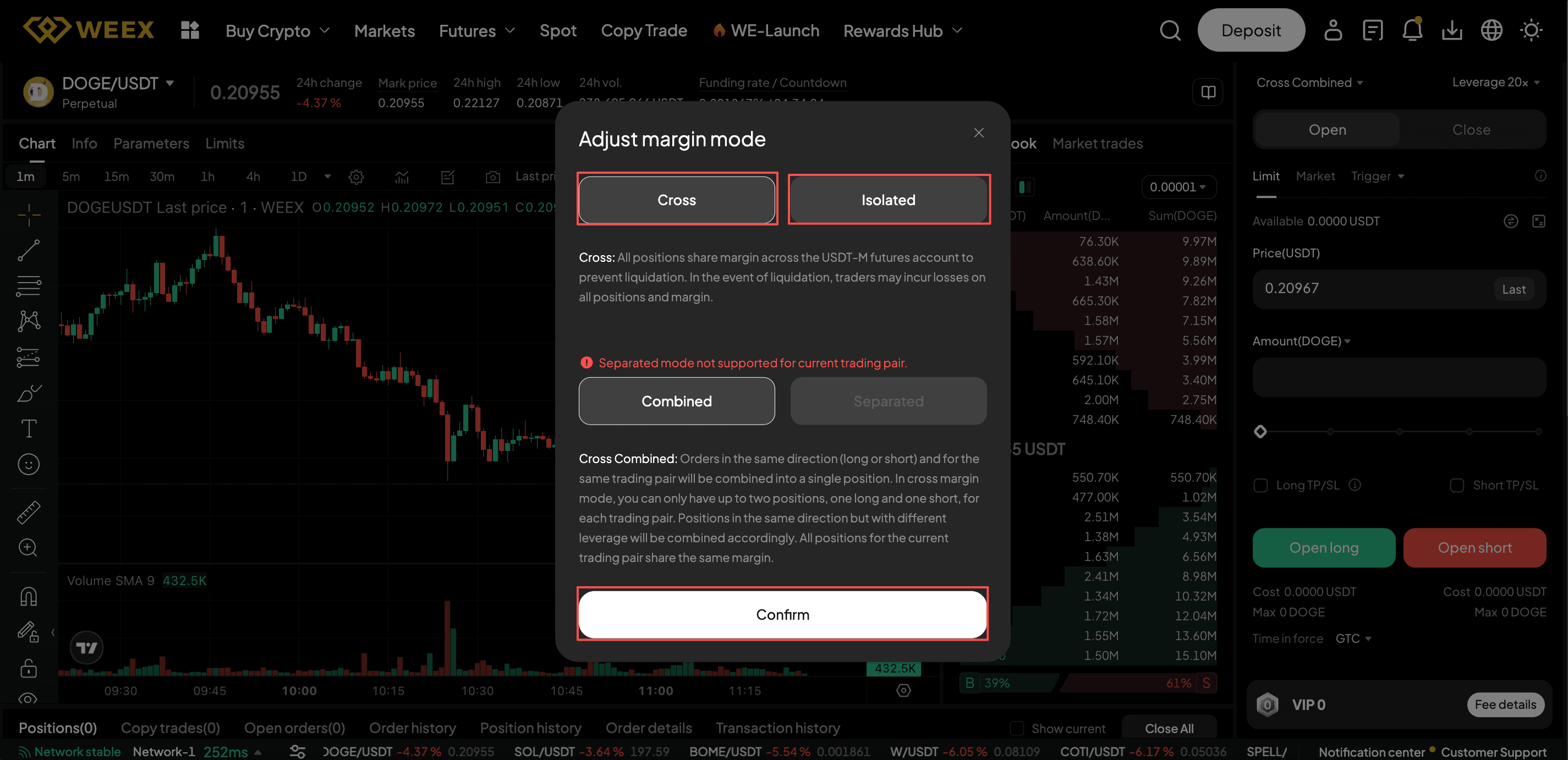
Select the [Margin Mode], which will only apply to the selected Futures Contract, then choose between [Cross] and [Isolated] and click [Confirm].
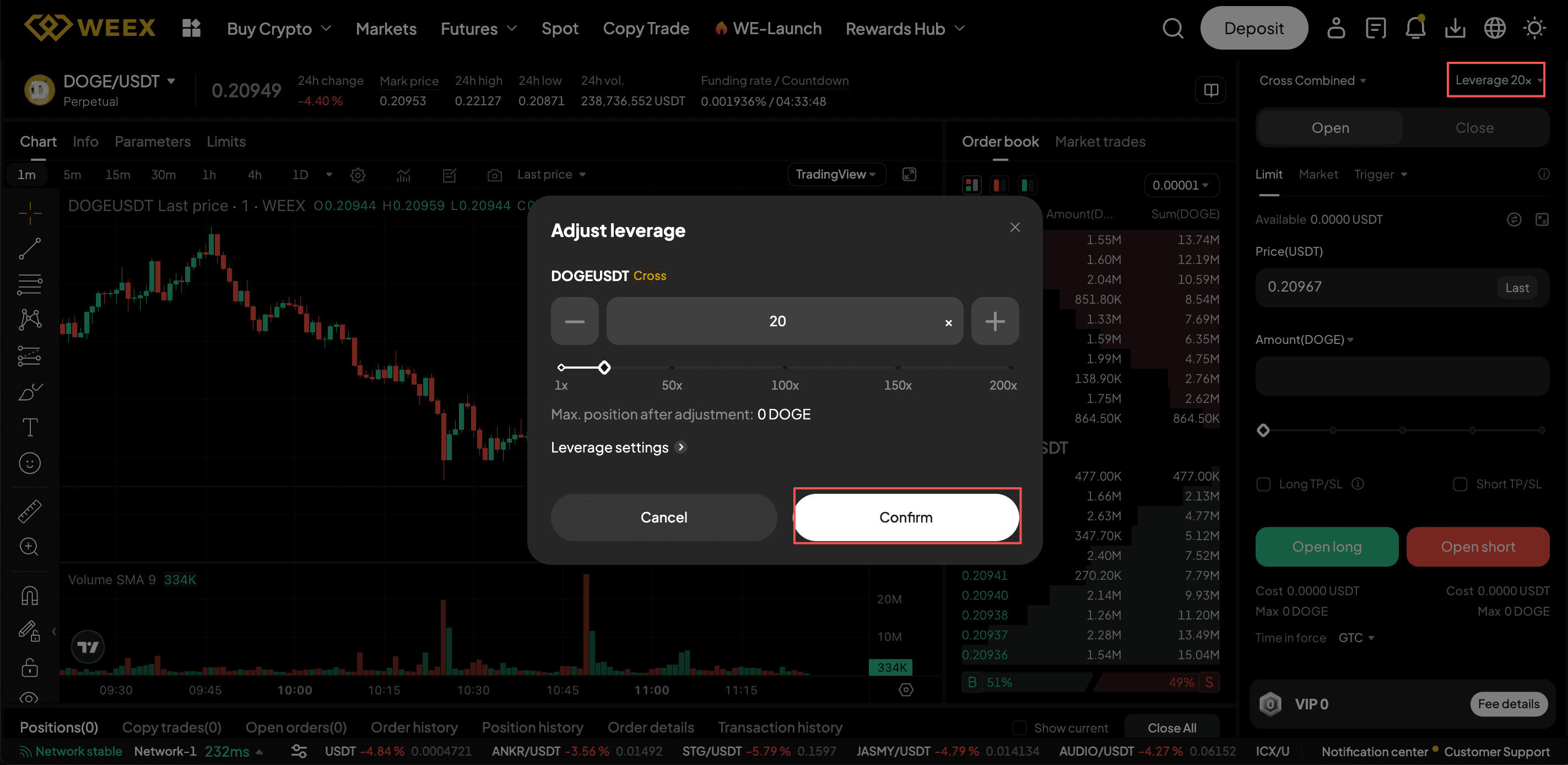
Now, you need to [Adjust Leverage] and click [Confirm]. Please note that using high leverage carries high risks and shouldn’t be done without a robust risk management strategy.
Pro Tip: When trading with leverage, be aware of the liquidation risk. If the market moves against you too far, your position may be liquidated, meaning you lose your initial investment.
Select [Type of Order] - [Price] - [Size], toggle the [TP/SL] feature to set up your [Take Profit] and [Stop Loss] orders, and choose between a [Open/Long] or [Open/Short] position.
Conclusion
Ready to put your WEEX Futures knowledge into practice?
Crypto derivatives trading enhances capital efficiency and helps hedge against market volatility—but always use proper risk management to protect against losses.
New to trading? Start risk-free with our mock trading feature to hone your strategies. When you're ready, switch to live trading on WEEX Futures, the world's leading crypto derivatives platform.
FAQs
- What is futures trading?
- Futures trading involves entering into contracts to buy or sell an asset at a predetermined price in the future. It allows you to speculate on the price movements of cryptocurrencies.
- Can I use leverage when trading futures on WEEX?
- Yes, WEEX offers leverage options for futures trading, allowing you to control larger positions with a smaller investment.
- How do I place a futures order on WEEX?
- Choose your trading pair, select your leverage, and choose an order type (Market or Limit). Then, enter the amount and click Buy or Sell to execute the trade.
- What is the risk of trading futures with leverage?
- Trading with leverage can magnify both profits and losses. If the market moves against you, there is a risk of liquidation, and you could lose your initial investment.
- How can I monitor my futures position?
- You can monitor your position from the Position Information section, which shows real-time profit/loss, margin level, and other key data points.
This content is provided for general informational purposes only and doesn't constitute financial, investment, legal, or tax advice. Any events, rewards, online promotions, or related information mentioned herein should not be considered a recommendation, solicitation, or invitation to purchase, sell, trade, or otherwise deal in any crypto assets. Crypto assets are highly volatile and may result in loss. The availability of WEEX services, products, and related events may vary by region. You are responsible for ensuring that your participation is in accordance with applicable local laws and regulations.
You may also like

WEEX Promo Code and Sign-Up Bonus: What You Need to Know

WEEX Welcome Bonus Explained: How New User Rewards Work
WEEX Affiliate Program: How to Join and Track Commission
WEEX Referral Code Guide: How Tracking and Verification Work

How to Get WEEX Referral Commission: Rules and Tracking
How Safe Are the Crypto Exchanges Pakistani Traders Actually Use? A Security Comparison
Which Crypto Exchange Offers the Widest Range of Assets for Pakistani Traders?
How to Buy Crypto with PKR in Pakistan via WEEX Quick Buy

How to Buy Crypto with JazzCash or Easypaisa via WEEX OTC
SEC Crypto Custody Rules for Investment Advisers: A 2026 Guide
NVDA Earnings Call Recap: Revenue Guidance, AI Demand and Key Takeaways
SEC Sends Crypto Custody Rule to White House: What Happens Next?
Nvidia Earnings Report Today: Did NVDA Beat Revenue and EPS Estimates?
Did Nvidia Beat Earnings? NVDA Q2 Results and Stock Reaction Explained
Bybit Japan Service Termination: The Complete Timeline and What Happens on July 22, 2026
Bitcoin Price Over 10 Years: Historical Recap and Long-Horizon Outlook
Common P2P Scams in Pakistan: How to Trade PKR Safely on WEEX
Common P2P Scams in Pakistan: How to Trade PKR Safely on WEEX
JazzCash vs Easypaisa for P2P Crypto Trading in Pakistan: Which Should You Use?
How to Buy Crypto in Pakistan With PKR After the Bank Rule Change
XST Coin Is Down More Than 25% This Week as Bitcoin Climbs to $77,000: What the Divergence Actually Means
How to Buy USDT with PKR on WEEX P2P: A Step-by-Step Guide for Pakistan
How to Choose a Reliable P2P Merchant for PKR Trades in Pakistan
How to Buy USDT with Easypaisa in Pakistan: P2P Trading and Safety Guide
How to Sell USDT for PKR Safely on WEEX P2P
Is WEEX P2P Safe in Pakistan? What PKR Traders Should Know
Can Bitcoin Reach $80,000 in August? BTC Price Prediction, Key Resistance Levels, and Market Outlook
Michael Saylor Sold 1,690 Bitcoin at a Loss: What Strategy Inc.'s August Bitcoin Sale Actually Reveals
MSTR Stock Surges 12% in a Single Session: What Strategy Inc's Bitcoin Treasury Model Actually Amplifies
Bitcoin Security or Commodity? How CLARITY Act Could Impact BTC
WEEX Promo Code and Sign-Up Bonus: What You Need to Know
WEEX Welcome Bonus Explained: How New User Rewards Work
WEEX Affiliate Program: How to Join and Track Commission
WEEX Referral Code Guide: How Tracking and Verification Work
How to Get WEEX Referral Commission: Rules and Tracking
How Safe Are the Crypto Exchanges Pakistani Traders Actually Use? A Security Comparison


