
"牛来" Niu Lai Meme Coin Just Hit a New $120M High: Why This Rally Has Lasted Weeks, Not Days

 Prefer us on Google
Most meme coins built around a viral moment follow the same script: a spike within hours, a peak within a day, and a steep retreat once the initial burst of attention fades. The BSC-based token known as "牛来" (Niu Lai) hasn't followed that script. "牛来" launched in mid-August, and rather than peaking once and fading, it has repeatedly broken its own record over the following weeks, most recently crossing a $120 million market capitalization.
That pattern alone makes "牛来" worth examining on different terms than the typical viral meme coin. A single spike tells you something about how fast attention can turn into a market. A rally that keeps setting new highs across multiple weeks tells you something different: that whatever is driving demand hasn't been a one time event, but a story that keeps generating fresh reasons for people to pay attention.

Why this rally is different from the typical meme coin flash pump
The standard lifecycle for an attention driven token is well documented at this point. A viral moment happens, a token appears within minutes or hours, trading volume spikes as speculators rush in, and once the initial wave of buying is absorbed, the price retreats sharply as early holders take profits and the underlying story stops generating new headlines. That arc typically plays out within a single day or, at most, a few days.
Niu Lai has instead shown a sequence of distinct peaks spaced across nearly two weeks: a first surge to roughly $29 million around August 16, a break above $50 million by August 19, a further push past $80 million around August 20 to 21, and now a move above $120 million. Each of these levels represented a new all-time high at the time it was reached, rather than a single peak followed by a long decline.
This repeated pattern of new highs is structurally different from a single spike, because it implies that new capital and new attention kept arriving at multiple distinct points rather than all at once. A token that pumps once and fades is being driven by a single wave of buyers. A token that keeps setting new records across weeks is being driven by something that keeps refreshing itself, which is worth understanding on its own terms rather than assuming it works the same way as a typical 24 hour meme coin spike.
The origin story: how a bad movie became a viral phenomenon
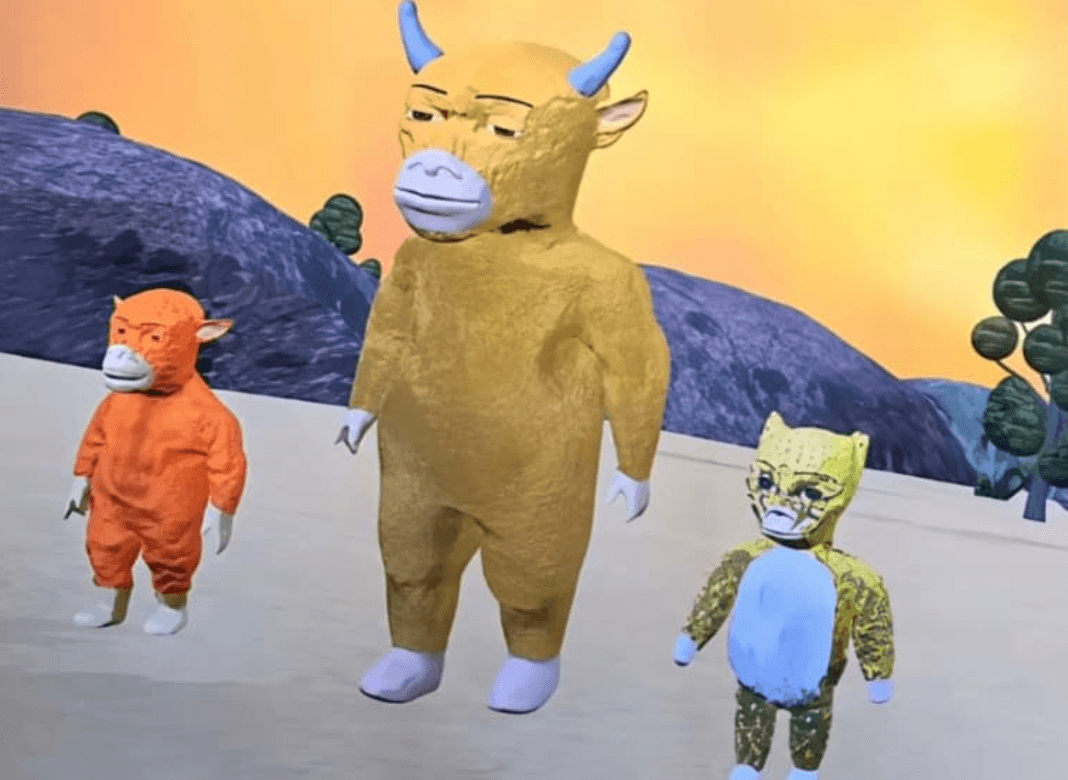
The token's name and momentum trace directly back to a low budget animated film also called "牛来," made over roughly five years by a director and his mother with almost no crew and a reported production cost of around 1,680 yuan. The film's animation quality was rough enough that it initially drew almost no attention, earning just 7,169 yuan in box office revenue over its first nine days in theaters.
What changed the film's trajectory was the internet's reaction to exactly how rough it was. Social media users began circulating the film specifically because of its crude production values, framing the contrast between a mainstream theatrical release and its homemade, ultra-low-budget execution as something worth watching out of curiosity rather than despite its flaws. That reaction pushed the film onto trending topics lists, and its box office climbed accordingly, reaching over 24.3 million yuan by August 19, a multiple-hundred-times increase from its opening numbers.
This offline cultural momentum is the part of the story that a purely on-chain analysis would miss. The token's price action has tracked the film's box office trajectory closely enough that the two appear to be reinforcing each other: renewed media coverage of the film's box office milestones brings fresh attention to the token, and the token's own price milestones generate additional coverage that circles back to the film. That feedback loop, rather than a single originating event, is a meaningful part of why this rally has had more staying power than a typical meme coin built around a moment that happens once and is over.
The token's timeline of new highs
Laying out the specific market cap milestones in sequence makes the sustained nature of this rally clearer than any single data point could. The token's market capitalization first crossed $500,000 on August 15 at 00:15, before beginning a rapid vertical climb later that same evening. By the early hours of August 16, it had reached nearly $29 million, a level widely reported as a fresh all-time high at the time, accompanied by 24-hour trading volume in the tens of millions of dollars.
Rather than reversing from that level, the token continued climbing over the following days. By August 19, alongside the film's box office crossing the 24 million yuan mark, the token's market capitalization broke above $50 million, again setting a new record. Roughly a day or two later, it pushed past $80 million, with reports citing a 24 hour gain of around 40% at that stage, suggesting the buying pressure behind each new high was still meaningfully strong rather than tapering off.
The most recent milestone extends that same pattern, with the token's market capitalization crossing $120 million. Each of these levels was reached in sequence rather than all at once, which is the specific detail that separates this token's trajectory from a single spike followed by a plateau or a decline. A chart showing one peak tells a simple story. A chart showing four or five distinct new highs across two weeks tells a story about sustained, repeatedly renewed demand.
-- Price
What the fragile liquidity structure underneath the rally actually means
Market capitalization alone doesn't describe how easily a position in a token this size can actually be bought or sold without moving the price significantly, and on-chain analysis conducted early in the rally flagged a specific structural concern worth carrying forward into any assessment of the current, much larger market cap. During the token's initial surge in mid-August, analysts noted that its liquidity pool, the actual capital available to absorb buy and sell orders, sat in the range of roughly $700,000 to $1 million, while the token's reported market capitalization at the same time ranged between $18 million and $26 million.
That gap between liquidity and market capitalization matters because it describes leverage in the literal sense: a relatively small amount of real capital was supporting a much larger headline valuation, meaning both pushing the price up and pushing it down required comparatively little capital relative to the market cap figure being reported. Analysts at the time also flagged concentration concerns, noting that while the top ten wallets held a modest 13.61% of supply on paper, a broader measure accounting for bundled and related wallet activity put effective concentration closer to 40%, a meaningfully higher figure than the surface-level holder distribution suggested.
Whether that same thin-liquidity structure persists at a $120 million market capitalization is a separate question from whether it existed at $18 million, since liquidity pools can deepen as a token matures and attracts more independent participants. But the early pattern is worth keeping in mind precisely because it illustrates a general risk in tokens whose market capitalization has grown quickly: a large headline number doesn't by itself confirm that an equivalently large amount of real capital is standing behind it, and confirming that requires checking the liquidity pool directly rather than assuming it scales in proportion to market cap.
Why sustained attention, not a single moment, has kept this rally alive
The clearest explanation for why this token hasn't followed the typical flash-pump pattern is that its underlying source of attention, the film itself, kept generating new milestones rather than existing as a single, already-completed news cycle. A meme coin built around a one-time announcement or a single viral post has nothing left to generate fresh headlines once that initial event has been fully absorbed by the market. A meme coin built around a film whose box office kept climbing day after day had a continuously renewing source of external validation for its own price action.
This dynamic also shows up in how the token's holder base appears to have evolved over time. On-chain analysis noted that relatively few well-known crypto influencers bought in during the earliest stage of the rally, with most trading activity and positioning concentrating after the broader attention had already built up. That pattern suggests the rally wasn't primarily engineered by a coordinated early group looking to exit into retail demand, but instead reflected a broader, more organically distributed set of participants entering at different points as the film's own story continued to develop.
None of this guarantees the rally continues from here, and a token that has repeatedly set new highs can still reverse sharply once its underlying attention source runs out of new milestones to generate. But understanding why this specific token has behaved differently from a typical 24-hour meme coin spike requires recognizing that its price action has been tied to a real-world story that kept producing new developments, rather than to a single moment that occurred once and was then left behind.
For traders looking to track fast moving meme coins like this one with real time price and volume data, WEEX offers spot and futures markets covering a range of trending tokens across multiple chains.
Conclusion
The "牛来" (Niu Lai) meme coin's climb to a $120 million market capitalization is notable less for the size of the number itself and more for the shape of the path that got it there: a sequence of distinct new highs spaced across nearly two weeks, tracking a real world viral story, a low budget film's box office run, that kept generating fresh reasons for renewed attention rather than existing as a single event.
FAQ
1. What is the "牛来" (Niu Lai) meme coin based on?
The token shares its name with a low-budget animated film made over roughly five years by a director and his mother, which went viral due to its rough production quality, driving both the film's box office and the token's price higher together.
2. How is this token's rally different from a typical meme coin pump?
Rather than spiking once and fading within a day, the token has set a sequence of distinct new market cap highs over nearly two weeks, moving from roughly $29 million to $50 million to $80 million and now past $120 million.
3. Is the "牛来" token officially affiliated with the film's production team?
No. Reports have explicitly noted there is no authorization or partnership between the token and the film's director or production company; the token was created independently to capitalize on the film's viral attention.
4. What liquidity risk was identified early in the token's rally?
Early on-chain analysis found the token's liquidity pool held only around $700,000 to $1 million while its market capitalization ranged from $18 million to $26 million, a gap that can make the price highly sensitive to large individual trades.
5. Why has this token's rally lasted longer than most meme coins?
Its underlying story, the film's ongoing box office growth, kept generating new milestones over time, giving the token repeated fresh sources of attention rather than a single event that quickly loses relevance.
This content is provided for general informational purposes only and doesn't constitute financial, investment, legal, or tax advice. Any events, rewards, online promotions, or related information mentioned herein should not be considered a recommendation, solicitation, or invitation to purchase, sell, trade, or otherwise deal in any crypto assets. Crypto assets are highly volatile and may result in loss. The availability of WEEX services, products, and related events may vary by region. You are responsible for ensuring that your participation is in accordance with applicable local laws and regulations.
You may also like

What Are Spot Stock Tokens? How Synthetic Stock Trading Works
Should I Buy PONS Coin? Sep 2026 Price Prediction & Guide
Can PONS Reach $1? PONS Coin Price Analysis After WEEX
Can PONS Reach $1? PONS Coin Price Analysis After WEEX

What Is WEEX Stock Spot Trading? A Beginner's Guide to US Stock Trading with USDT
SpaceX Stock Price Holds Near $141: Why Isn't a $100 Billion Spaceport Plan Moving It?
MU Stock Price Fell After Trump Praised Micron: What Actually Happened
"我的女友景甜" Days Later: What Happened to the Viral Meme Coin
XST Coin Price Bounced 19% Off a New Low in Hours: Is This the Bottom or Just Noise?
Is NVDA Stock Overvalued After Record Q2 Earnings?
NVDA Stock Pulls Back After Earnings: Is $250 Still Next?

WEEX Promo Code and Sign-Up Bonus: What You Need to Know

WEEX Welcome Bonus Explained: How New User Rewards Work
WEEX Affiliate Program: How to Join and Track Commission

WEEX Referral Code Guide: How Tracking and Verification Work
How to Get WEEX Referral Commission: Rules and Tracking

Salesforce Stock Price Targets Are Rising Fast: What Wall Street Actually Sees
MRVL Stock Price Target: Why Options Traders Bet on $300 Before Earnings
Marvell Stock (MRVL) Beat Earnings and Raised Guidance: Why Did It Fall Anyway?
What Is SUE Coin? Is a Dump Coming After Its 150% Pump?
What Is the WEEX Mini App? A Lightweight Way to Trade Inside Telegram
What Is CLAN? Is a Dump Coming After Its 100% Surge?
BISCOTTI Crypto: Robot Dog Token Behind Emblem Vault's Debut
How to Evaluate a Crypto Exchange in Pakistan: A Practical Checklist for Traders
CRMON After Salesforce's 23% Post-Earnings Surge: The Catch
How Safe Are the Crypto Exchanges Pakistani Traders Actually Use? A Security Comparison
Where Is XST Actually Trading Now? A Look at Volume Distribution After the Crash
Which Crypto Exchange Offers the Widest Range of Assets for Pakistani Traders?
XST Coin Price Crosses Into Deep Capitulation Territory: What a 90%+ Decline Actually Signals
A Breakup Became "我的女友景甜" Token in Hours: What That Says About Crypto's Attention Economy
What Are Spot Stock Tokens? How Synthetic Stock Trading Works
Should I Buy PONS Coin? Sep 2026 Price Prediction & Guide
Can PONS Reach $1? PONS Coin Price Analysis After WEEX
Can PONS Reach $1? PONS Coin Price Analysis After WEEX
What Is WEEX Stock Spot Trading? A Beginner's Guide to US Stock Trading with USDT
SpaceX Stock Price Holds Near $141: Why Isn't a $100 Billion Spaceport Plan Moving It?


