
WXT Burn Q2 2026: What It Means for WEEX Token (WXT)

 Prefer us on Google
WEEX has completed its Q2 2026 WXT token burn in accordance with the WXT Burn Model. A total of 64,014,084 WXT was removed from the token supply, with a reported burn value of approximately $1.10 million based on the market price on the burn date.
The burn is part of WEEX's ongoing token supply management strategy. This article explains what WXT is, how the Q2 2026 burn was calculated, how the burn mechanism works, and what factors may influence WXT's market price.
What Is WXT Coin?
WXT is the native token of WEEX, a cryptocurrency exchange. It is designed to support different functions across the WEEX ecosystem, including platform-related benefits, rewards, and other token-based use cases.
WXT is an ERC-20 token on Ethereum. Its tokenomics include a deflationary mechanism through periodic token burns.
Unlike a cryptocurrency that is issued solely as a payment asset, WXT is closely connected to the WEEX ecosystem. Its supply and utility are therefore relevant to users who follow the development of the platform and its token economy.
The WXT token model includes several key elements:
- Native ecosystem token: WXT is the native token associated with the WEEX ecosystem.
- ERC-20 standard: WXT is issued on the Ethereum blockchain.
- Token utility: WXT can be used across eligible WEEX ecosystem features and programs.
- Deflationary mechanism: A portion of WXT is periodically removed from circulation through the token burn mechanism.
- On-chain transparency: Completed burns can be verified through their corresponding blockchain transactions.
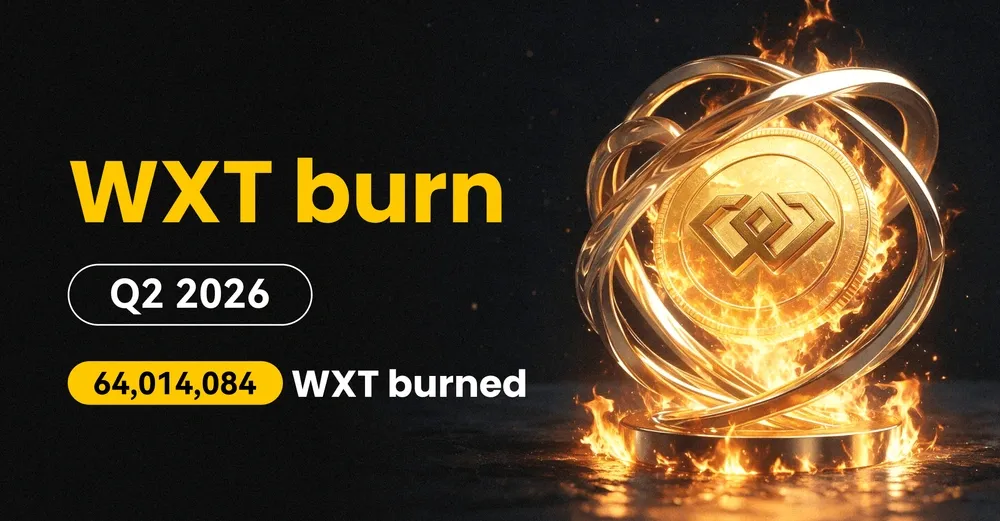
Key Details of WEEX Native Token Burn Q2 2026
The Q2 2026 WXT burn has been completed under the WXT Burn Model.
The reported burn value of $1,096,113 is based on the market price of WXT on the burn date. It should therefore be viewed as the estimated market value associated with the tokens removed in this burn, rather than a fixed cash amount.
The Q2 2026 burn can also be independently verified on Ethereum through the following transaction:
On-chain record:
https://etherscan.io/tx/0xe134f44f56a9ab2dff0da94244c5c2e8d4146be1ff0f5aec229e2cca6cb69ed4
Following the Q2 burn, the total amount of WXT burned reached 4,317,110,783 WXT, leaving a reported supply of 5,682,889,217 WXT.
Why Did WEEX Burn WXT?
The WXT burn is part of WEEX's long-term tokenomics design.
A token burn permanently removes tokens from the available supply. In the case of WXT, periodic burns are conducted according to the WXT Burn Model rather than being determined by a fixed number of tokens for every quarter.
The main purpose of the mechanism is to manage WXT's token supply as the WEEX ecosystem develops.
The Q2 2026 burn removed more than 64 million WXT from the supply. Combined with previous burns, more than 4.3 billion WXT has now been burned.
However, a token burn should not be interpreted as a guarantee of price appreciation. The market price of WXT depends on multiple factors, including market demand, liquidity, trading activity, token utility, and broader cryptocurrency market conditions.
How Does the WXT Burn Mechanism Work?
The WXT Burn Model uses several variables to determine the amount of WXT to be burned.
The model takes into account factors related to the platform's trading activity, WXT market conditions, and platform scale.
The parameters used in the Q2 2026 model include:
The model can be summarized as a combination of these inputs rather than a simple fixed quarterly allocation.
This approach allows the burn amount to reflect changes in platform activity and market conditions. As a result, the number of WXT burned can differ from one quarter to another.
For Q2 2026, the model resulted in a burn of:
64,014,084 WXT
The resulting transaction was then recorded on the Ethereum blockchain, providing an on-chain reference for verification.
What Happens to WXT After a Burn?
Burned tokens are permanently removed from the available token supply. Once the burn transaction has been completed on-chain, those tokens are no longer available for normal circulation.
This creates a distinction between:
- Total WXT supply before the burn
- WXT burned during the period
- Cumulative WXT burned
- Remaining WXT supply
After the Q2 2026 burn, the reported figures are:
Total WXT burned: 4,317,110,783 WXT
Current WXT supply: 5,682,889,217 WXT
These figures provide a clearer way to track the impact of the burn mechanism than looking at the quarterly burn amount alone.
What Could Drive WXT Price in 2026?
The WXT burn reduces the token supply, but supply reduction is only one factor that can affect market price.
Anyone evaluating WXT should consider both supply-side changes and demand-side factors.
1. WXT Utility
The practical use of WXT within the WEEX ecosystem can influence demand for the token. New or expanded token utility may affect how users interact with WXT.
2. WEEX Ecosystem Activity
Changes in platform activity, including trading activity and user participation, may affect the broader WXT ecosystem.
The WXT Burn Model itself incorporates trading volume and other market-related parameters, making platform activity an important part of the tokenomics mechanism.
3. Continued Token Burns
Future burns would continue to reduce the amount of WXT in the available supply if the burn mechanism remains active.
However, the size of future burns is not necessarily the same as the Q2 2026 burn because the model uses multiple inputs.
4. Market Demand and Liquidity
Token price is ultimately determined by market supply and demand. Liquidity, trading activity, market sentiment, and the availability of buyers and sellers can all affect WXT's market price.
A lower token supply does not automatically result in a higher market price if demand does not increase accordingly.
5. Broader Crypto Market Conditions
WXT also operates within the broader cryptocurrency market. Bitcoin and major altcoin price movements, market liquidity, investor sentiment, and overall risk appetite can influence the market environment in which WXT trades.
For this reason, the Q2 2026 burn should be viewed as one component of WXT's tokenomics rather than a standalone price signal.
WXT Burn Q2 2026: Key Takeaways
The Q2 2026 WXT burn removed 64,014,084 WXT from the token supply under the WXT Burn Model.
The key figures are:
- 64,014,084 WXT burned in Q2 2026
- $1,096,113 reported burn value based on the market price on the burn date
- 4,317,110,783 WXT burned cumulatively
- 5,682,889,217 WXT current supply
- Burn transaction publicly recorded on the Ethereum blockchain
The burn mechanism is designed to adjust WXT supply based on predefined tokenomics parameters, including trading volume, volatility, platform scale, and market liquidity.
While supply reduction is an important part of WXT's tokenomics, it does not guarantee a specific future price. WXT's market performance will continue to depend on ecosystem utility, market demand, liquidity, platform activity, and broader cryptocurrency market conditions.
WEEX will continue to publish information about WXT burns and related tokenomics developments to support greater transparency around the token supply.
This content is provided for general informational purposes only and doesn't constitute financial, investment, legal, or tax advice. Any events, rewards, online promotions, or related information mentioned herein should not be considered a recommendation, solicitation, or invitation to purchase, sell, trade, or otherwise deal in any crypto assets. Crypto assets are highly volatile and may result in loss. The availability of WEEX services, products, and related events may vary by region. You are responsible for ensuring that your participation is in accordance with applicable local laws and regulations.
You may also like

XST Coin Liquidity Risk: What Low DEX Depth Actually Means for Buyers Who Want to Exit

XST Coin Price Prediction: What Happens to AI Narrative Tokens After the Initial Hype Fades

Is Walmart Stock a Buy After Falling 23% From Its 52 Week High? What the $137 Analyst Target Actually Implies

Can Bitcoin Reach $80,000 in August? BTC Price Prediction, Key Resistance Levels, and Market Outlook
Michael Saylor Sold 1,690 Bitcoin at a Loss: What Strategy Inc.'s August Bitcoin Sale Actually Reveals
MSTR Stock Surges 12% in a Single Session: What Strategy Inc's Bitcoin Treasury Model Actually Amplifies

How High Can Sandisk Stock Go? 2026 Price Target and Analyst Outlook

Is Micron or Sandisk a Better Buy? 2026 Memory Stock Comparison
Why Is Sandisk (SNDK) Stock Up So Much? 2026 Rally Explained
Pakistan Crypto Exchange Comparison: Which Platform Works Best for PKR Traders in 2026

Bitcoin Security or Commodity? How CLARITY Act Could Impact BTC
Crypto Security vs Commodity: What CLARITY Act Means for Bitcoin and Tokens
Crypto P2P Trading in Pakistan: Which Exchange Has the Best PKR Marketplace in 2026

Is WMT Stock a Buy After Falling 23% From Its 52-Week High? What the $137 Analyst Target Actually Implies
Best Crypto Exchange in Pakistan for 2026: What You Need to Know Before Choosing
Can Bitcoin Reach $100,000 Before Year End? What the Current Rally Structure Actually Requires
Bitcoin Has Broken $66,000, $70,000, and $75,000 in Three Days: What Sequential Resistance Breaks Actually Mean
Bitcoin Price Climbs Past $76,000: What Happens After Bitcoin's Strongest Week Since January
Bitcoin Hits $70K: How Trump’s CLARITY Act Could Impact Crypto Markets
XRP ETFs Have Pulled Nearly 1 Billion Tokens off the Market: Why the Price Keeps Sliding Anyway
Walmart Stock Falls 9% After Q2 Earnings: What Weak Same Store Sales and Cautious Guidance Actually Signal
XRP Price Prediction 2026-2027: Can XRP Recover After Falling 65% From Its January High

XRP Price Surges With Bitcoin and Ethereum: What Is Driving the August 20 Crypto Rally
XRP Price Breaks Above $1.18 Resistance as Whales Accumulate 190 Million Tokens: What the Breakout Actually Signals
Fake WEEX Support: How Impersonation Scams Drain Real Accounts

Is WEEX Safe? Verify the Reserves and 1,000 BTC Fund Yourself
Is Bitcoin Overvalued After CLARITY Act? 2026 BTC Valuation Analysis
JPMorgan Says Buy the Chip Dip but Morgan Stanley Says Sell: What the SOXL Analyst Disagreement Actually Means
Bitcoin's $2.7 Billion Short Squeeze: What Triggered the Largest Liquidation Event of August 2026
Is SOXL a Good Investment? What 3x Leverage Actually Does to Your Returns in Both Directions
XST Coin Liquidity Risk: What Low DEX Depth Actually Means for Buyers Who Want to Exit
XST Coin Price Prediction: What Happens to AI Narrative Tokens After the Initial Hype Fades
Is Walmart Stock a Buy After Falling 23% From Its 52 Week High? What the $137 Analyst Target Actually Implies
Can Bitcoin Reach $80,000 in August? BTC Price Prediction, Key Resistance Levels, and Market Outlook
Michael Saylor Sold 1,690 Bitcoin at a Loss: What Strategy Inc.'s August Bitcoin Sale Actually Reveals
MSTR Stock Surges 12% in a Single Session: What Strategy Inc's Bitcoin Treasury Model Actually Amplifies
Contents
Popular coins
Latest articles


