
Amid the boom in stablecoin investments, which stablecoins are worth keeping an eye on?
As we enter the second quarter of 2026, the overall sentiment in the cryptocurrency market remains relatively subdued. At the start of this week, Bitcoin finally rebounded, recouping the losses incurred following the breakdown of US-Iran negotiations, whilst a handful of meme coins began to surge against the market trend; however, the sustainability of the market’s overall momentum and the strength of its narratives remain to be seen.
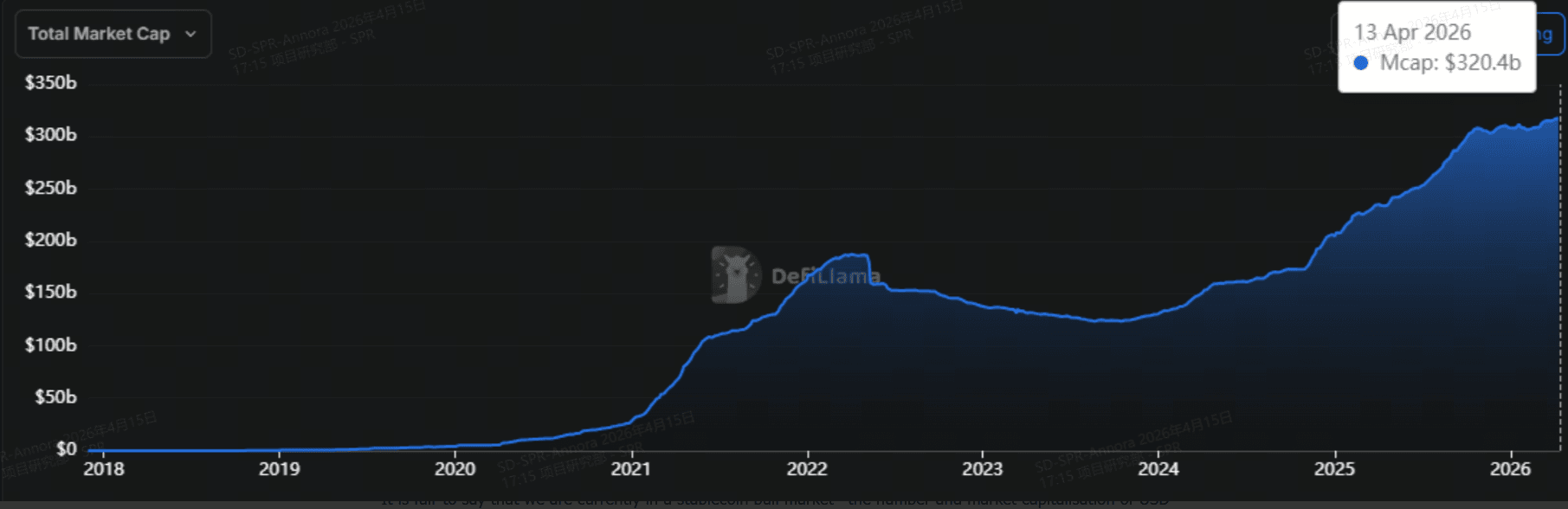
In this market environment, an increasing number of investors are turning to stablecoin investments. According to our observations, whilst USDT and USDC still firmly dominate the stablecoin market share, a wave of regulatory compliance is driving the rapid rise of a new generation of USD-pegged stablecoins. The total market capitalisation of stablecoins has now reached $318.9 billion, representing a 3.47% increase year-to-date.
market cap.png">
It is fair to say that we are currently in a stablecoin bull market—the number and market capitalisation of USD-pegged stablecoins are on the rise, whilst highly competitive yields are attracting sustained participation from both institutional and retail investors.
Click here to participate in WEEX’s stablecoin investment campaign: 12% APR on USDC, 10% APR on USD1/USDT
Below are several of the most popular stablecoins currently on the market that are well worth keeping an eye on.
World Liberty Financial USD (USD1)
USD1 is a US dollar-pegged stablecoin launched by World Liberty Financial in April 2025; the project was co-founded by the family of former US President Trump. USD1 operates on a 100% fully-reserved model, with reserve assets comprising US dollar cash, US government money market funds and other cash equivalents, all of which are custodied and issued by BitGo Trust Company.
Key features:
- Zero-fee minting and redemption: Unlike most stablecoins, USD1 offers completely free minting and redemption services.
- Multi-chain deployment: Supports major blockchains such as Ethereum, BNB Chain, Solana and Tron.
- Guaranteed transparency: Utilises Chainlink’s Proof of Reserves (PoR) mechanism to provide real-time on-chain reserve verification.
- Institutional-grade custody: Managed by the regulated BitGo Trust Company, compliant with US regulatory standards.
It is worth noting that the USD1 project has recently been embroiled in controversy. According to public data, World Liberty Financial recently borrowed nearly 190 million USD1 by staking WLFI on the Dolomite protocol, triggering severe liquidity strain for USD1. However, following the repayment of 25 million USD1 last Saturday, market tensions have finally begun to ease.
As of the date of writing, WLFI has fallen by 20% over the week, whilst USD1 currently has a market capitalisation of approximately $4.14 billion. The token price remains pegged at around 1:1 and has not been affected by the aforementioned circular lending incident.
USDS (USDS)
USDS is an upgraded stablecoin within the Sky ecosystem, evolved from MakerDAO’s (now renamed Sky) DAI in September 2024. As a long-standing stablecoin in the DeFi space, USDS inherits DAI’s decentralised characteristics whilst introducing additional innovative features.
Key Features:
- Optional Upgrade: Users can upgrade DAI to USDS at a 1:1 ratio, or revert back to DAI at any time.
- SKY Token Rewards: USDS holders are eligible for token rewards built into the Sky protocol.
- DeFi Compatibility: USDS boasts excellent liquidity and high base yields across major DeFi lending protocols, such as Aave and Morpho.
- Decentralised Governance: Managed through the Sky DAO community.
The standout feature of USDS is its ‘stablecoin + native yield’ model, with a current market capitalisation of approximately $11.5 billion.
USDD (USDD)
Launched by TRON DAO Reserve in May 2022, USDD is the core stablecoin of the TRON ecosystem. This stablecoin operates on an over-collateralised model and is backed by a variety of cryptocurrencies, including Bitcoin, Ethereum and TRX.
Key Features:
- Decentralised community governance: Oversighted by the decentralised stakeholder community of TRON DAO Reserve.
- Over-collateralisation: The value of reserve assets exceeds the total amount of USDD in circulation; the current collateralisation ratio is approximately 170%.
- Multi-chain support: Deployed on TRON, Ethereum and BNB Chain.
- Smart contract issuance: Issued and redeemed via smart contracts on TRON.
USDD currently has a market capitalisation of approximately $1.52 billion. Thanks to its decentralised nature and TRON’s high-performance network, USDD is widely used in scenarios such as payments, trading and staking, offering holders highly competitive returns.
Ripple USD (RLUSD)
RLUSD is issued by Standard Custody & Trust Company, LLC, a wholly-owned subsidiary of Ripple, and is specifically designed for enterprise-grade payments and cross-border settlements. It is deployed on the XRP Ledger and is also compatible with the Ethereum ecosystem.
Key features:
- Designed for cross-border payments: leveraging the efficiency advantages of blockchain technology.
- Fully backed by US dollars: each RLUSD is supported by at least an equivalent value in US dollars and cash equivalents.
- Compliance advantages: Ripple possesses a global portfolio of licences and over a decade of experience in compliant operations.
- Wide accessibility: Services available to financial institutions, enterprises and developers.
Leveraging Ripple’s deep expertise in cross-border payments and extensive network of financial institution partnerships, RLUSD surpassed a market capitalisation of US$1.4 billion within less than six months of its launch, demonstrating strong growth potential.
United Stables (U)
U is a US dollar-pegged stablecoin issued by United Stables Limited (British Virgin Islands). The reserve assets for $U are held in a dedicated trust arrangement operated by the registered trustee, Wallets Trust Limited, ensuring that the reserve assets are completely legally segregated from the issuer’s corporate assets and are bankruptcy-isolated.
Key features:
- 1:1 Collateralisation: Every U is backed 1:1 by fiat US dollars and high-quality stablecoins, held in segregated, auditable custody.
- Acceptable Reserves: U accepts fiat currencies and trusted stablecoins as reserves.
- Partner and User Empowerment: Empowers exchanges, market makers, over-the-counter platforms, wealth management institutions and payment networks through unified liquidity, whilst sharing ecosystem rewards with partners and users.
- AI-enabled and programmable: Enables autonomous, intelligent trading.
- Enhanced corporate privacy: Supports confidential balance functionality — safeguarding financial privacy whilst ensuring on-chain transactions remain auditable.
U currently has a market capitalisation of US$1 billion.
Conclusion: The Stablecoin Bull Market is Underway
As a crucial anchor of value in the crypto market and a key bridge to the real world, stablecoins are seeing their safe-haven and wealth management attributes further amplified amidst a lack of narrative momentum and market volatility.
Coupled with the orderly progress of the GENIUS Act and the Clarify Act, numerous signs indicate that the stablecoin boom has only just begun.
It is foreseeable that, driven by the parallel advancement of compliance and innovation, the stablecoin sector will continue to grow, and stablecoin wealth management is becoming an increasingly important investment method within the crypto market.
We will continue to rigorously select and list new stablecoins that meet compliance requirements and possess sufficient liquidity, promptly adding them to our wealth management section. We also advise investors to diversify their holdings across different types of stablecoins according to their own risk preferences, whilst keeping a close eye on reserve transparency and potential returns.
Further reading:
WEEX — Subscribe now to earn steady returns: https://www.weex.com/staking
WEEX — Auto Earn: https://www.weex.com/events/promo/spot-earn-3
You may also like
Crunch Time for the CLARITY Act: What’s in Store for Crypto?
The CLARITY Act, the most closely watched piece of crypto legislation in the U.S. history, has entered its final sprint.
Over the past few months, questions such as who should receive stablecoin yields, how to allocate liability in DeFi, and whether traditional banks would suffer a “bloodletting” have repeatedly stalled the bill. It wasn’t until recently that the deadlock was truly broken. Senator Thom Tillis confirmed on Monday that he and Senator Alsobrooks have been in talks with various parties for months and have finally produced a proposal that is broadly acceptable to all sides.
So, what exactly does the long-delayed CLARITY Act entail? And if it passes, what changes will it bring to the crypto market? This article provides an in-depth breakdown.
CLARITY Act Overview: Establishing Compliance and ClassificationThe Digital Asset Market Clarity Act (CLARITY Act) is the most ambitious attempt at crypto industry regulation by the U.S. Congress to date.
The bill passed the House of Representatives in July 2025 but has been stalled for an extended period due to disputes in the Senate.
Simply put, the bill primarily covers three key areas:
First, it clarifies the regulatory boundaries between the SEC and the CFTC. This is one of the most challenging issues facing those U.S. crypto companies. Currently, there is an overlap in the SEC and CFTC’s functions regarding the classification of digital assets, leaving companies facing long-standing uncertainty regarding their “regulatory status” from a compliance perspective.Second, establishing a regulatory framework for stablecoins. The bill imposes restrictions on stablecoin yields, but more crucially, it expands the scope of coverage—unlike the GENIUS Act signed in 2025, which targeted only issuers, the CLARITY Act extends to a broader range of entities, including trading platforms and wallet service providers, thereby filling a legislative gap.Third, strengthening investor protection and disclosure requirements. The bill strengthens the legal basis for holding parties accountable for fraudulent transactions, clarifies the criteria for determining market manipulation, and restricts insiders from abusing non-public information for illegal gains.Additionally, federal regulators will issue a stablecoin disclosure framework and a list of compliance activities within one year of the bill’s passage, establishing a more predictable compliance roadmap for the industry’s development.
The Key Compromise: How Does the Stablecoin Yield Provision Balance the Interests of Both Sides?It is clear that the biggest stumbling block preventing this bill from moving forward has been the issue of stablecoin yields—specifically, where the money comes from and whether it will siphon deposits away from banks—which has long been a major point of contention between the traditional banking sector and the crypto industry.
The key to breaking this deadlock lies in the compromise text on stablecoin yields reached by Senators Thom Tillis and Angela Alsobrooks. The provision explicitly prohibits crypto companies from paying “any form of interest or yield” (i.e., similar to bank deposits or interest-bearing products without cause) solely because customers hold stablecoins. However, it preserves room for rewards based on “real activity,” such as trading rebates, membership benefits, and on-chain interaction incentives.
Traditional banks have long feared that high-yield stablecoins would erode their deposit base, leading to massive capital outflows. This ban directly positions stablecoins as “payment tools” rather than “savings products,” effectively putting their minds at ease.
On the other hand, while crypto project teams cannot directly pay interest, they can still gain market share through product innovation, boosting user engagement, and expanding use cases.
In my view, this compromise may appear to be a mere semantic game on the surface, but it effectively amounts to a “redefinition of function”—stablecoins have shifted from their previous role as “savings-like assets” seeking risk-free returns back to that of “base money” for payments, settlements, and ecosystem incentives. However, the exact criteria for determining “real activity” remain vague, and this is likely to become a new battleground for all parties vying for regulatory interpretation in the future.
Following the key compromise, the probability of the bill being signed into law in 2026 surged to 70% on the prediction market Polymarket, setting a monthly high. https://polymarket.com/event/clarity-act-signed-into-law-in-2026
With the implementation of this compromise, the probability of the bill being signed into law in 2026 on the prediction market Polymarket briefly surged to 70%, setting a monthly record.
However, on the very day this article was written, U.S. banking trade groups still stated that the Senate’s stablecoin incentive compromise was “not sufficient”—they fear that the wording of the ban is not firm enough and that disguised economic incentives might emerge.
Clearly, this battle is far from over.
What Changes Will the Crypto Market See?In fact, on every level, the CLARITY Act is more than just a simple update to regulatory terminology; it marks a landmark shift for the U.S. crypto market as it moves from a “pilot phase” to “institutionalization,” and the crypto market will benefit from this.
Leading compliance players see a revaluation: As a leader in compliant stablecoins, Circle (CRCL) is one of the bill’s biggest beneficiaries, with its stock surging 20% on Monday alone. As interest income from reserve assets grows and USDC continues to expand its market share across multiple use cases, Circle’s profit outlook is expected to become increasingly clear, enabling its transformation from a “crypto cyclical stock” to a “Web3+AI infrastructure stock.”Stablecoin ecosystem stands to benefit directly: Stablecoins are explicitly defined as “payment tools” rather than “deposit-like products.” This represents a major boon for cross-border payments, the tokenization of RWA (real-world assets), and AI-driven business models, helping to revitalize sectors such as DeFi, PayFi, and RWA.Overall market sentiment is improving: As a “macro-level” development, the CLARITY Act will further boost risk appetite as btc-42">Bitcoin recently rebounded to the $80,000 mark.The next two weeks will be a critical window for the CLARITY Act’s passage. The crypto industry has made clear concessions regarding the flexibility of financial products to alleviate the concerns of the traditional financial system. This concession is not a retreat, but a strategic trade-off.
Of course, this does not mean everything is settled—the banking sector continues to question the boundaries of “real-world activities,” and regulatory responsibilities for DeFi have not yet been fully clarified. But at the very least, for the entire crypto industry, a “clear bill” that can be implemented is more important than a “perfect bill.” And the active progress being made at this stage is itself a sign that crypto assets are moving toward a mature capital market.

Tokenized Stocks 101: When the World's 7+3 Most Valuable Companies Become Crypto's Underlying Assets
The trend of tokenizing U.S. stocks is unstoppable: U.S. stocks and related ETFs are being extensively tokenized, allowing users to freely buy and sell these “tokenized stocks” on-chain, enabling 24/7 trading, low barriers to entry, and highly combinable on-chain asset allocation.
Among all tokenized U.S. stock assets, the most liquid and most representative of the “U.S. stock market ethos” are the seven tech giants known as the “Magnificent Seven”—Apple (AAPL), Microsoft (MSFT), NVIDIA (NVDA), Amazon (AMZN), Google’s parent company Alphabet (GOOGL), Meta (META), and Tesla (TSLA).
They account for over 80% of the volatility in the U.S. stock market.
In today’s guide, we’ll explore the overall structure of the U.S. stock market, the business evolution of the Magnificent Seven, and finally discuss how three upcoming “rising stars” set to go public will reshape the market.
I. The U.S. Stock Market: A Bull Market Dominated by the “Magnificent Seven”The U.S. stock market, benchmarked by the S&P 500 Index, has a total market capitalization exceeding $50 trillion, but it is highly concentrated among tech giants. As of April 2026, the “Seven Sisters” collectively accounted for approximately 33.7% of the S&P 500’s weighting (up from just 12.5% in 2016), with a combined market capitalization of about $20 trillion. The top 10 stocks sometimes account for nearly 40% of the index.
Simply put: buying an S&P 500 ETF ≈ buying the “Seven Sisters.”
For ordinary investors, a straightforward question arises: what does this actually mean? The most intuitive answer is that whether you make money or not depends largely on these seven companies.
This structure gives rise to the typical “long bull, short bear” characteristic of the U.S. stock market:
Dual-engine growth driven by earnings and buybacks: These giants consistently maintain free cash flow profit margins of 15%+, combined with annual stock buybacks in the hundreds of billions of dollars, creating a structural bull market characterized by “a floor on the downside and leverage on the upside.”Highly simplified macro-level pricing: The Fed’s interest rate path determines the denominator of valuations, the pace of AI commercialization determines the numerator of earnings, and global dollar liquidity determines market elasticity.Bear markets feature “sharp declines and gradual recoveries”: When macroeconomic headwinds or liquidity tightening occur, indices typically experience a rapid 10%–15% pullback within 1–3 months. However, passive fund allocations and institutional bottom-fishing quickly restore the upward trend, with bear market cycles generally lasting no longer than six months.For on-chain investors, understanding this structure implies that trading U.S. RWA essentially involves trading the discounted cash flows of a few core assets and macro liquidity premiums. If systemic volatility occurs in the broader market, on-chain prices typically revert to their anchored levels within 1–3 minutes through arbitrage mechanisms.
II. A Detailed Breakdown: The Deep Integration of the “Seven Sisters” and AI1. NVIDIA—The Computing Power Provider of the AI Era
NVIDIA is the world’s highest-valued publicly traded company and the investment with the fastest profit growth, the most direct benefits, and the greatest certainty in the current AI wave. It is also closely tied to the AI sector of the cryptocurrency market.
- Main Business: GPU chips, with the data center business accounting for approximately 91% of the company’s total revenue.
- Market Capitalization: Approximately $5.09 trillion as of the end of April 2026, with a weighting of about 7.85% in the S&P 500.
- Performance: GPUs based on the Blackwell architecture hold a near-monopoly in the global AI training sector. CEO Jensen Huang has publicly stated that the company’s market capitalization could reach $10 trillion in the future.
Click to Trade NVDAON/USDT
2 Apple — Consumer Hardware × Service Ecosystem Empire
Apple is the world’s second-largest company by market capitalization. Its core business consists of the iPhone, a “super product,” coupled with a service ecosystem spanning over 2.5 billion active devices.
- Main Business: iPhone sales + monetization of the service ecosystem (App Store, Apple Music, iCloud, etc.).
- Market Cap: Approximately $3.97 trillion as of the end of April 2026, with a weighting of about 6.12%.
- Performance: Q1 FY2026 revenue of $143.8 billion, up 16% year-over-year; EPS of $2.84, up 19% year-over-year, exceeding expectations across the board. Services revenue surpassed $30 billion for the first time.
Click to Trade AAPLON/USDT
3. Microsoft — The “Shovel Seller” of Cloud Computing × AI
Microsoft has transformed from a traditional software company selling Windows and Office into a cloud computing and AI integration giant centered on Azure cloud services.
- Core Businesses: Azure cloud services + Copilot AI office assistant + enterprise software.
- Market Cap: Approximately $3.15 trillion as of the end of April 2026, with a weighting of about 4.86%.
- Financial Results: Q3 FY2026 revenue of $82.9 billion (up 18% YoY), EPS of $4.27 (exceeded expectations); Microsoft Cloud revenue: $54.5 billion (up 29% YoY); annualized AI revenue run rate exceeded $37 billion (up 123%). Demand for AI Copilot and Azure remains strong, but AI investments have put slight pressure on gross margins.
Click to Trade MSFTON/USDT
4 Amazon — E-commerce Empire × Cloud Computing King
Amazon is the most diversified of the “Big Seven,” but its true profit engines are AWS (cloud computing) and advertising.
- Core Businesses: E-commerce (traffic base) + AWS Cloud (profit core) + Advertising (fastest-growing major business).
- Market Cap: Approximately $2.83 trillion as of the end of April 2026, with a weighting of about 4.37%.
- Financial Results: Q1 2026 revenue of $181.5 billion (up 17% YoY), EPS of $2.78 (beat expectations); AWS cloud business revenue of $37.6 billion (up 28% YoY, the fastest growth in 15 quarters). AWS accounts for only about 17–18% of total revenue but contributes over 60% of operating profit; Annualized revenue from the advertising business has exceeded $70 billion, with growth exceeding 20%.
Click to Trade AMZNON/USDT
Alphabet, Google’s Parent Company—The “Trio” of Search × AI × CloudAlphabet holds nearly 90% of the global search engine market share, while also owning Google Cloud, the world’s third-largest cloud platform, and DeepMind, the leading AI research organization.
Core Businesses: Search Advertising (Cash Cow) + Google Cloud (Rapid Growth) + AI Business.Market Cap: Approximately $4.20 trillion combined, with a combined weighting of about 6.51%.Performance: Q1 2026 revenue of $109.9 billion (up 22% YoY), EPS of $5.11 (significantly beating expectations); Google Cloud revenue of $20.0 billion (up 63%).Click to trade GOOGLON/USDT
6 Meta — The AI Advertising Machine of Social Media
After navigating the “metaverse slump” of 2022, Meta staged a strong rebound in 2025 driven by AI advertising.
Core Business: Social media advertising across the Facebook, Instagram, and WhatsApp ecosystem.Market Cap: Approximately $1.70 trillion as of the end of April 2026, with a weighting of about 2.62%.Performance: Daily active users (across the entire suite) reached 3.58 billion, continuing to grow even at this massive scale. Annualized revenue from the AI advertising automation tool Advantage+ has reached $60 billion, with AI-driven ad impressions growing by 18% and average ad prices rising by 6%.Trade METAON/USDT
Tesla — The Narrative King: From Selling Cars to Selling the “Future”Tesla is the most unique of the “Seven Sisters”—there is a significant tension between its actual financial performance (car sales) and its capital market narrative (autonomous driving + robotics).
Core Businesses: Electric vehicle manufacturing + energy storage + Full Self-Driving (FSD) system + Optimus robot.Market Cap: Approximately $1.40 trillion as of the end of April 2026, with a weighting of about 2.1% .Performance: 2025 marked the first full-year revenue decline, down approximately 3%; the market is watching for signs of recovery following persistently weak delivery numbers.Click to Trade TSLAON/USDT
It is worth noting that the Q1 2026 earnings season has reached its peak—on April 29–30, Amazon, Alphabet, Microsoft, and Meta reported strong results, with Apple following suit the next day. The short-term impact of these earnings reports on stock prices is evident. However, overall, the “Big Seven” are expected to see total Q1 earnings grow by approximately 14.5% to 20.3% year-over-year, remaining the primary drivers of overall earnings growth for the S&P 500.
Further Reading: RWA Eco Week: Share $60,000!
III. A New Variable Deserves Close Attention: The Three Mega IPOs of 2026The landscape of the “Seven Sisters” is not set in stone. In 2026, three of the largest private tech companies in history are lining up for IPOs—once they go public, they may not only redefine the “Seven Sisters” but also bring about a systemic disruption to the liquidity structure of global capital markets.
We previously discussed this in our article, “How the Three Most Valuable IPOs of 2026 Will Ignite a New RWA Narrative?”:
SpaceX — The Space EconomyLaunch missions and Starlink (satellite internet) account for the vast majority of revenue, with combined revenue for these two businesses projected to exceed $20 billion in 2026. SpaceX has quietly filed for an IPO, planning to go public around June 2026, with its target valuation raised from an earlier $1.75 trillion to over $2 trillion.
OpenAI — The King of AI Applications, Parent Company of ChatGPTAs the pioneer of generative AI, OpenAI’s annualized revenue has surged to $25 billion. OpenAI plans to go public as early as the fourth quarter of 2026, with a target valuation of approximately $1 trillion.
Anthropic — AI Safety Company, Developer of the Claude ModelAs OpenAI’s main rival, Anthropic positions itself as a provider of “safe and reliable AI.” It has attracted significant investment from Amazon and Google, with a valuation pegged at $350 billion, making it a darling of the enterprise AI market. Anthropic is considering an IPO as early as October of this year, targeting a valuation of approximately $900 billion.
However, all three of these soon-to-be-listed companies are currently operating at a loss. Under the S&P 500’s inclusion criteria (which require four consecutive quarters of profitability), they cannot be passively included in major indices in the short term, meaning they lack the automatic buying support from trillions of dollars in passive investment funds.
SpaceX’s strategy is to list on the Nasdaq and seek inclusion in the Nasdaq-100 index as soon as possible. Nasdaq, for its part, is proposing new rules to help large-cap new companies like SpaceX gain rapid index inclusion. Once included in the NASDAQ-100 Index, SpaceX’s stock would directly enter the investment universe of passive funds and ETFs, attracting substantial holdings from both institutional passive investors and retail investors.
IV. Conclusion: Investment Considerations Following the On-Chain Integration of U.S. StocksWith the entry of top-tier institutions like Nasdaq and the NYSE, RWA is transitioning from a niche narrative to a core topic in mainstream finance. The RWA tokenization products from the “Seven Sisters” serve as the best “ambassadors” for this trend, providing the crypto industry with compelling arguments to persuade mainstream investors.
It is foreseeable that the combination of tokenization and DeFi composability will give rise to entirely new financial scenarios, such as pre-IPO subscription trading, hedging, yield aggregation, collateralized lending, and arbitrage strategies. On-chain stocks will evolve from mere trading instruments into a full layer of financial infrastructure.
Although the integration of cryptocurrencies and RWA is deepening, leading to occasional convergence in price performance, fundamental and technical analysis of the stock market may still differ from that of cryptocurrencies. When purchasing tokenized stocks on-chain, users must still ask themselves the same questions they would in a traditional brokerage account:
What is this company actually worth? Is the current price undervalued?
As the Q1 2026 earnings season unfolds and the countdown begins for three of the largest IPOs in history, the market is rewriting these answers one by one—and we will continue to follow the story.

How the Three Most Valuable IPOs of 2026 Will Ignite a New RWA Narrative?
The US stock market is set to welcome the three most valuable IPOs in history this year—OpenAI, SpaceX and Anthropic. These three unicorns are also poised to bring fresh innovation and narrative depth to the RWA narrative within the crypto world.
In 2026, the US stock market is set to stage a trillion-dollar IPO frenzy.
OpenAI, SpaceX and Anthropic, three era-defining unicorns, have a combined valuation approaching $3.3 trillion, far exceeding the market capitalisation of the crypto sector. As for today, the total circulating market capitalisation of cryptocurrencies, including stablecoins, has just rebounded to $2.45 trillion.
It is anticipated that the listings of these three companies will not only drive an overall upward shift in the valuation benchmark for the technology sector but will also inject fresh scope for imagination and value anchors into the crypto world’s RWA narrative.
SpaceX, OpenAI and Anthropic: IPOs in Progress
Following recent geopolitical turbulence, the US stock market is currently in a recovery phase, whilst the AI and space technology sectors continue to attract massive institutional capital, with a market appetite for high-growth, high-barrier assets reaching a peak. The imminent IPOs of these three major projects are a concentrated manifestation of this trend.
SpaceX: The Largest IPO in History, Musk’s Final Puzzle Piece
SpaceX is the space-based Starlink project under Elon Musk’s. The uniqueness of its IPO lies in its three-dimensional business model of hardware with services and data: the ongoing sales of Starlink terminals, revenue from network service subscriptions, and the potential for tokenisation of space data assets.
According to public data, SpaceX is achieving global broadband coverage through its low-Earth orbit satellite network. It has deployed over 9,500 satellites, with revenue projected at approximately $12.3 billion in 2025, accounting for around 70% to 80% of SpaceX’s total revenue. The service has over 10 million users and is rapidly expanding into the aviation, maritime and defence sectors.
Regarding the IPO timeline, Musk has confirmed plans to proceed with the listing in 2026, with the process set to begin as early as June, ahead of OpenAI and Anthropic.
It is worth noting that SpaceX has recently raised its target valuation for the IPO to over $2 trillion. Viewed from a broader perspective, when this largest IPO in human history is placed within the grand narrative of surpassing the seven giants of the US stock market, it transcends a mere fundraising exercise. Through a highly impactful vision and meticulous capital orchestration, it is continuously reinforcing market consensus and asset premiums ahead of the listing.
OpenAI: The AI Era’s Most Cash-Burning Growth Machine
As the developer of ChatGPT, OpenAI has established absolute leadership in the field of AGI (Artificial General Intelligence).
From a fundamental perspective, OpenAI is growing at a pace unprecedented in human history: ChatGPT’s weekly active users have surpassed 900 million, Codex serves over 2 million developers weekly, and annualised revenue in February 2026 has crossed the $25 billion threshold. The company forecasts annual revenue exceeding $280 billion by 2030 and has publicly declared its ambition to build an AI super-app platform.
Just at the end of March, OpenAI completed the largest funding round in Silicon Valley’s history, raising a total of $122 billion from investors including SoftBank, Amazon, NVIDIA and Andreessen Horowitz, at a valuation of $852 billion. Amazon alone invested $50 billion, alongside a commitment to spend $100 billion on AWS cloud services.
A clear sign accompanying this development is that OpenAI has, for the first time, opened up banking channels to raise funds from individual investors. This move is widely interpreted as a move to build momentum ahead of a potential IPO in the fourth quarter.
In contrast to SpaceX’s status as the sole player in the commercial space sector, OpenAI currently remains mired in fierce competition and massive losses: it burns through over $14 billion annually, a cost incurred to maintain the computational infrastructure required for training cutting-edge models and expanding data centres, and the company has pledged to invest over $600 billion in cloud servers over the next five years.
Faced with competition on multiple fronts from Anthropic, Google and the open-source community, this parallel state of massive losses and rapid business growth will continue to be scrutinised by the public market.
Anthropic: OpenAI’s Strongest Rival, Focusing on Safety and Enterprise AI
In contrast to OpenAI’s aggressive expansion, Anthropic, developer of the Claude series of models, has adopted a more prudent approach favoured by compliance bodies and large enterprises. Its brand positioning of "AI safety first" has secured it the number two spot in the AI sector.
The business growth driven by this differentiated approach is equally staggering: Anthropic’s annualised revenue this year has surged from $9 billion at the end of 2025 to $30 billion, setting a record for the fastest quarterly growth rate in enterprise software history for a company of this scale.
In fact, thanks to the advantages of its Claude series of models in long-text processing and the safety of Constitutional AI (a method of training AI systems to align with human values), Anthropic has become the preferred choice in the enterprise AI market: currently, eight of the global Fortune 10 companies are paying customers of Claude, with enterprise customers accounting for over 80% of revenue.
In its Series G funding round this February, Anthropic raised $300 million, with its valuation soaring to $380 billion.
It is reported that Anthropic is considering an IPO on the Nasdaq as early as October 2026, aiming to raise over $60 billion, with an estimated valuation range of between $400 billion and $500 billion at that time.
Summary: Pre-IPO is riding a wave of momentum
By 2026, RWA has become the most certain narrative in the crypto industry: the value of US Treasury bonds tokenised on-chain has exceeded $1.28 trillion, and the entire RWA market is projected to grow by over 200% year-on-year in 2025. The combined valuation of these three major IPOs approaches $3.3 trillion, far exceeding the current total market capitalisation of the crypto market, signalling that the crypto world is on the cusp of an unprecedented RWA boom: the most sought-after tech equity assets are waiting to be tokenised on-chain.
The current surge in a range of pre-IPO products represents the inevitable path for RWA to extend from bonds and ETFs to high-growth tech equities. Based on our observations, there are currently three main models for participating in pre-IPOs on-chain:
Pre-market contracts: These facilitate equity-like trading via perpetual contracts, offering high capital efficiency and low barriers to entry. However, pricing is highly dependent on oracles, making them susceptible to manipulation and subject to significant risk exposure.Tokenisation of real equity: This involves establishing legal title on-chain through an SPV (Special Purpose Vehicle) structure, with the underlying assets backed by real equity, ensuring a clear compliance pathway. This is the most legally robust of the three models, but it involves high compliance barriers and limited tradable shares, and currently remains in an early, institution-led phase.Shadow shares/IOUs: Pre-traded in the form of pre-market spot contracts, with physical settlement occurring once the underlying equity assets have been tokenised on-chain. The process is simple and rapid to implement, but the trust in the custody of the underlying assets is weak, and legal risks cannot be overlooked.Each of these three approaches has its own trade-offs, and none are yet fully mature. However, the underlying logic is consistent: from US Treasuries and real estate to technology equities, the tokenisation of assets is an irreversible trend in financial innovation and a positive step towards financial democratisation, which will be enabling more ordinary investors to participate on an equal footing in scarce assets that were previously the preserve of top-tier institutions.
In summary, this year’s three major IPOs represent not only a historic moment for the US stock market but also provide the strongest catalyst for the deep integration of blockchain technology and Real-World Assets (RWAs). We will continue to monitor this trend, seeking a balance between product innovation and regulatory compliance, and will launch relevant RWA products at the appropriate time to provide investors with more efficient and transparent participation methods, whilst welcoming the arrival of the new era of equity tokenisation.
Further reading: Tokenized Stock Trading Week

51% Attacks Explained: How Blockchains Get Rewritten
51% Attacks are one of the clearest ways to understand how blockchain security really works. 51% Attacks do not break private keys, but they can break trust in transaction history. When 51% Attacks succeed, an attacker can reverse recent payments, trigger deep chain reorganizations, and exploit exchanges or merchants that assume a transaction is already final.
For anyone researching blockchain risk, this matters because the real danger behind 51% Attacks is not just technical. It is economic. A chain is only as secure as the cost of overpowering its consensus. In this guide, you will learn what 51% attacks are, how they work, what attackers can and cannot do, and why some blockchains are far more exposed than others.
What Are 51% Attacks?A 51% attack happens when one miner, validator set, or coordinated group controls enough consensus power to influence which version of the blockchain becomes the accepted history. In Proof of Work networks, that usually means controlling a majority of hash power. In other consensus systems, the threshold for disruption may differ, but the principle stays the same: one actor gains enough influence to undermine honest participants.
In practice, 51% attacks are usually associated with chain reorganizations. The attacker secretly builds an alternative version of the chain while the public network continues operating normally. If the attacker’s private chain becomes heavier or longer under the protocol’s rules, the network may accept it as canonical. That is where recent transactions can be erased or replaced.
This is why 51% attacks are so dangerous for exchanges, payment processors, and merchants. A transaction may look confirmed, yet still be vulnerable if the network’s finality is weak and the attacker can outpace honest block production.
How 51% Attacks Work in CryptoThe classic attack path is a double-spend.
First, the attacker sends coins to an exchange or merchant. The transaction enters the public chain and receives the required confirmations. Once the platform credits the deposit, the attacker trades the funds for another asset or withdraws value elsewhere.
At the same time, the attacker privately mines or validates a competing chain that excludes the original payment. Because the attacker controls the majority of consensus power, this hidden chain can eventually overtake the public one. Once the attacker has already extracted value, they publish the private chain. Honest nodes then follow the protocol rules and accept the stronger chain, while the original deposit disappears from canonical history.
The result is simple but severe: the exchange or merchant loses value, and the attacker keeps the proceeds.
This also explains why 51% attacks are often described as consensus attacks rather than wallet hacks. The attacker is not stealing your private key. The attacker is rewriting the order of transactions the network agrees to recognize.
What 51% Attacks Can and Cannot DoA successful attacker can:
Reverse their own recent transactionsDelay or censor new transactionsTrigger deep chain reorganizationsUndermine settlement confidence on weaker chainsA successful attacker usually cannot:
Steal coins from wallets they do not controlForge signatures for another userMint unlimited coins outside protocol rulesFreely rewrite finalized history in networks with strong finality defensesThat distinction is critical. Many newer users hear “51% attacks” and assume attackers can drain any wallet on the network. That is not how this threat works. The real damage comes from broken finality, not broken cryptography.
Why Smaller Chains Face Higher 51% Attack RiskNot every blockchain faces the same exposure. Large networks with massive, globally distributed mining or staking power are much harder to attack. Smaller networks, especially minority Proof of Work chains, often carry far more risk.
One reason is the rise of hash-rental markets. Attackers do not always need to own mining hardware outright. If enough hash power can be rented for a short period, the cost of launching 51% attacks falls dramatically. That makes smaller chains with lower security budgets much easier to exploit.
Historical cases show this clearly.
Targeted Network
Attack Period
Exploited Value (Estimated)
Attack Vector and Operational Notes
Bitcoin Gold (BTG)
May 2018
~$18 Million
Double-spend targeting exchanges via massive rented hash power, utilizing wallet GTNjvCGssb2rbLnDV1xxsHmunQdvXnY2Ft.
Ethereum Classic (ETC)
January 2019
~$1.1 Million
Successful double-spend through deep chain reorganization.
Expanse (EXP)
July 2019
Undisclosed
Detected via deep reorg tracking monitoring systems.
Litecoin Cash (LCC)
July 2019
Undisclosed
Chain reorganization detected exceeding 6 blocks deep.
Vertcoin (VTC)
December 2019
Undisclosed
51% attack resulting in deep chain reorganization and network disruption.
Bitcoin Gold (BTG)
Jan/Feb 2020
~$70,000+
Secondary attack exposing the continued vulnerability of the network.
Ethereum Classic (ETC)
August 2020
~$5.6 Million
Coordinated DaggerHashimoto rental via NiceHash; targeting OKEX.
Why 51% Attacks Are Not the Whole StoryThe phrase “51% attacks” is useful, but it can oversimplify the real security model.
Research on selfish mining shows that attackers may not always need a full majority to distort network incentives. By withholding blocks and strategically releasing them, a coordinated mining group can waste honest miners’ work and gain an unfair advantage. Under some conditions, this creates centralization pressure long before a full majority is reached.
Modern blockchain security therefore depends on more than just one number. It depends on network propagation, miner or validator distribution, economic incentives, and how finality is enforced.
That is why newer systems increasingly rely on stronger finality mechanisms. In Proof of Stake and BFT-style designs, deep rollbacks can become far more costly because they require slashable behavior, supermajority failure, or direct economic loss. Some networks also use anti-reorg systems and checkpoint-based defenses to reduce the attacker’s payoff window.
The big takeaway is this: 51% attacks reveal whether a network has real security depth or only superficial decentralization.
How to Evaluate a Blockchain’s Defense Against 51% AttacksIf you are evaluating a chain, ask these questions:
How expensive is it to control enough consensus power to disrupt the network?Can that power be rented cheaply from outside markets?Does the chain rely only on probabilistic confirmations, or does it have stronger finality?How concentrated are miners or validators?How do exchanges and infrastructure providers handle reorg risk?These questions matter more than marketing language. A blockchain may promise speed, low fees, or accessibility, but if its consensus can be cheaply overwhelmed, those benefits come with a real tradeoff.
Conclusion51% Attacks remain one of the most important concepts in blockchain security because they expose the gap between apparent confirmation and true finality. 51% Attacks do not let someone break your wallet keys, but they can let attackers reverse payments, exploit exchanges, and rewrite recent chain history when consensus becomes too concentrated or too cheap to control.
If you want to assess crypto risk seriously, do not just ask whether a chain is popular. Ask how it handles reorganizations, how expensive majority control really is, and what defenses stand between honest users and successful 51% Attacks. That is where blockchain trust is either earned or exposed.
Learn more about consensus design, finality, and exchange risk before you rely on any blockchain for serious value transfer.
FAQQ1:What are 51% attacks in simple terms?
51% attacks happen when one actor controls enough consensus power to influence which blockchain history the network accepts as valid.
Q2:Can 51% attacks steal funds from my wallet?
Not directly. They usually cannot steal coins from a wallet without the private key, but they can reverse recent transactions and disrupt settlement.
Q3:Which blockchains are most vulnerable to 51% attacks?
Smaller Proof of Work chains are often more exposed, especially when hash power can be rented cheaply from external markets.
Q4:Are Proof of Stake networks immune to 51% attacks?
No. They change the attack model, but they are not automatically immune to censorship, disruption, or finality-related attacks.
Q5:Why do exchanges care so much about 51% attacks?
Because exchanges can lose money if a deposit appears confirmed, gets credited, and is later erased by a chain reorganization.

With the World Cup hype building, which tokens are worth keeping an eye on?
As an official partner of LaLiga, WEEX believes that the principles of rules, fairness and long-term value emphasised in sporting events align closely with WEEX’s ongoing commitment to trading security, risk management systems and user experience. We are also actively promoting brand communication and interactive activities that incorporate sports culture. This article will provide a detailed analysis of which tokens are worth keeping an eye on against the backdrop of this June’s World Cup.
The 2026 World Cup, co-hosted by the United States, Canada and Mexico, will kick off on 11 June and culminate in the final on 19 July, spanning 39 days. With an expanded field of 48 teams, 104 matches and 16 host cities, this tournament is the largest World Cup in history.
Currently, the latest data from prediction market Polymarket shows Spain leading the favourites with a 16% probability of winning, followed closely by France (14%), England (11%), Argentina (9%) and Brazil (9%).
On 28 March, as excitement builds ahead of the World Cup, the fan token sector has already seen a collective surge: CHZ rose by 13% in a single day, SANTOS gained 11%, ASR climbed 7%, and GALFT has continued to rise steadily in small increments; the market appears to have begun pricing in expectations for the tournament.
In fact, looking back at major events such as the 2022 Qatar World Cup and the 2024 European Championship, sports and fan tokens led by CHZ all saw remarkable gains. This demonstrates that anticipation of the events themselves serves as a powerful catalyst for speculation in this sector.
Let’s take a look at which tokens are worth keeping a close eye on.
Click here to trade:
CHZ/USDT
GALFT/USDT
BAR/USDT
ARG/USDT
PSG/USDT
SANTOS/USDT
AFC/USDT
OG/USDT
Chiliz (CHZ)
Founded in 2018, Chiliz is the undisputed leader in the sports crypto sector. Its fan engagement platform, Socios.com, has amassed over 5 million registered users and partners with top-tier clubs such as FC Barcelona and Paris Saint-Germain.
CHZ serves as the base currency for purchasing all Socios fan tokens, whilst also functioning as the gas fee token for the Chiliz Chain; on-chain transactions trigger the burning of a portion of CHZ, creating deflationary pressure.
2026 marks a pivotal milestone in Chiliz’s Vision 2030 strategy: the company plans to re-enter the US market with an investment of between $50 million and $100 million, and has already obtained EU MiCA regulatory certification, enabling it to reach 450 million EU users in compliance with regulations. The host nation effect in the North American market, combined with the new issuance of tokens for multiple national teams, means that CHZ’s catalytic impact during this World Cup could exceed that of 2022.
However, historically, CHZ has experienced significant pullbacks following every World Cup, so investors should pay particular attention to market rotation.
Galatasaray Fan Token (GALFT)
GALFT is the official fan token of Istanbul’s prestigious football club Galatasaray, issued via the Socios.com platform. It is one of the earliest European top-tier club tokens to be launched within the Socios ecosystem. Holders can participate in club decision-making votes, gain priority access to home match tickets and signed merchandise, whilst also enjoying exclusive opportunities to interact with the club’s legends; voting weight is linked to the number of tokens held.
The Turkish national team has recently performed impressively in the qualifiers and took a crucial step towards the World Cup finals with a 1-0 victory over Romania on 26 March. Several key Galatasaray players have been selected for their respective national teams squads for the 2026 World Cup, or the ongoing critical stages of the qualifiers, which may be a key reason for GALFT’s recent counter-trend rise and speculative fervour.
FC Barcelona Fan Token (BAR)
BAR is one of the first top-tier club tokens issued on the Socios platform, backed by one of the football clubs with the broadest global fan base, which is called FC Barcelona. Token holders can participate in club-related voting, gain access to exclusive content, and qualify for official merchandise. As Barcelona was an early core partner in the Chiliz ecosystem, BAR was once a benchmark asset in the fan token sector.
In this World Cup, Spain tops the prediction markets with a 16% chance of winning, and Barcelona-affiliated players, such as Yamal and Pedri, are expected to feature heavily in the Spanish national team. Should Spain continue to progress in the tournament, the knock-on effect of Spain fever is likely to provide additional support for BAR.
BAR has recently seen a weekly increase of 8%, a slightly slow start, but it has begun to catch up.
Argentine Football Association Fan Token (ARG)
ARG is the official national team token issued by the Argentine Football Association (AFA) on the Socios platform, and is one of the few tokens on this watchlist directly tied to a World Cup-qualifying national team.
Unlike club tokens, the price movements of national team tokens are more directly correlated with the World Cup schedule – every match Argentina progresses to could act as a catalyst for ARG’s price. Holders can participate in official interactions such as voting on kit designs and shirt number selections, and win match tickets and VIP stadium experiences via the Socios app.
It is worth noting that should Messi lead his team deep into the tournament, the level of attention and hype surrounding this national team token is set to rise significantly.
Paris Saint-Germain Fan Token (PSG)
PSG is the official fan token of French Ligue 1 giants Paris Saint-Germain, and alongside BAR, one of the first top-tier club tokens to be launched on the Socios platform.
PSG boasts a vast fan base across Asia, the Middle East and Europe, and its token holders are spread across a wide international audience, which contributes to the token’s relatively high trading activity.
In this World Cup, France ranks third with an 14% chance of winning the title, and several PSG players, including former teammates of Mbappé, which is now at Real Madrid, and current first-team regulars, will be representing the national side.
Historically, whenever the French team has performed impressively in major tournaments, the PSG token has shown a clear correlation with market sentiment.
It is worth noting that the PSG token has risen by 8% over the past week, demonstrating strong momentum and placing it in the upper-middle tier among mainstream fan tokens.
Santos FC Fan Token (SANTOS)
SANTOS is the official fan token of Santos Football Club, the renowned São Paulo-based team, issued by the club itself and distinct from the Socios system.
Holders enjoy exclusive voting rights, autographed memorabilia and specific experience benefits at the Vila Belmiro stadium.
As a representative club of Brazil, SANTOS holds strong emotional appeal amongst South American fans. Given that Brazil is a major favourite to win this World Cup, with a 9% probability of victory on Polymarket, the growing interest in South American themes may bring additional attention to SANTOS.
Arsenal Fan Token (AFC)
AFC is the official fan token issued by Premier League giants Arsenal on the Socios.com platform.
Token holders can participate in customising matchday experiences, exclusive club voting and fan engagement activities, whilst accumulating reward points via the Socios app.
One of the most notable features of the AFC token is its relative decoupling from the club’s on-pitch performance: data shows that during Arsenal’s 10-match winning streak in the league at the end of 2025, the AFC token rose by over 30%, whilst Bitcoin fell by 7.6% over the same period, demonstrating the fan token’s ability to trade independently in specific contexts.
Meanwhile, the England national team has a 11% probability of winning the World Cup on Polymarket, making them one of the favourites for the tournament, with several Arsenal players selected for the Three Lions squad. Should England’s campaign progress well, the AFC token is likely to receive an additional boost in sentiment during the World Cup cycle.
OG Fan Token (OG)
The background of the OG Fan Token is entirely different from other football-related tokens. It originates from the esports sector. Founded in 2015 and specialising in Dota 2, OG is the only team in history to have won The International (TI) twice in 2018 and 2019, with total prize winnings exceeding $26.6 million.
In March 2020, OG became the first esports club to launch on the Socios.com platform, pioneering the introduction of fan tokens to the esports sector.
Whilst its price drivers have relatively low correlation with football events, OG’s esports team is set to participate in major tournaments this year, including the IEM Cologne Major 2026, the 2026 Esports World Cup, the Honor of Kings World Cup 2026 and The International 2026 (TI 15), which may drive price volatility.
In summary, as the world’s largest sporting IP this year, the 2026 World Cup typically provides a significant catalyst for CHZ and fan tokens during its pre-event build-up phase. However, historical experience suggests that price speculation peaks tend to occur around the time of the event’s opening, rather than during or after the event itself; investors should therefore remain vigilant for signals indicating the end of the speculative rally.
More:
Champions League Fan Token 0% Fee Campaign https://www.weex.com/events/promo/ucl-rewards
With OpenClaw taking the world by storm, what can the Agentic economy bring to Web3?
Goodbye Agent, hello OpenClaw
“It is now the largest, most popular and most successful open-source project in human history. This is definitely the next ChatGPT.”
This isn’t the wild claim of some tech enthusiast, but rather NVIDIA CEO Jensen Huang’s assessment of OpenClaw in an interview this Tuesday.
This open-source AI agent, released by a former Apple developer, saw its GitHub stars skyrocket to 320,000 within three months, surpassing Linux and React. Because its logo bears a striking resemblance to a lobster, the Chinese community has dubbed it ‘龙虾’, referring to lobster in Chinese.
However, the viral success of OpenClaw is not merely another AI tool craze, but rather the prelude to the agentic economy—a pivotal turning point where AI evolves from ‘talking’ to ‘doing’.
From chatbots to digital employees: this time it’s different
Over the past two years, the term “AI agent” has been bandied about repeatedly, yet it remained confined to presentation slides. It wasn’t until the emergence of OpenClaw that this impasse was truly broken.
Its core distinction lies in execution rather than conversation.
Traditional products like ChatGPT and Claude are, at their core, tools for answering questions—you ask, it answers, and the next step is still up to you. The new generation of agents represented by OpenClaw operates on a completely different logic: OpenClaw is authorised to take control of the operating system, autonomously invoking browsers, code executors, APIs, iMessage and more, planning, executing and adjusting its course of action independently until the task is completed.
Of course, this fully managed approach carries inherent risks, but that is a story for another time.
Many have likened this moment to the ChatGPT moment of 2022, but I believe a more accurate analogy might be that distant afternoon years ago when Steve Jobs unveiled the iPhone.
Innovation shows no signs of stopping; OpenClaw’s official skills marketplace, ClawHub, currently offers over 27,000 skills for various AI agents to access free of charge—meaning these digital employees are capable of handling an ever-increasing range of tasks.
Looking further ahead, OpenClaw’s popularity is not merely a repeat of past AI tool fads, but rather the prelude to the agentic Economy, for which Web3 is the natural breeding ground.
Why is Web3 the most natural economic vehicle for AI agents?
On the surface, this OpenClaw appears to be merely a slightly intelligent executor: automatically checking emails, booking tickets, managing files, and even posting across platforms. But dig deeper, and it is precisely the true catalyst for the agentic economy—and Web3 is the most suitable ‘ocean’ for this lobster once it has crawled ashore.
Moreover, the integration of blockchain and the OpenClaw possesses inherent advantages that amplify its impact:
The x402 protocol enables agents to autonomously pay fees and switch AI model providers using a single wallet, without the need for manual review;The ERC-8004 protocol grants agents a portable reputation system and legal identity;Clawpay, ClawCredit and ClawRouter facilitate private payments, native credit and autonomous routing;Stablecoins (USDT/USDC) serve as the agent’s 24/7 bank, perfectly aligning with code-driven settlement requirements.In summary, the automatic execution of smart contracts, permissionless on-chain interactions, and the instant global settlement enabled by stablecoins—these characteristics can significantly address the bottlenecks faced by traditional AI agents in areas such as payment closed-loop systems, identity and reputation, and contract execution.
Further innovative use cases are on the horizon:
Circle’s open-source Circle Skills already enable AI agents to directly generate USDC payments, cross-chain transfers and smart contract logic;MistTrack Skills from SlowMist provide agents with on-chain AML risk analysis capabilities, automatically performing security checks prior to transfers;RootData, meanwhile, has packaged databases of thousands of crypto projects, funding data, token economics and social engagement metrics into Skills, boosting content creation efficiency tenfold.We therefore have every reason to believe that OpenClaw’s explosive popularity is merely the beginning; once integrated into Web3, the Agentic economy will unleash astonishing potential.
The Agentic concept project at the forefront of the trend
KITE
KiteAI is a PoAI L1 blockchain dedicated to agents, working in close synergy with the OpenClaw ecosystem: it supports OpenClaw developer activities and enables agents to independently pay for computing resources and API calls.
Currently, KiteAI has joined the Agentic AI Foundation, in partnership with OpenAI, Google and others, and serves as a key piece of infrastructure for the agentic economy
PIEVERSE
The on-chain payment protocol Pieverse recently launched Purr-Fect Claw, transforming OpenClaw into a fully on-chain tool. Users can now deploy agents directly within Web2 applications such as Line, Kakao and WhatsApp, enabling gasless on-chain transactions and operations.
GPS
GoPlus Security has launched SafuSkill—a security-first Skills marketplace built on the BNB Chain, integrating a skills marketplace, an automated security scanning engine and developer tools to help users filter for secure AI agent skills.
Lobster
This is not an AI agent, but rather a Chinese meme coin originated from OpenClaw. Like many similarly named meme coins that capitalise on trending events, ‘Lobster’ has also been hyped due to OpenClaw’s viral popularity.
CLAWD
‘clawd.atg.eth’ is a self-hosted personal AI assistant deployed by Ethereum developer Austin Griffith based on the open-source clawd.bot. The agent can independently write, test and deploy dApps to the Ethereum/Base mainnet, and has already produced over 14 production-grade applications, such as the ClawFomo game, PFP prediction markets and the Incinerator burning mechanism.
KELLYCLAUDE
KellyClaude is a personal AI executive assistant created by Austen Allred. Running on the Claude model, it can proactively manage tasks such as schedules, emails and travel, and actively shares experiences within agent communities such as Moltbook.
CLUDE
Clude.io, meanwhile, focuses on an independent memory layer, separating memory from the model to achieve a persistent, private, and cross-model portable brain-like system, perfectly addressing the pain points of memory and privacy sovereignty for agents.
Last but not least
In 2023, the arrival of ChatGPT ignited the AI data sector, represented by Fetch.ai (FET), SingularityNET (AGIX) and Ocean Protocol (OCEAN), as well as the early AI+DePIN sector, represented by Render (RNDR), Akash (AKT) and io (IO);
By the end of 2024, TURBO, GOAT and Fartcoin triggered an AI meme frenzy, shifting AI’s focus from utility to culture and speculation;
In 2025, the market’s focus shifted to AI agents as economic entities, with projects such as Bittensor (TAO) and The Graph (GMT) pivoting towards supporting data queries and autonomous transactions for AI agents, whilst projects like SkyAI emphasised multi-agent collaboration;
Now, OpenClaw is taking the next step in enabling s to truly carry out 24/7 trading, collaboration and entrepreneurship, thereby fuelling massive on-chain traffic and new DeFi narratives. This marks our transition into the agentic era.
The lobster has been launched, and the vast ocean of Web3 awaits it.
Are you ready for the new generation?
Conflict Escalates, Oil Prices Moon: How Will Crypto React?
History tells us that geopolitical shocks are often shown as a case of "short-term pain for long-term gain."
Trade here:
CRUDEOIL: Brent Crude (Tokenized)USOON: US Oil (Ondo/Tokenized)XAUT: Tether Gold(Tokenized)The Chaos of the Last Few Days
On February 28, the U.S. and Israel launched a joint military operation codenamed "Epic Fury." A massive airstrike on Iran wiped out core leadership, including Supreme Leader Khamenei. Iran retaliated instantly, moving to choke off the Strait of Hormuz.
There is no secret that the Strait of Hormuz is the world’s most important oil artery, carrying about 20% of global supply. In the world of energy, when the Strait closes, prices go parabolic.
Within just one week: Brent Crude jumped 28% to $92.69; WTI crude skyrocketed 36% to $90.90, marking its biggest weekly gain since 1983.
By March 9, the situation went from bad to worse. A drone strike took out Saudi Arabia's largest refinery, Kuwait slashed production, and Iraq’s daily output dropped by 1.5 million barrels. Oil smashed through the $100 barrier. Iran even upped the ante, warning that if Trump isn't reined in, oil could hit a record-breaking $200.
On March 10, Trump declared that the war was "basically over". Coupled with the G7’s plan to tap into strategic oil reserves and hints from the IRGC about reopening the Strait, these glimmers of hope helped stock markets claw back some losses. Oil began to cool off, with Brent crude retreating to the $85 mark.
By March 11, the time of writing, the International Energy Agency (IEA) proposed the largest emergency oil release in its history, sending Brent crude further down toward $80 per barrel.
The key takeaway: Last week’s "decapitation strike" did not actually rattle oil prices that much. What really sent the market into a tailspin was the realization that Trump’s "quick fix" rhetoric was spinning out of control. That’s when the panic-buying truly began.
Crypto Markets: Dip, Bounce, Dip Again
When the conflict first broke out over the weekend, Bitcoin did what it always does in a crisis — panicked first, recovered second. The whipsaw has been covered in detail in "US-Iran Tensions Boil Over: How War Rewires the Crypto Market".
Then came the plot twist. Instead of winding down after the targeted strikes, the Middle East conflict escalated further, forcing Trump to admit the military operation would drag on for 4 to 5 weeks. Markets took one look at that headline and sold off again.
This "dip to bounce to dip" pattern is practically a playbook at this point. Every major geopolitical shock runs the same script.
Here is a cruel truth regarding Bitcoin: it would not be trade like gold. It trades like a leveraged bet on dollar liquidity.
The "digital gold" narrative has stuck around for years, but when real chaos hits, Bitcoin's first instinct is pure risk-off panic, instead of safety. This also happened on March 12, 2020, with COVID fear wiping out 50% in a day, and on August 5, 2024 while the JPY carrying trade unwinds, Bitcoin cratered alongside the Nasdaq.
Same story this time. On February 28th, as the conflict erupted, Bitcoin flash-crashed toward $63,000. Weekend + war headlines = no liquidity with maximum fear.
The short-term read: War is noisy. Between Trump's contradictory statements, shifting military objectives, and oil supply headlines dropping every few hours, calling the next move is mostly a coin flip. What is predictable: volatility stays elevated. Buckle up.
On the macro side, the market currently anticipates a 97.4% probability that the Federal Reserve will maintain interest rates unchanged in March, with the timing of the first rate cut in 2026 now delayed from the initial expectation of March to the latter half of the year. High oil would lead to sticky inflation, causing the Fed to hold the rate remain. That is a tough environment for Bitcoin as well as other cryptos.
Opportunity in Crisis
While many observers are focusing on painting a doomsday scenario, yet the clues noted are less gloomy..
The first note would be Bitcoin’s drawdown, which is holding up much better than most would have expected.
The relevant observations have already been detailed in WEEX's previous article, US-Iran Tensions Boil Over: How War Rewires the Crypto Market, without further elaboration.
Second, how will the market price change once the dust settles?
History shows that while Bitcoin’s gut reaction to geopolitical shocks is usually a wave of forced liquidations, its long-term trajectory almost always runs counter to that initial panic. In a nutshell, the "dump-then-pump" logic remains undefeated.
Third, what if the war continues?
If the conflict in the Middle East becomes a prolonged affair, the focus will shift to the duration and intensity of the hostilities, as well as the actual recovery of shipping through the Strait of Hormuz. Crucially, if the global economy takes a significant hit, it would pave the way for the Fed to pivot toward more dovish monetary policies—which, ironically, would be a massive tailwind for Bitcoin.
This is the "counter-intuitive" bull case that Arthur Hayes recently highlighted. It is a complex domino effect with plenty of "if", but history proves that it has been a path the market traveled before.
The Future of On-Chain Narratives
Every upheaval in the established order presents a prime opportunity for decentralised assets to demonstrate their worth.
Interestingly, the biggest winner of this conflict is not Bitcoin, but stablecoins and RWA (Real World Assets).
During wartime, straits are alternately blockaded and opened. Nations impose price controls or deliberate on releasing oil reserves. Ordinary citizens bought gold and crude oil, or began transferring assets.
This is where stablecoins and on-chain protocols prove their worth. Their value is simple but profound: Permissionless, Trustless, Borderless, and 24/7.
Ultimately, this Middle East conflict has emphasised the dual nature of crypto. Bitcoin remains a high-beta play that swings with global liquidity. However, stablecoins and RWAs have proven themselves to be the Pragmatic Tools of Decentralization in times of chaos.
At this stage, "cautious optimism" beats "blind pessimism". After all, markets eventually stop pricing in the fear itself and start pricing in the recovery.

Is Ethereum Still King in 2026? How Ethereum and Layer2 Are Reshaping the Crypto Ecosystem
By early 2026, many people in the 2026 crypto market find themselves scratching their heads about whether Ethereum is still king. The price of Ethereum — commonly referred to simply as ETH — has pulled back nearly 60% from its 2025 highs and sits around $2,000, yet the real story of Ethereum’s role in crypto is far deeper than its price numbers alone. This strange juxtaposition of price weakness and fundamental strength is one of 2026’s most compelling narratives in the Ethereum Layer2 ecosystem.
From the perspective of retail traders, the Ethereum price slide triggers endless debate about whether faster, cheaper chains can replace Ethereum as the core of decentralized finance. But when you zoom out to look at the entire Layer2 ecosystem around Ethereum — supported by actual usage data, institutional flows, and real transaction growth — the picture becomes clearer: Ethereum is not fading; it’s evolving, and Layer2 is the engine of that evolution.
In fact, institutional players like traditional financial institutions have quietly doubled down on Ethereum, not abandoned it. TradFi institutions continue building financial infrastructure on Ethereum, deploying smart contracts, tokenizing assets, and using Layer2 solutions, which reflects deeper confidence in Ethereum’s future regardless of short‑term price noise.
Why the Ethereum Narrative Changed in 2026For years, Ethereum has been the bedrock of decentralized finance and the broader Web3 ecosystem, powering thousands of applications and billions of dollars in locked‑in value. But in 2026, the conversation has shifted. Instead of asking whether Ethereum can scale, the industry is now asking: has Ethereum already solved its scaling problem — or has the rise of Layer2 networks transformed what Ethereum actually is?
Today, Ethereum is no longer just a blockchain — it has become the secure settlement layer underpinning a growing multi‑layer financial infrastructure. With the Layer2 ecosystem now absorbing most of the user activity that once congested Ethereum’s mainnet, Ethereum’s core role is to provide security, decentralization, and settlement for a vast network of Layer2 rollups.
This shift didn’t happen by accident. Ethereum’s 2024 Dencun upgrade introduced data blobs, dramatically reducing Layer2 fees. Follow‑up improvements like the Pectra hard fork continued to increase blob capacity, lowering Layer2 costs even further and fueling massive adoption across networks like Arbitrum, Optimism, Base, zkSync, and Starknet. Transaction costs that once spiked into the tens of dollars are now often fractions of a cent — a transformative change for everyday users.
By the time 2026 rolled around, analysts were already reporting that Ethereum Layer2 networks collectively processed more than 500 million transactions, with transaction costs on Layer2 dropping up to 99% compared to the Ethereum base layer.
The Layer2 Explosion: What It Really MeansThe Layer2 explosion isn’t just hype — it’s backed by important growth data. In early 2026, multiple sources show that Layer2 networks generate significant economic activity. For example, Layer2 networks generated around $50 million in monthly revenue, with leading solutions like Base and Arbitrum capturing the majority of that income.
More importantly, Layer2 solutions process the vast majority of Ethereum ecosystem transactions today. Even though Ethereum’s base layer is still critical for security and settlement, most real‑world usage — DeFi trades, transfers, gaming interactions, NFT activity, and more — happens on Layer2. This is a structural evolution: Layer2 is where users actually interact, and Ethereum is where everything ultimately settles.
If you imagine Ethereum as the vault deep underground in a traditional financial system, Layer2 chains are the bustling highways of activity on the surface. Ethereum keeps accounts secure and final, while Layer2 handles the busy transaction traffic.
This expansion of the Layer2 ecosystem also shows in global throughput numbers. Ethereum’s overall transaction processing capacity (TPS) has surged significantly, driven by Layer2 adoption. Analysts noted that Ethereum’s TPS peaked at nearly 58,000 transactions per second, a massive jump thanks to Layer2 networks absorbing major traffic.
Ethereum Still Dominates DeFi LiquidityDespite all the talk about alternative blockchains and Layer1 competitors, Ethereum remains the undisputed leader in decentralized finance (DeFi). Even in a market where price action is subdued, Ethereum commands the largest share of global DeFi TVL — often capturing more than two‑thirds of the total value locked across all DeFi protocols.
This dominance isn’t just theoretical — it’s evidenced by how major financial protocols continue to operate mainly within Ethereum’s ecosystem. Decentralized exchanges, lending protocols, liquid staking platforms, and tokenized real‑world asset markets all rely on Ethereum’s deep liquidity and robust security guarantees. Liquidity begets liquidity, and that’s why institutional players — from banks to asset managers — keep placing their largest bets on Ethereum.
One topic frequently discussed on social media and Twitter is how stablecoins on Ethereum continue to dwarf those on rival chains, reflecting real economic activity and not just speculative trades. That’s another layer of credibility for Ethereum’s long‑term role as a global settlement network for stable value transactions.
Growing Competition Yet Deeper EcosystemOf course, Ethereum isn’t facing zero competition. Blockchains like Solana have positioned themselves as fast, low‑fee alternatives with simple single‑chain models that attract trading bots, meme coins, NFTs, and high‑frequency retail activity. Solana’s ecosystem growth — driven by ultra‑cheap fees and quick block times — is legitimate and exciting.
But here’s where comparisons matter: Solana may win on raw speed or simplicity, but it hasn’t matched the ecosystem depth and financial infrastructure that Ethereum has built with its Layer2 networks over many years. Thousands of developers, billions in economic activity, and deep institutional trust make Ethereum’s ecosystem uniquely resilient and multi‑layered.
This isn’t just FUD vs hype — this is a comparison that experienced traders and developers discuss on Twitter and crypto forums daily: transaction cost vs liquidity depth, single‑chain simplicity vs multi‑layer financial complexity, short‑term activity vs long‑term infrastructure. The lesson many come to is that Ethereum and Layer2 serve a different purpose than chains built solely for niche applications.
Does Layer2 Reduce Ethereum’s Value?A common question among ETH holders is: If most activity moves to Layer2, does Ethereum still capture enough economic value?
This debate is real, and you see it everywhere from Twitter threads to research discussions. Layer2 networks increasingly capture transaction fees — sometimes more than Ethereum’s base layer — because users transact more frequently on Layer2. That revenue accrues to Layer2 sequencers, not directly to Ethereum validators.
However, many analysts argue that Layer2 growth ultimately strengthens Ethereum, because it expands total ecosystem activity and bolsters Ethereum’s security by drawing more value into a system that all settles back onto Ethereum. In other words, Layer2 doesn’t replace Ethereum — it scales it.
Most importantly, Ethereum’s base layer remains the ultimate anchor of security and decentralization, which is why institutions continue to build on it even if granular economic value accrues first on Layer2.
Institutional Interest in Ethereum Remains StrongIn 2026, institutional interest in Ethereum hasn’t waned — it has been quietly building. After the approval of major crypto ETFs, large financial players began exploring programmable finance on Ethereum. That includes tokenized funds, stablecoins backed by regulated institutions, and DeFi protocols designed specifically for professional capital flows.
This trend shows up in both traditional financial analysis and on crypto social feeds: institutions aren’t ignoring Ethereum’s price action; they’re building on its foundational strength. For many decision‑makers, Ethereum isn’t an “asset to trade” — it’s an infrastructure to leverage, much like they would treat a settlement network or financial rail in the traditional world.
Why This Matters for Traders and the 2026 Crypto MarketUnderstanding Ethereum and Layer2 isn’t just academic — it opens up real ETH trading opportunities for participants in the 2026 crypto market. Engagement with Ethereum isn’t limited to long‑term HODLing; it also includes active trading, strategic DeFi deployment, and Layer2‑based strategies.
Platforms like WEEX Exchange recognize the importance of this evolving Ethereum Layer2 ecosystem and help users capture these opportunities with features tailored to both beginners and advanced traders. WEEX supports seamless spot trading of ETH and major Layer2 tokens like ARB and OP, often offering zero‑fee ETH/USDT promotions that make entering or scaling positions easier. For more experienced traders, WEEX offers futures trading with up to 200x leverage in both USDT‑M and Coin‑M contracts, allowing traders to take advantage of volatility and directional moves in ETH and Layer2 assets.
Beyond trading, WEEX provides a user‑friendly cross‑chain experience where Layer2 assets can be bridged and managed directly within the app — a key advantage as Ethereum’s multi‑layer model continues to grow. Special campaigns like the “Layer2 Carnival Week”, which rewards users with trading fee rebates when trading popular Layer2 tokens, make it more engaging than ever to participate in the broader Ethereum ecosystem.
Final Thoughts: Ethereum in 2026 and BeyondIn 2026, Ethereum’s story isn’t about whether it is still the king — it’s about how it has evolved into the backbone of a multi‑layer financial ecosystem. Layer2 adoption has changed where users interact, but Ethereum remains the foundational settlement layer that secures and finalizes the billions of dollars in economic activity flowing through DeFi, stablecoins, tokenized assets, and more.
Competitors may excel in niche areas like transaction speed or retail appeal, but none have replicated Ethereum’s depth of liquidity, developer ecosystem, or institutional trust. The real question isn’t whether Ethereum remains dominant; it’s whether any ecosystem can rival the scale and complexity of the Ethereum Layer2 network emerging in the 2026 crypto market — a network that continues to grow, innovate, and anchor the future of decentralized finance, one Layer2 transaction at a time.

US-Iran Tensions Boil Over: How War Rewires the Crypto Market
In an era of intensifying geopolitical friction, the crypto market is reacting to and absorbing shocks far faster than traditional finance (TradFi).
Trade here: [BTC/USDT] | [XAUT/USDT] | [XAG/USDT]
Trade here:Gold & silver 0% fees
Middle East Escalation: Bitcoin Leads the "War Premium"Over the past 96 hours, the global order has been shaken to its core. As the only 24/7 financial frontline, the crypto market has been the first to "foot the bill" for the war premium:
February 28: The US and Israel launch massive airstrikes, deploying over 1,200 missiles. Bitcoin (BTC) flash-crashes 4.4%, while Gold and Crude Oil spike 1.3% and 4%, respectively.Same day: Reports confirm the death of Iran’s Supreme Leader Khamenei and several high-ranking officials. As rumors of the "decapitation strike" conclude, BTC stages a aggressive V-shaped recovery, while Gold enters a consolidation phase.March 1–2: Iranian forces retaliate with missile strikes against US and Israeli positions. While the Foreign Ministry initially denies intentions to block the Strait of Hormuz, the Islamic Revolutionary Guard Corps (IRGC) officially closes the chokepoint on March 2, sending oil prices into the stratosphere.March 3: Donald Trump asserts US military superiority, stating the military is "locked and loaded." Concurrently, capital flight from Iranian crypto exchanges surges by 700%.Because traditional markets are closed over the weekend, crypto has become the ultimate "relief valve" and 24/7 outlet for investors to hedge risks and bet on real-time developments.
A Look at the Rearview Mirror: History Doesn’t Repeat, But It RhymesPast geopolitical conflicts show a strikingly consistent pattern: Short-term emotional shockwaves followed by mid-to-long-term rallies driven by safe-haven demand and liquidity expectations.
2022 Russia-Ukraine War: BTC dropped 7% on Day 1 but rallied 25% within a month.2023 Israel-Hamas Conflict: BTC dipped 5% in a week, only to surge over 80% three months later.2025 Iran-Israel Clash: An initial 7.5% weekly slide was followed by a 25% recovery within 30 days.When chaos breaks out, liquidity is often the first casualty, and Bitcoin usually bears the brunt of the initial "sell everything" panic. However, its identity as a "non-sovereign asset" eventually brings it back to its original trajectory—and often beyond.
"This Time is Different": The New GuardTo be specific, the market resilience is markedly stronger than before.
Since the fourth halving, institutional players have taken the wheel. While the current conflict is arguably more intense than previous ones, Bitcoin’s drawdowns are shallower and shorter.
Simultaneously, spot ETFs and institutional "Diamond Hands" are playing the long game; they don’t liquidate over weekend headlines. This structural maturity provides a massive liquidity buffer that absorbs emotional selling.
The conflict is far from over. If the Strait of Hormuz remains blocked for the long haul, the market narrative will shift from a simple "inflation hedge" to a "global recession defense".
While the smoke of war has been seen, a new financial order is quietly taking root on-chain. We are keeping a close monitor.

BTC Approaches $60K: Crypto Isn't Dead, It's Just Filtering the Noise
Macro disturbances, leverage collapses, and sluggish trading volumes are the hallmarks of every crypto bear market.
Let's temporarily step back from the AI bubble of June 2028 and focus on the crypto market in February 2026. Recently, BTC has fallen back to the $60K level, and the market is quiet and sluggish. We've reached another critical juncture where we should learn from history.
To truly grasp the "chill" in 2026, we first need to break down what happened during those "freezing moments" in previous bear markets.
The ICO Bubble Burst and Regulatory Winter of 20182018 marked a full year of the crypto market swinging from euphoric bull runs to a deep freeze bear phase. Bitcoin plummeted from its late — peak of nearly $20,000 to around $3,200 in 2017, with the overall market cap evaporating by over 80%. The industry went through the growing pains of shifting from wild speculation to more grounded buildings.
The key themes of this bear market were "liquidity drought and shattered faith."
The macro environment back then was brutally harsh:
- Global economic recovery was sluggish, and the Fed kicked off a rate-hike cycle, raising rates four times that year and ending with the federal funds rate at 2.25%-2.50%;
- China had already banned ICOs and exchanges the previous year, and in 2018, the U.S. SEC ramped up scrutiny and lawsuits, with many countries and regions following suit with their own bans.
At the same time, the massive wealth-creating ICO frenzy from 2017 finally popped, with hacks hitting platforms like Mt.Gox and Bitfinex fueling the panic. Many mining operations have been shut down in droves, and "blockchain is a scam" became the mainstream media's go-to narrative.
In terms of impact, this bear cycle wiped out over 95% of ICO projects, but as every cloud has a silver lining, it paved the way for the DeFi boom in the next bull run. Some institutions started dipping their toes into Bitcoin on a small scale.
The Leverage Meltdown and Rate-Hike Crisis of 2022In 2022, Bitcoin tumbled from $69,000 to around $15,000, with the drop less severe than in 2018.
Compared to 2018, the 2022 bear market was also fueled by macro disruptions and a restructuring of the existing ecosystem.
Macros sucked up liquidity like a vacuum:
- Post- pandemic economies were dealing with persistent high inflation, and the Fed hiked rates seven times to 4.25%-4.50%, marking the fastest, largest, and most frequent dollar rate increases since 1982.
- Regulatory pressures escalated again, with the EU reaching key agreements on MiCA regulations, and the U.S. SEC tightening enforcement on stablecoins and exchanges.
Inside the crypto space, it was a chain reaction starting with the Terra/Luna algorithmic stablecoin collapse, which dragged down Celsius, Three Arrows, FTX, and others into bankruptcy. Sectors like NFTs, GameFi, and the metaverse fell into a deep slumber.
Even though the market turned chilly once more, long-term holders (LTH) started hitting record-high holdings, institutions like MicroStrategy ramped up their stakes dramatically, and the purge of CeFi ecosystems sped up the rise of self-custody, Layer2 solutions, and more.
In-depth compliance review in 2026Heading into 2026, Bitcoin has broken below $80K, $70K, and $60K one after another. The Fear & Greed Index has spent a whopping 26 days in extreme fear territory over the past month, and Google searches for "Bitcoin is dead" have spiked to all-time highs—familiar bear market vibes making a comeback.
Compared to the past, the spread of market risks has intensified short-term sell-offs, but the underlying logic is a bit different:
- Even though we're in a mild rate-cutting phase right now, as we discussed in "Gold & Silver Hit New Highs, Is Bitcoin's Safe-Haven Narrative Losing Its Luster?", funds are flocking to gold and silver for shelter amid escalating sovereign debt crises, U.S. tariff trade wars, and potential threats to Fed independence. A certain number of crowds even reckon that AI has overtaken Web3 as the hot tech story, putting crypto right in the crosshairs.
- On the regulatory front, U.S. crypto policies have turned more friendly, but the odds of the CLARITY bill passing have taken a nosedive.
Of course, in this round of innovation narratives, we've seen a ton of high-funding, high-FDV infrastructure projects without real revenue keep tumbling. Narratives like Layer2, Restaking, and Memecoins have gone quiet, while the ETF story has ushered in an institution-dominated era. Right now, privacy, prediction markets, and stablecoins are still leading the pack.
If we look at volatility, as shown in the chart below, Bitcoin's 60-day average volatility has been trending downward year by year—a clear shift. Unlike the bubble bursts of 2018 or the leverage blowups of 2022, 2026 feels more like a weary adjustment. Although it was cold, it felt more like a mild winter.
While it's too early to call it the "market bottom", it's clear that the chill in 2026 isn't the dramatic crash of old bear cycles — more like a deep recalibration in this era of hyper-compliance.
For investors, the long-term upward potential in crypto markets far outweighs the downside risks. However, where will the next wave of narratives pivot to? As the proverb says, "Time will tell" — let's keep our eyes peeled.

What Just Happened Referring to Decoding Crypto's Latest Plunge
It hasn't been long since our previous analysis, "Gold and Silver Hit New Highs—Has Bitcoin Lost Its Safe-Haven Appeal?"—yet the crypto market has plunged again, with bearish sentiment now palpable across the board. Unlike past crashes, however, this sell-off lacks a clear smoking gun: no exchange collapse, no regulatory crackdown, not even a mass exodus of capital. So how exactly did this sharp jumping occur?
Below is our multi-dimensional breakdown of recent market turbulence:
1. Macro Liquidity ShockwavesIn our earlier piece, we noted how frenzied speculation in gold and silver had temporarily sidelined Bitcoin—a sign of fragmented risk preferences amid growing macro uncertainty.
When precious metals recently plunged from overbought levels, equities, crypto assets, and oil followed suit, a broader liquidity drain appears —a systemic risk environment. This is mainly driven by yen carry-trade unwinds, hawkish signals around the next Fed chair nominee, and geopolitical tensions that far outweighs crypto's own fundamentals.
The real trigger emerged on February 4, when U.S. tech stocks experienced extreme volatility. Goldman Sachs' prime brokerage desk reported that multi-strategy hedge funds suffered their worst single-day performance on record—a 3.5σ event with just a 0.05% probability, ten times rarer than a classic "black swan." Risk managers immediately mandated across-the-board deleveraging. Bitcoin, exhibiting unusually high correlation with software stocks—and as a 24/7 liquid risk asset—became the first port of call for institutions scrambling to raise cash.
This dynamic closely mirrors the macro-driven selloff of summer 2022: not a crypto-native credit crisis, but a resonance within the global risk-pricing machinery.
2. Derivatives Fragility: A Double SqueezeData reveals that on February 5, the near-month basis for CME Bitcoin futures surged from 3.3% to 9% — marking the largest single-day jump since ETFs launched. This strongly suggests forced unwinding of basis trades by institutions like Millennium and Citadel, whose strategies involving "selling spot + buying futures." Given their substantial ETF holdings, synchronized liquidation unleashed massive spot selling pressure.
Compounding this was a cascade of put-option unwinds. With volatility suppressed in preceding weeks, crypto market makers had accumulated significant short-gamma exposure—concentrated short puts between $64,000 and $71,000. As prices breached this zone, dealers were forced to sell spot Bitcoin to hedge delta risk, triggering a vicious feedback loop: *price drop → hedging sells → accelerated decline*.
As illustrated above, implied volatility collapsed to the 90th percentile of historical lows—a textbook signature of this mechanism.
3. Misread "Good News": The SEC Position Limit ClarificationRumors fueled panic by spreading "Nasdaq removed IBIT's options position limits, granting Wall Street unlimited leverage". The reality was far more mundane:
The SEC merely raised position limits for newer ETFs like FBTC and ARKB from lower thresholds to 250,000 shares—aligning them with IBIT and BITB to ensure competitive parity. BlackRock's request in November to increase IBIT's cap from 250,000 to 1 million shares was not approved.
This episode echoes past crashes where misinformation amplified fragile market nerves—a reminder that in volatile regimes, perception often moves markets more than reality.
4. The Edge of Structural CapitulationMultiple on-chain indicators suggest Bitcoin has entered bearish market territory:
Price has broken below the 200-week exponential moving average (EMA)Price has dipped under the previous cycle's peak of $69,000Price has fallen beneath the Realized Price (average cost basis of active supply, excluding dormant coins)Long-Term Holder SOPR (Spent Output Profit Ratio) has retreated to ~1.0, indicating holders are no longer in aggregate profitAs these bearish signals accumulated, some investors began acting on Bitcoin's quasi-four-year cycle narrative, basically by accelerating selling pressure through preemptive profit-taking or capitulation.
Conclusion: Fast Money Outpaces Slow Money—But the Foundation HoldsThis sharp correction appears less a failure of Bitcoin's value thesis but more a case of fast money deleveraging far outpacing slow money accumulation, which creates a temporary liquidity mismatch rather than fundamental erosion.
Despite the gloom, market resilience differs significantly from prior cycles:
✅ No major institutional failures—the infrastructure has proven far more robust than during past crashes
✅ Stablecoin adoption and growth in tokenization, AI, and privacy sectors remain strong; on-chain activity shows no meaningful contraction
✅ Sustained ETF net inflows confirm institutional demand persists—only the pacing has moderated
Undeniably, Bitcoin's entanglement with traditional finance has deepened. Yet this very linkage, although amplifying short-term volatility, signals maturation. As the macro deleveraging cycle concludes, pent-up institutional demand could catalyze a powerful recovery. We'll keep monitoring the positive signal above all: sustained spot buying that rebuilds a floor near $60,000, decoupled from basis-trade expansion. When the signal occurs, the darkest hour may have already passed.
WEEX Labs: Is the Much-Hyped “Supercycle” Finally Upon Us?

“ABC: Anything But Crypto.”
As 2026 kicks off, this cynical mantra echoes through the trading floors. While gold and silver are in the pink, hitting record highs, Bitcoin is feeling blue, languishing near $90,000 in a sluggish retracement. Altcoins, meanwhile, are trapped in a seemingly endless sea of red.
Yet, against this backdrop of local despair, the elite at the Davos World Economic Forum are singing a different tune. The buzzword of the hour is the “Supercycle.” The argument? Regulatory thaws and mass adoption will soon act as a bulkhead against macro headwinds, ushering in a permanent bull market.
But what does this “Supercycle” actually entail? Is it a genuine paradigm shift, or just another high-octane narrative designed to part fools from their money?
Decoding the “Supercycle”
In the crypto lexicon, a “Supercycle” isn’t just a fancy term for a "pump." It refers to a prolonged expansionary phase driven by structural demand rather than fleeting hype—a cycle that lasts longer and climbs higher than anything we've seen before.
It marks crypto’s “coming of age,” moving from a fringe “digital experiment” to the “institutionalized” core of global financial infrastructure.
This isn't exactly a new vintage. In early 2021, Su Zhu (of the now-infamous Three Arrows Capital) championed the Supercycle theory, citing imminent mass adoption. Analysts like Dan Held echoed this, suggesting the 4-year halving cycle was merging with a larger 10-year macro wave. More recently, Murad Mahmudov ignited the “Meme Coin Supercycle” narrative, picking “winners” like SPX6900 to “mint billionaires.”
History shows that the “Supercycle” is often a marketing Trojan horse used to keep the party going. Is there any hard evidence that this time is actually different?
For a decade, crypto lived by a rhythmic "heartbeat"—the four-year halving cycle (three years of green candles, one year of red ink). Today, many believe that rhythm is being replaced by a sustained roar. The logic? We’ve shifted from Supply Scarcity to Demand Explosion.
The Regulatory Green Light: The US SEC’s decision to scrub “Crypto Assets” from its 2026 priority risk list is a watershed moment. CZ views this pivot from “suppression” to “compliance” as the starting pistol for the Supercycle.The Fundamental Facelift: Crypto is no longer just about “magic internet money.” With the globalization of stablecoins, prediction markets, and RWA (Real World Assets), the industry is merging with reality. Tom Lee argues that Ethereum is the poster child for this, evolving from “programmable money” into the “Global Settlement Layer.”Wall Street’s "Manifest Destiny": In previous cycles, we relied on retail "moonboys." Now, the Old Guard is building the architecture. BlackRock CEO Larry Fink isn’t just interested in Bitcoin; he wants to tokenize every financial asset on earth. This sovereign-level buy-in carries more weight than any halving ever could.The Interest Rate "Inverse Dividend": Paradigm’s Matt Huang offers a counter-intuitive take: the end of "free money" actually fueled the Stablecoin Supercycle. High interest rates allowed issuers to harvest massive yields, pumping liquidity back into the ecosystem’s veins.The Real Alpha: A "Structural" Rather than "Universal" Supercycle
While the "Supercycle" debate lacks a total consensus, we believe the era of “a rising tide lifts all boats” is over. A universal, moon-shot rally for every token on the board is unlikely to return.
The reason is simple: Crypto has moved into the "Big House" (Institutionalization). The market is now tethered to the Fed’s whims, global liquidity, and geopolitical tremors. With the yen carry trade unwinding and Quantitative Tightening (QT) sucking the oxygen out of the room, a total market explosion is a tall order. We must also brace for the occasional “1011-style” deleveraging crash when the market gets too over-leveraged.
However, a Structural Supercycle is already underway. The "Alpha" of the next few years will be found in sectors with tangible utility:
The "Plumbing" Revolution (Stablecoins): Stablecoins have become the essential "pipes" of global finance. We expect over 100,000 payment systems to emerge, forcing traditional banks to overhaul their legacy stacks.The Financialization of Information (Prediction Markets): Platforms like Polymarket (and Robinhood’s entry) are turning information into a tradable commodity. By pricing the probability of everything from elections to tech breakthroughs, they are becoming a multi-trillion-dollar gateway.The AI-On-Chain Synergy: AI agents don’t have bank accounts; they have wallets. The demand for permissionless, automated settlement layers will provide a "utility floor" for the market that is far more durable than mere speculation.The Supercycle is crypto’s Bar Mitzvah. It signals the dampening of wild volatility and the end of "easy mode" gains. The "ABC" noise is merely a transient fog. For those focusing on the builders and the infrastructure, the real cycle hasn't even reached its peak. The value will follow the utility. Stay tuned.
About Us
WEEX Labs is the research department established by WEEX exchange, dedicated to tracking and analyzing cryptocurrency, blockchain technology, and emerging market trends, and providing professional assessments.
We adhere to the principles of objectivity, independence, and comprehensiveness in our analysis. Our aim is to explore cutting-edge trends and investment opportunities through rigorous research methods and cutting-edge data analysis, providing the industry with comprehensive, rigorous, and clear insights, and offering all-round guidance for Web3 startups and investors in their development and investment.
Disclaimer
The views expressed herein are for informational purposes only and do not constitute endorsements of any discussed products or services, nor investment, financial, or trading advice. Readers should consult qualified professionals before making any financial decisions. Please note that WEEX Labs may restrict or prohibit all or part of its services in restricted jurisdictions.
WEEX Labs: Gold & Silver Hit New Highs, Is Bitcoin's Safe-Haven Narrative Losing Its Luster?
From early 2025 through today, gold and silver prices have soared relentlessly, shattering one historical high after another, while Bitcoin has slipped into a volatile downtrend. Its much-touted "digital gold" label now seems to be gathering dust on this flight to safety.
But this story is far from over—2026 may yet deliver a dramatic twist.
Note: You can trade gold (XAUT/USDT), silver (XAG/USDT), and Bitcoin (BTC/USDT) on WEEX.
Gold & Silver Surge: Sovereign Assets Enter a "Gilded Age"Per the latest data, gold surged 65% in 2025, effortlessly breaching the $4,000 threshold. In 2026 alone, it has climbed further to $4,800—its strongest performance in nearly four decades. Silver’s catch-up rally has been even more staggering: a 141.4% annual gain, marking its biggest leap since 1979.
Traditional inflation-hedge narratives fall short here. The real catalyst? A paradigm shift. As we saw in February 2022 when $300 billion of Russia’s FX reserves were frozen during the Ukraine invasion, central banks worldwide received a brutal wake-up call: Assets that are someone else’s liabilities—like U.S. Treasuries or bank deposits—can be zeroed out overnight in extremis.
While such "black swan" events were once outliers, today’s toxic cocktail of U.S. fiscal instability, whiplash tariff wars, fiat devaluation fears, and eroding Fed independence has turned tail risks into mainstream concerns. Sovereigns and institutions are now front-running this reality, hoarding gold as their armor of choice.
The numbers speak volumes: Global central banks bought over 600 metric tons of gold in 2025 (per World Gold Council), lifting gold’s share of official reserves to 25–27%. With 2026 purchases projected at 840 tons, the PBOC has led the charge—adding gold nonstop since 2022 to amass 74.15 million ounces (~2,300 metric tons) by December 2025.
Emerging economies surge in gold purchases
Silver follows a similar—but more industrial—logic. As macro analyst Luke Gromen explained when shifting to silver late last year: Its supply is rock-stiff. Even if prices double, new mines take 5–7 years to come online—while solar and EV demand soars.
Is Bitcoin’s "Digital Gold" Narrative on Ice?Meanwhile, Bitcoin peaked at $126,000 last October before rolling into a technical bear market. As of this writing, it remains trapped in a grinding downtrend—a stark contrast to precious metals’ fireworks.
As shown above, the Bitcoin/Gold ratio has plummeted from its 2024 peak of 40 to below 20 today—with no bottom in sight.
BTC GOLD Rate hits new lows">
BTC/GOLD hits new lows https://www.longtermtrends.com/bitcoin-vs-gold/
This divergence has given gold bull Peter Schiff ample ammunition. Tweeting recently, he quipped: "Bitcoin’s failure to match gold’s gains undermines its narrative as digital gold, resulting in a spectacular crash."
Why didn’t Bitcoin ride the same macro wave?
In my view, the core distinction is structural vs. cyclical. Gold and silver are riding an enduring geopolitical realignment; Bitcoin’s swings remain tied to its halving cycle (now widely debated) and liquidity tides.
Deeper context matters: As deglobalization and great-power rivalry intensify, trust in dollar assets is fraying. Central banks aren’t just fighting inflation—they’re re-engineering reserves for a sanctions-prone world. Naturally, sovereigns flock to gold—a $14 trillion market with millennia of trust. Bitcoin, by contrast, lives and dies by leveraged crypto-native capital: retail speculators, hedge funds, and prop shops. Crucially, per IMF data, central banks hold less than 0.1% of global Bitcoin reserves. Until sovereigns step in, "digital gold" remains a promise—not a reality.
Can Bitcoin stage a gold-like breakout?Bitcoin's safe-haven narrative hasn't budged—limited supply, inflation hedge, decentralization, easy portability, and hack-resistant. While broader sovereign adoption remains elusive for now, its edge in portability, divisibility, and transparency is unmatched. At the same time, the relentless rally in gold and silver prices has cracked open the ceiling for Bitcoin's long-term potential.
Zooming in on Bitcoin itself, from late 2022 through October last year, it rode a three-year bull run, underscoring how its value is steadily being unlocked. Slipping into a consolidation phase now isn't out of left field—after a three-year surge, Bitcoin often cools off for 12-18 months (think 2018 or 2021), and this pattern aligns perfectly with its historical ups and downs.
Heading into 2026, gold and silver's momentum might hold strong, but Bitcoin isn't backed into a corner. With the Fed's measured rate cuts and progress on U.S. crypto market structure laws, Bitcoin—and the broader crypto ecosystem—will toughen up even more. Its real shot at glory isn't about aping gold, but forging deep ties with traditional finance via RWA (Real World Assets), PayFi, stablecoins, and the like, reshaping its story as a premier store of value.
On a brighter technical note, history shows that gold often pulls ahead of Bitcoin at liquidity inflection points—digital asset research firm Delphi Digital pegs it at about 3 months, while BitWise's research lead André Dragosch puts it at 4-7 months. Either way, once gold wraps up repricing safe-haven demand, currency debasement and fiscal strains will linger on, setting the stage for Bitcoin's big breakout. When gold and silver's "safe-haven premium" starts spilling over, Bitcoin's higher volatility typically amps up the reaction—history doesn't lie.
As illustrated in the chart below, taking a straight-line view of Bitcoin's correlation with gold suggests its rally might be better late than never. That said, this is just one lens on the market.
Bitcoin's rallies always follow gold's https://x.com/sminston_with/status/2011148322934063137
All in all, while gold and silver's record highs lay bare the cracks in Bitcoin's safe-haven pitch, they also tee up a chance for a fresh narrative. In 2026's backdrop of rebounding liquidity expectations, Bitcoin's current "gathering steam" could forge a powder-keg bottom, redefining its "digital gold" crown under a new era of seamless system integration.
WEEX Labs: Is the Chinese Meme Coin Craze Really Now?
Since the start of 2026, even though the overall crypto market's still in the dumps, on-chain buzz has quietly bounced back. A bunch of Chinese-language meme coins aren't just sparking rallies in some veteran memes—they're shaking things up with celebrity shoutouts and homegrown cultural twists, flipping the script on the usual English-dominated narratives.
In this quick read, we'll break down these hot Chinese meme coins and share our two cents.
币安人生
"币安人生" dropped on October 4, 2025, inspired by CZ's memoir vibes and folks' hilarious rants about "life's ups and downs" during app crashes.
As the first Chinese meme coin to smash past a $100M market cap, it kicked off a mini-boom for others like "客服小何", "哈基米" and "马到成功".
With more Chinese memes launching and heating up this year, this one's rebounded from its dip, holding steady at a $260M market cap now.
Trade "币安人生" now.
哈基米 @hajimi_CTO_BNB
"哈基米" is pure Chinese internet slang turned meme coin.
It stems from a honey drink, but blew up thanks to the anime *Uma Musume: Pretty Derby*, where the character Tokai Teio obsesses over honey water, repeating "hachimitsu" (hajimi). That evolved into a cat-personified theme, and by a funny phonetic twist, it links to Google's AI model Gemini—turning it into a nationwide cute pet code and a crossover cultural icon.
Right now, its FDV sits at $43M, right behind "币安人生".
Trade "哈基米" now.
我踏马来了
This token comes from He Yi's New Year's Day 2026 tweet: "2026, 我踏马来了."
Thanks to its viral spread and that uniquely Chinese punny flair (playing on words like a horse charging in), "我踏马来了" skyrocketed to a peak FDV of $52M after listing on WEEX, leading the pack in recent Chinese memes.
Trade "我踏马来了" now.
雪球
Late last year, a meme coin called snowball gained traction with its 100% auto-buyback tax mechanism. Then the Chinese version popped up, embodying how niche projects can "雪球" into something big in meme culture. It uses a 3% buy/sell tax for auto-buybacks and token burns.
This flywheel-powered meme hit a high FDV of $31.5M.
Trade "雪球" now.
人生K线
"人生K线" is a techy, mystic-wrapped, team-run meme coin that's all about emotional highs and lows.
It comes from @0xsakura666, whose main gig is lifekline.cn—an AI-powered tool that charts your life's fortune trends as a K-line graph, like a visual roadmap of your destiny's twists and turns.
This coin taps into the randomness of fate and philosophical investing vibes, drawing folks in naturally. It got a big FOMO boost from mentions in Guangming Daily on January 2 and CCTV's WeChat article on January 3.
Peak FDV hit $41M, now cooled to $7.8M.
Trade "人生K线" now.
老子
"老子" taps into the folksy charm of Sichuan dialect mixed with the ancient philosopher's cultural clout, launching recently amid hype.
Like others, it got a boost when the BNB Chain Foundation scooped up 50,000 tokens, spiking the price over 20% short-term.
It's still on the upswing, with an FDV of $7.5M.
Trade "老子" now.
Conclusion
As we chatted about in our earlier post "Memecoin Next Act: The Flash Era," more new memecoins are riding the "social media buzz + data-driven" wave into fast-paced, small-cap territory. Especially in this sluggish market with thin liquidity, these Chinese memes—with their built-in chatter and wealth-creation stories—are giving the Chinese community a sense of belonging in crypto, sparking a fresh meme trading frenzy.
It's worth mentioning that the WEEX spot team has identified and listed these new coins relatively early, providing investors with an early opportunity to get involved. We'll keep digging for more promising tokens down the line, but remember the old saying: "Don't count your chickens before they hatch." Investors, always DYOR—do your own research—and amid the speculative fun, make smart calls and trade wisely.
What Is a Mempool and How Does It Work? A Beginner Guide
A mempool is a waiting room on a blockchain node where unmined transactions are stored before being added to the blockchain
Every node in a blockchain network has its own mempool; together they form a collective mempool
Miners and validators prioritize transactions with higher fees, creating a competitive market within mempools
Mempool congestion occurs when transaction demand exceeds block space capacity
Understanding mempool mechanics helps users optimize fees and avoid delays
IntroductionIf you have ever executed a cryptocurrency transaction, such as sending funds to another wallet address, you may have noticed a delay. These delayed transactions are usually held in what is called a mempool.
This guide details what a mempool is, how it works, and why it is an essential part of a cryptocurrency transaction.
Before trading any crypto asset, you can register on WEEX to access a regulated trading environment.
What Is a Mempool?A mempool is a sort of waiting room on a blockchain node where unmined transactions are stored. The term mempool is a combination of two words, memory and pool, and refers to the space where pending transactions wait in line before they are added to the blockchain.
Bitcoin was the first blockchain to introduce and utilize the concept of a transaction memory pool (mempool). Other blockchains like Ethereum also later adopted the term. All blockchains have some type of mempool, even though they may have a different term for it. For example, the Parity blockchain uses the term Transaction Queue to represent mempools on their chain.
TermBlockchainMempoolBitcoin, EthereumTransaction QueueParityRole in Blockchain TransactionsMempools play a major role in how blockchain nodes operate. For a transaction to be completed and recorded on a blockchain, it must first be added to a block. However, not all nodes on a blockchain network can create a new block.
Consensus MechanismWho Adds TransactionsProof-of-Work (Bitcoin)MinersProof-of-Stake (Ethereum)Validators or ProposersAfter initiating a transaction, users must depend on a miner or a validator to approve the transaction and add it to the blockchain. This does not happen instantly. There is a delay between the time a transaction was initiated and when it will be completed. During this time, the transaction is stored in a mempool awaiting confirmation.
How Does the Mempool Work?First, you should note that blockchains do not have just one mempool. On the contrary, every node in a particular blockchain network has its own transaction memory pool. For instance, each node in the Bitcoin blockchain has its own pool of transactions waiting to be added to the public ledger. Together, mempools in individual nodes make up a collective mempool.
When a user initiates a transaction, it is sent to a node. The node will then add the transaction to its mempool and put it in a queue, awaiting validation. Once the transaction is validated, it will be marked as pending. Miners can only add transactions marked as pending to a new block.
Mempool Dynamics and Transaction LifecycleTo illustrate mempool dynamics and transaction lifecycle, let us assume that you want to send 0.01 BTC to a friend.
Step-by-step process:
StepDescription1Key in your friend wallet address, accept blockchain transaction fees, and hit Send2Transaction is added to the nearest mempool as a queued transaction3Transaction is broadcasted to other nodes but not yet on the blockchain4Each node performs tests to check that the transaction is genuine5If approved, transaction status changes from queued to pending6A miner picks the pending transaction and adds it to a new block7Miner broadcasts the block back to all nodes8Nodes that still have the transaction stored delete it from their mempools9Transaction is completed; recipient receives the fundsMempool Congestion and BacklogCongestion in a transaction mempool occurs when the demand for transactions exceeds the number of transactions that can fit in one block. Several factors can trigger mempool backlog.
Causes of Mempool Congestion:
FactorDescriptionNetwork CongestionHigh transaction volumes pressure available block spaceEvents or NewsToken launches, airdrops, or celebrity support cause sudden demand spikesForks or Network UpgradesNodes updating changes may cause momentary congestionThe average number of transactions in one block in the Bitcoin blockchain is currently around 2800. If the number of pending transactions greatly surpasses this number for several hours, the network will get congested, and as a result, the mempools will also get congested.
Understanding these factors and how they impact mempool congestion is important for users and developers. It enables them to anticipate potential delays and make the necessary adjustments to save on gas fees and avoid delays.
Managing Transaction Priority and FeesWith many transactions occurring at the same time, there are several factors that determine which transactions get prioritized within a mempool.
Fee Estimation and Transaction Inclusion:
One of the primary factors determining the order of executing transactions within a mempool is the fees attached to each transaction. Miners and validators are driven by profit, and they get to choose which transactions they want to add to a new block. Unsurprisingly, they favor transactions with higher fees attached to them since this translates to greater rewards.
Therefore, the fees associated with a transaction heavily influence its chances of being included in a block. Miners normally organize transactions inside their mempools in terms of fees per unit of transaction data, commonly represented as satoshis per byte. From there, they prioritize transactions with the highest rates of fees until the block is full.
This fee-based approach creates a competitive market within mempools. It forces users to choose between paying higher fees for fast transaction completion or lower fees at the expense of longer waiting periods.
Impact of Network Congestion:
EffectDescriptionIncreased Confirmation TimesMiners prioritize higher fees; lowest fees may take hours or daysFee CompetitionUsers compete by paying higher fees for faster confirmationMempool Synchronization and Block SpaceMempools do not have to keep a matching list of all transactions waiting to be added to a block. However, they have to know which transactions have already been added to the blockchain so that they can remove them from their mempools if still stored there. When a miner broadcasts a new block to the nodes, they can check for this information and thus achieve mempool synchronization. This ensures that only unmined transactions are kept in mempools.
Block space is the capacity available to include transactions in a new block. Since this space is limited, miners or validators prioritize transactions with higher gas fees while the rest are sent to the mempools awaiting confirmations.
Mempool Size and EvictionEvery transaction added to a mempool is a piece of data not more than a few kilobytes (KB). The sum of all the bytes making up the transactions is the size of the mempool. A larger mempool size indicates that there are numerous transactions awaiting confirmation. It could also signify a spike in network traffic.
While mempools do not have a predefined maximum size, nodes can set size limits for their mempools. This is normally set at 300MB for Bitcoin. When the mempool reaches this threshold, nodes may enforce a minimum transaction fee requirement. Any transactions with a fee rate lower than this limit are evicted from the mempool. By doing so, nodes can avoid crashing due to an overload of pending transactions.
Understanding how mempool size affects transaction fees and times is important since it enables users to pick the best times to carry out a transaction. Several websites track the global mempool size on the Bitcoin network, such as mempool.space and BitcoinTicker.co.
Mempool in Bitcoin and Ethereum NetworksBitcoin Mempool:
All valid transactions sent across the Bitcoin network are not added to the blockchain instantly. They have to wait in the Bitcoin mempool.
Originally, transaction fees in Bitcoin were measured in the number of satoshis per byte of transaction. However, this changed after the SegWit upgrade. Now, transactions in a Bitcoin mempool are measured in weight units. As a result of the upgrade, Bitcoin blocks can now accommodate up to four times more transactions.
Ethereum Mempool:
Like Bitcoin, the Ethereum blockchain initially utilized the Ethereum mempool to serve as temporary storage for transactions awaiting to be added onto a block by miners. However, after Ethereum move from a proof-of-work to a proof-of-stake consensus mechanism, the network introduced the concept of a block builder.
Block builders are specialized third-party entities that compile transactions to create an optimized transaction bundle that can form a block. They do so by reordering or including certain transactions in the bundle from a transaction memory pool. Eventually, they offer the bundles to proposers and validators for inclusion in a block at a fee.
The value of a block depends on the transactions it contains. This incentivizes block builders to create the most lucrative blocks as they are likely to be prioritized and confirmed quicker by validators.
NetworkMempool FeatureBitcoinMeasured in weight units after SegWit; 4x more transactions per blockEthereumBlock builders create optimized transaction bundlesConclusionA mempool is a vital component in blockchain transactions. It acts as a waiting room where unconfirmed transactions await validation and eventual inclusion in a new block. Understanding the mechanics of a mempool, such as transaction queuing, validation, and fee prioritization, is essential for cryptocurrency users.
For those looking to trade crypto with a better understanding of transaction mechanics, a regulated platform can provide a smoother experience.
If you want to buy WXT now, you can sign up for a WEEX account.
Welcome Bonus from WEEX — Claim Up to 30,000 USDT! Join Now!
A mempool is a waiting room on a blockchain node where unmined transactions are stored before being added to the blockchain. The term combines memory and pool.
Q2: How does a mempool work?When a user initiates a transaction, it is sent to a node and added to its mempool as queued. After validation, it becomes pending. Miners or validators then pick pending transactions with the highest fees to add to a new block.
Q3: What causes mempool congestion?Mempool congestion occurs when transaction demand exceeds block space capacity. Causes include network congestion, sudden events like token launches or airdrops, and network upgrades or forks.
Q4: How are transactions prioritized in a mempool?Miners and validators prioritize transactions with higher fees. They organize transactions by fees per unit of data and select the highest-paying ones until the block is full.
Q5: What happens when a mempool is full?Nodes can set size limits for their mempools (300MB for Bitcoin). When full, they may enforce a minimum transaction fee requirement and evict transactions with lower fees to avoid crashing.
Q6: How does Bitcoin mempool differ from Ethereum mempool?Bitcoin mempool measures transactions in weight units after SegWit. Ethereum uses block builders that compile optimized transaction bundles from the mempool for validators.
Risk Disclaime:This article is for informational purposes only and does not constitute financial, investment, or legal advice. Cryptocurrency transactions involve network fees and potential delays. Always conduct your own research before making any investment decisions.

Bio Protocol Coin Price Prediction & Forecasts: Will It Rally to $0.45 by Q4 2025? +12% Surge Amid Market Recovery
I’ve been tracking cryptocurrencies like Bio Protocol Coin for years, and I remember back in 2023 when I first invested in a similar emerging token—it skyrocketed 50% in a month, but then regulatory news tanked it overnight. That experience taught me to always dig into the fundamentals before predicting prices. For Bio Protocol Coin, I’ve personally reviewed its white paper and recent CoinMarketCap data as of September 10, 2025, showing a current price of $0.28 with a 5% dip over the last week. Drawing from reports by CoinGecko, which highlight Bio Protocol Coin’s volatility amid biotech integrations, I’m forecasting a potential rally. Have you seen how these niche coins bounce back? Let’s break down the Bio Protocol Coin price prediction, including short-term forecasts and long-term potential—could it hit $0.45 by year-end, or will external factors pull it back?
Understanding Bio Protocol Coin Price Prediction BasicsWhen it comes to Bio Protocol Coin price prediction, I always start with the core metrics. Bio Protocol Coin, a token tied to blockchain-based biotech protocols, has shown promising adoption in decentralized health data sharing. According to a 2025 report from CoinMarketCap, Bio Protocol Coin’s market cap sits at around $150 million as of today, September 10, 2025, with trading volume up 8% in the last 24 hours. This positions Bio Protocol Coin for potential growth, but investors should watch for regulatory shifts in the biotech space.
Key Factors Influencing Bio Protocol Coin ForecastIn my analysis of Bio Protocol Coin forecast, partnerships play a huge role. I witnessed a case last year where a similar coin surged 30% after a major collaboration announcement—Bio Protocol Coin could follow suit if its rumored integrations with health tech firms materialize.
Technical Analysis for Bio Protocol Coin Price PredictionDiving into the technical side, I’ve used tools like RSI and MACD to gauge Bio Protocol Coin price prediction. As of September 10, 2025, the RSI for Bio Protocol Coin is at 45, indicating it’s neither overbought nor oversold, per CoinGecko data. The MACD shows a bullish crossover, suggesting upward momentum in the Bio Protocol Coin forecast.
Bollinger Bands reveal Bio Protocol Coin trading near the lower band at $0.25, which could signal a rebound. Moving averages? The 50-day SMA is at $0.30, acting as resistance, while the 200-day SMA at $0.22 provides support. Fibonacci retracements point to a key level at $0.35—if Bio Protocol Coin breaks this, my price prediction sees it rallying to $0.40.
Support levels for Bio Protocol Coin are at $0.22, a historical low from Q2 2025, significant as it held during market dips. Resistance is at $0.32, where selling pressure has capped gains twice this year, impacting the overall Bio Protocol Coin price prediction.
Recent news, like Bio Protocol Coin’s integration with a major blockchain network announced last week, could boost the forecast by 10-15%, based on similar events tracked by CoinMarketCap.
Date Price % Change September 10, 2025 $0.28 0% September 11, 2025 $0.29 +3.57% September 12, 2025 $0.30 +3.45% September 13, 2025 $0.29 -3.33% September 14, 2025 $0.31 +6.90% September 15, 2025 $0.30 -3.23% September 16, 2025 $0.32 +6.67% September 17, 2025 $0.31 -3.13% Weekly and Monthly Bio Protocol Coin Price PredictionFor the Bio Protocol Coin price prediction on a weekly scale, I expect consolidation followed by a surge, driven by market trends.
Week Min Price Avg Price Max Price Week of September 9-15, 2025 $0.27 $0.29 $0.31 Week of September 16-22, 2025 $0.28 $0.30 $0.32 Week of September 23-29, 2025 $0.29 $0.31 $0.33 Week of September 30-October 6, 2025 $0.30 $0.32 $0.34Shifting to the 2025 Bio Protocol Coin price prediction, monthly forecasts incorporate seasonal trends and potential ROI.
Month Min Price Avg Price Max Price Potential ROI September 2025 $0.27 $0.29 $0.31 +10.71% October 2025 $0.28 $0.30 $0.33 +17.86% November 2025 $0.30 $0.32 $0.35 +25.00% December 2025 $0.32 $0.34 $0.37 +32.14% Long-Term Bio Protocol Coin ForecastLooking ahead, my long-term Bio Protocol Coin forecast draws from historical growth patterns in biotech cryptos, projecting steady climbs if adoption continues.
Year Min Price Avg Price Max Price 2025 $0.32 $0.38 $0.45 2026 $0.40 $0.48 $0.55 2027 $0.50 $0.60 $0.70 2028 $0.60 $0.72 $0.85 2029 $0.70 $0.85 $1.00 2030 $0.80 $0.95 $1.10 2035 $1.20 $1.50 $1.80 2040 $2.00 $2.50 $3.00 Analyzing Recent Bio Protocol Coin Price DropBio Protocol Coin experienced a 7% price drop last month, dipping from $0.30 to $0.28 as of September 10, 2025, per CoinMarketCap. This mirrors the movement of Polkadot (DOT), which saw a similar 8% decline in Q3 2024 amid broader market corrections.
Both were affected by global economic uncertainty, including rising interest rates and a crypto market downturn influenced by regulatory scrutiny on DeFi projects. A CoinGecko report notes that such events caused a 10% sector-wide dip.
My hypothesis for Bio Protocol Coin’s recovery? It could follow a V-shaped pattern, like DOT’s 15% rebound after its low, supported by upcoming protocol upgrades. If market conditions stabilize, Bio Protocol Coin price prediction suggests a 12% surge by October.
FAQ: Common Questions on Bio Protocol Coin Price Prediction What is the current Bio Protocol Coin price prediction for 2025?Based on my analysis, Bio Protocol Coin price prediction for 2025 averages $0.38, with potential to reach $0.45 if adoption grows, per CoinMarketCap trends.
How does Bio Protocol Coin forecast look for the next year?The Bio Protocol Coin forecast indicates a steady rise to $0.48 average in 2026, driven by biotech integrations.
Is Bio Protocol Coin a good investment based on price prediction?From what I’ve seen, Bio Protocol Coin price prediction shows strong ROI potential, but always assess risks like market volatility.
What factors affect Bio Protocol Coin price prediction?Market sentiment, news events, and technical indicators heavily influence Bio Protocol Coin price prediction.
When might Bio Protocol Coin reach $1 according to forecasts?Long-term Bio Protocol Coin forecast points to $1 by 2029 if trends hold.
How to buy Bio Protocol Coin amid current price predictions?Research exchanges like those listed on CoinGecko, and time purchases during dips for better Bio Protocol Coin price prediction outcomes.
What is the short-term Bio Protocol Coin price prediction?Short-term Bio Protocol Coin price prediction sees it hitting $0.31 next week.
Are there risks in the Bio Protocol Coin forecast?Yes, regulatory changes could alter the Bio Protocol Coin forecast negatively.
How reliable is the long-term Bio Protocol Coin price prediction?It’s based on data, but Bio Protocol Coin price prediction isn’t guaranteed—I’ve lost on sure bets before.
What tools help with Bio Protocol Coin forecast analysis?Use RSI and MACD for accurate Bio Protocol Coin forecast insights.
Conclusion: Final Thoughts on Bio Protocol Coin Price PredictionWrapping this up, I’ve poured over the data and my own experiences with volatile coins like Bio Protocol Coin, and I believe its forecast holds real promise for patient investors. If it navigates the biotech regulatory landscape smartly, we could see that $0.45 mark by Q4 2025—I’ve bet on underdogs before and won big, but remember, timing is everything in crypto.
Disclaimer: This article is for informational purposes only and does not constitute financial advice. Always conduct your own research and consult with a licensed financial advisor before making investment decisions.

Beginner's Guide to Spot Trading on WEEX 2026 (Latest Version)

Why Choose WEEX Futures? Low Fees, Deep Liquidity, and 400x Leverage
Crunch Time for the CLARITY Act: What’s in Store for Crypto?
The CLARITY Act, the most closely watched piece of crypto legislation in the U.S. history, has entered its final sprint.
Over the past few months, questions such as who should receive stablecoin yields, how to allocate liability in DeFi, and whether traditional banks would suffer a “bloodletting” have repeatedly stalled the bill. It wasn’t until recently that the deadlock was truly broken. Senator Thom Tillis confirmed on Monday that he and Senator Alsobrooks have been in talks with various parties for months and have finally produced a proposal that is broadly acceptable to all sides.
So, what exactly does the long-delayed CLARITY Act entail? And if it passes, what changes will it bring to the crypto market? This article provides an in-depth breakdown.
CLARITY Act Overview: Establishing Compliance and ClassificationThe Digital Asset Market Clarity Act (CLARITY Act) is the most ambitious attempt at crypto industry regulation by the U.S. Congress to date.
The bill passed the House of Representatives in July 2025 but has been stalled for an extended period due to disputes in the Senate.
Simply put, the bill primarily covers three key areas:
First, it clarifies the regulatory boundaries between the SEC and the CFTC. This is one of the most challenging issues facing those U.S. crypto companies. Currently, there is an overlap in the SEC and CFTC’s functions regarding the classification of digital assets, leaving companies facing long-standing uncertainty regarding their “regulatory status” from a compliance perspective.Second, establishing a regulatory framework for stablecoins. The bill imposes restrictions on stablecoin yields, but more crucially, it expands the scope of coverage—unlike the GENIUS Act signed in 2025, which targeted only issuers, the CLARITY Act extends to a broader range of entities, including trading platforms and wallet service providers, thereby filling a legislative gap.Third, strengthening investor protection and disclosure requirements. The bill strengthens the legal basis for holding parties accountable for fraudulent transactions, clarifies the criteria for determining market manipulation, and restricts insiders from abusing non-public information for illegal gains.Additionally, federal regulators will issue a stablecoin disclosure framework and a list of compliance activities within one year of the bill’s passage, establishing a more predictable compliance roadmap for the industry’s development.
The Key Compromise: How Does the Stablecoin Yield Provision Balance the Interests of Both Sides?It is clear that the biggest stumbling block preventing this bill from moving forward has been the issue of stablecoin yields—specifically, where the money comes from and whether it will siphon deposits away from banks—which has long been a major point of contention between the traditional banking sector and the crypto industry.
The key to breaking this deadlock lies in the compromise text on stablecoin yields reached by Senators Thom Tillis and Angela Alsobrooks. The provision explicitly prohibits crypto companies from paying “any form of interest or yield” (i.e., similar to bank deposits or interest-bearing products without cause) solely because customers hold stablecoins. However, it preserves room for rewards based on “real activity,” such as trading rebates, membership benefits, and on-chain interaction incentives.
Traditional banks have long feared that high-yield stablecoins would erode their deposit base, leading to massive capital outflows. This ban directly positions stablecoins as “payment tools” rather than “savings products,” effectively putting their minds at ease.
On the other hand, while crypto project teams cannot directly pay interest, they can still gain market share through product innovation, boosting user engagement, and expanding use cases.
In my view, this compromise may appear to be a mere semantic game on the surface, but it effectively amounts to a “redefinition of function”—stablecoins have shifted from their previous role as “savings-like assets” seeking risk-free returns back to that of “base money” for payments, settlements, and ecosystem incentives. However, the exact criteria for determining “real activity” remain vague, and this is likely to become a new battleground for all parties vying for regulatory interpretation in the future.
Following the key compromise, the probability of the bill being signed into law in 2026 surged to 70% on the prediction market Polymarket, setting a monthly high. https://polymarket.com/event/clarity-act-signed-into-law-in-2026
With the implementation of this compromise, the probability of the bill being signed into law in 2026 on the prediction market Polymarket briefly surged to 70%, setting a monthly record.
However, on the very day this article was written, U.S. banking trade groups still stated that the Senate’s stablecoin incentive compromise was “not sufficient”—they fear that the wording of the ban is not firm enough and that disguised economic incentives might emerge.
Clearly, this battle is far from over.
What Changes Will the Crypto Market See?In fact, on every level, the CLARITY Act is more than just a simple update to regulatory terminology; it marks a landmark shift for the U.S. crypto market as it moves from a “pilot phase” to “institutionalization,” and the crypto market will benefit from this.
Leading compliance players see a revaluation: As a leader in compliant stablecoins, Circle (CRCL) is one of the bill’s biggest beneficiaries, with its stock surging 20% on Monday alone. As interest income from reserve assets grows and USDC continues to expand its market share across multiple use cases, Circle’s profit outlook is expected to become increasingly clear, enabling its transformation from a “crypto cyclical stock” to a “Web3+AI infrastructure stock.”Stablecoin ecosystem stands to benefit directly: Stablecoins are explicitly defined as “payment tools” rather than “deposit-like products.” This represents a major boon for cross-border payments, the tokenization of RWA (real-world assets), and AI-driven business models, helping to revitalize sectors such as DeFi, PayFi, and RWA.Overall market sentiment is improving: As a “macro-level” development, the CLARITY Act will further boost risk appetite as btc-42">Bitcoin recently rebounded to the $80,000 mark.The next two weeks will be a critical window for the CLARITY Act’s passage. The crypto industry has made clear concessions regarding the flexibility of financial products to alleviate the concerns of the traditional financial system. This concession is not a retreat, but a strategic trade-off.
Of course, this does not mean everything is settled—the banking sector continues to question the boundaries of “real-world activities,” and regulatory responsibilities for DeFi have not yet been fully clarified. But at the very least, for the entire crypto industry, a “clear bill” that can be implemented is more important than a “perfect bill.” And the active progress being made at this stage is itself a sign that crypto assets are moving toward a mature capital market.
Tokenized Stocks 101: When the World's 7+3 Most Valuable Companies Become Crypto's Underlying Assets
The trend of tokenizing U.S. stocks is unstoppable: U.S. stocks and related ETFs are being extensively tokenized, allowing users to freely buy and sell these “tokenized stocks” on-chain, enabling 24/7 trading, low barriers to entry, and highly combinable on-chain asset allocation.
Among all tokenized U.S. stock assets, the most liquid and most representative of the “U.S. stock market ethos” are the seven tech giants known as the “Magnificent Seven”—Apple (AAPL), Microsoft (MSFT), NVIDIA (NVDA), Amazon (AMZN), Google’s parent company Alphabet (GOOGL), Meta (META), and Tesla (TSLA).
They account for over 80% of the volatility in the U.S. stock market.
In today’s guide, we’ll explore the overall structure of the U.S. stock market, the business evolution of the Magnificent Seven, and finally discuss how three upcoming “rising stars” set to go public will reshape the market.
I. The U.S. Stock Market: A Bull Market Dominated by the “Magnificent Seven”The U.S. stock market, benchmarked by the S&P 500 Index, has a total market capitalization exceeding $50 trillion, but it is highly concentrated among tech giants. As of April 2026, the “Seven Sisters” collectively accounted for approximately 33.7% of the S&P 500’s weighting (up from just 12.5% in 2016), with a combined market capitalization of about $20 trillion. The top 10 stocks sometimes account for nearly 40% of the index.
Simply put: buying an S&P 500 ETF ≈ buying the “Seven Sisters.”
For ordinary investors, a straightforward question arises: what does this actually mean? The most intuitive answer is that whether you make money or not depends largely on these seven companies.
This structure gives rise to the typical “long bull, short bear” characteristic of the U.S. stock market:
Dual-engine growth driven by earnings and buybacks: These giants consistently maintain free cash flow profit margins of 15%+, combined with annual stock buybacks in the hundreds of billions of dollars, creating a structural bull market characterized by “a floor on the downside and leverage on the upside.”Highly simplified macro-level pricing: The Fed’s interest rate path determines the denominator of valuations, the pace of AI commercialization determines the numerator of earnings, and global dollar liquidity determines market elasticity.Bear markets feature “sharp declines and gradual recoveries”: When macroeconomic headwinds or liquidity tightening occur, indices typically experience a rapid 10%–15% pullback within 1–3 months. However, passive fund allocations and institutional bottom-fishing quickly restore the upward trend, with bear market cycles generally lasting no longer than six months.For on-chain investors, understanding this structure implies that trading U.S. RWA essentially involves trading the discounted cash flows of a few core assets and macro liquidity premiums. If systemic volatility occurs in the broader market, on-chain prices typically revert to their anchored levels within 1–3 minutes through arbitrage mechanisms.
II. A Detailed Breakdown: The Deep Integration of the “Seven Sisters” and AI1. NVIDIA—The Computing Power Provider of the AI Era
NVIDIA is the world’s highest-valued publicly traded company and the investment with the fastest profit growth, the most direct benefits, and the greatest certainty in the current AI wave. It is also closely tied to the AI sector of the cryptocurrency market.
- Main Business: GPU chips, with the data center business accounting for approximately 91% of the company’s total revenue.
- Market Capitalization: Approximately $5.09 trillion as of the end of April 2026, with a weighting of about 7.85% in the S&P 500.
- Performance: GPUs based on the Blackwell architecture hold a near-monopoly in the global AI training sector. CEO Jensen Huang has publicly stated that the company’s market capitalization could reach $10 trillion in the future.
Click to Trade NVDAON/USDT
2 Apple — Consumer Hardware × Service Ecosystem Empire
Apple is the world’s second-largest company by market capitalization. Its core business consists of the iPhone, a “super product,” coupled with a service ecosystem spanning over 2.5 billion active devices.
- Main Business: iPhone sales + monetization of the service ecosystem (App Store, Apple Music, iCloud, etc.).
- Market Cap: Approximately $3.97 trillion as of the end of April 2026, with a weighting of about 6.12%.
- Performance: Q1 FY2026 revenue of $143.8 billion, up 16% year-over-year; EPS of $2.84, up 19% year-over-year, exceeding expectations across the board. Services revenue surpassed $30 billion for the first time.
Click to Trade AAPLON/USDT
3. Microsoft — The “Shovel Seller” of Cloud Computing × AI
Microsoft has transformed from a traditional software company selling Windows and Office into a cloud computing and AI integration giant centered on Azure cloud services.
- Core Businesses: Azure cloud services + Copilot AI office assistant + enterprise software.
- Market Cap: Approximately $3.15 trillion as of the end of April 2026, with a weighting of about 4.86%.
- Financial Results: Q3 FY2026 revenue of $82.9 billion (up 18% YoY), EPS of $4.27 (exceeded expectations); Microsoft Cloud revenue: $54.5 billion (up 29% YoY); annualized AI revenue run rate exceeded $37 billion (up 123%). Demand for AI Copilot and Azure remains strong, but AI investments have put slight pressure on gross margins.
Click to Trade MSFTON/USDT
4 Amazon — E-commerce Empire × Cloud Computing King
Amazon is the most diversified of the “Big Seven,” but its true profit engines are AWS (cloud computing) and advertising.
- Core Businesses: E-commerce (traffic base) + AWS Cloud (profit core) + Advertising (fastest-growing major business).
- Market Cap: Approximately $2.83 trillion as of the end of April 2026, with a weighting of about 4.37%.
- Financial Results: Q1 2026 revenue of $181.5 billion (up 17% YoY), EPS of $2.78 (beat expectations); AWS cloud business revenue of $37.6 billion (up 28% YoY, the fastest growth in 15 quarters). AWS accounts for only about 17–18% of total revenue but contributes over 60% of operating profit; Annualized revenue from the advertising business has exceeded $70 billion, with growth exceeding 20%.
Click to Trade AMZNON/USDT
Alphabet, Google’s Parent Company—The “Trio” of Search × AI × CloudAlphabet holds nearly 90% of the global search engine market share, while also owning Google Cloud, the world’s third-largest cloud platform, and DeepMind, the leading AI research organization.
Core Businesses: Search Advertising (Cash Cow) + Google Cloud (Rapid Growth) + AI Business.Market Cap: Approximately $4.20 trillion combined, with a combined weighting of about 6.51%.Performance: Q1 2026 revenue of $109.9 billion (up 22% YoY), EPS of $5.11 (significantly beating expectations); Google Cloud revenue of $20.0 billion (up 63%).Click to trade GOOGLON/USDT
6 Meta — The AI Advertising Machine of Social Media
After navigating the “metaverse slump” of 2022, Meta staged a strong rebound in 2025 driven by AI advertising.
Core Business: Social media advertising across the Facebook, Instagram, and WhatsApp ecosystem.Market Cap: Approximately $1.70 trillion as of the end of April 2026, with a weighting of about 2.62%.Performance: Daily active users (across the entire suite) reached 3.58 billion, continuing to grow even at this massive scale. Annualized revenue from the AI advertising automation tool Advantage+ has reached $60 billion, with AI-driven ad impressions growing by 18% and average ad prices rising by 6%.Trade METAON/USDT
Tesla — The Narrative King: From Selling Cars to Selling the “Future”Tesla is the most unique of the “Seven Sisters”—there is a significant tension between its actual financial performance (car sales) and its capital market narrative (autonomous driving + robotics).
Core Businesses: Electric vehicle manufacturing + energy storage + Full Self-Driving (FSD) system + Optimus robot.Market Cap: Approximately $1.40 trillion as of the end of April 2026, with a weighting of about 2.1% .Performance: 2025 marked the first full-year revenue decline, down approximately 3%; the market is watching for signs of recovery following persistently weak delivery numbers.Click to Trade TSLAON/USDT
It is worth noting that the Q1 2026 earnings season has reached its peak—on April 29–30, Amazon, Alphabet, Microsoft, and Meta reported strong results, with Apple following suit the next day. The short-term impact of these earnings reports on stock prices is evident. However, overall, the “Big Seven” are expected to see total Q1 earnings grow by approximately 14.5% to 20.3% year-over-year, remaining the primary drivers of overall earnings growth for the S&P 500.
Further Reading: RWA Eco Week: Share $60,000!
III. A New Variable Deserves Close Attention: The Three Mega IPOs of 2026The landscape of the “Seven Sisters” is not set in stone. In 2026, three of the largest private tech companies in history are lining up for IPOs—once they go public, they may not only redefine the “Seven Sisters” but also bring about a systemic disruption to the liquidity structure of global capital markets.
We previously discussed this in our article, “How the Three Most Valuable IPOs of 2026 Will Ignite a New RWA Narrative?”:
SpaceX — The Space EconomyLaunch missions and Starlink (satellite internet) account for the vast majority of revenue, with combined revenue for these two businesses projected to exceed $20 billion in 2026. SpaceX has quietly filed for an IPO, planning to go public around June 2026, with its target valuation raised from an earlier $1.75 trillion to over $2 trillion.
OpenAI — The King of AI Applications, Parent Company of ChatGPTAs the pioneer of generative AI, OpenAI’s annualized revenue has surged to $25 billion. OpenAI plans to go public as early as the fourth quarter of 2026, with a target valuation of approximately $1 trillion.
Anthropic — AI Safety Company, Developer of the Claude ModelAs OpenAI’s main rival, Anthropic positions itself as a provider of “safe and reliable AI.” It has attracted significant investment from Amazon and Google, with a valuation pegged at $350 billion, making it a darling of the enterprise AI market. Anthropic is considering an IPO as early as October of this year, targeting a valuation of approximately $900 billion.
However, all three of these soon-to-be-listed companies are currently operating at a loss. Under the S&P 500’s inclusion criteria (which require four consecutive quarters of profitability), they cannot be passively included in major indices in the short term, meaning they lack the automatic buying support from trillions of dollars in passive investment funds.
SpaceX’s strategy is to list on the Nasdaq and seek inclusion in the Nasdaq-100 index as soon as possible. Nasdaq, for its part, is proposing new rules to help large-cap new companies like SpaceX gain rapid index inclusion. Once included in the NASDAQ-100 Index, SpaceX’s stock would directly enter the investment universe of passive funds and ETFs, attracting substantial holdings from both institutional passive investors and retail investors.
IV. Conclusion: Investment Considerations Following the On-Chain Integration of U.S. StocksWith the entry of top-tier institutions like Nasdaq and the NYSE, RWA is transitioning from a niche narrative to a core topic in mainstream finance. The RWA tokenization products from the “Seven Sisters” serve as the best “ambassadors” for this trend, providing the crypto industry with compelling arguments to persuade mainstream investors.
It is foreseeable that the combination of tokenization and DeFi composability will give rise to entirely new financial scenarios, such as pre-IPO subscription trading, hedging, yield aggregation, collateralized lending, and arbitrage strategies. On-chain stocks will evolve from mere trading instruments into a full layer of financial infrastructure.
Although the integration of cryptocurrencies and RWA is deepening, leading to occasional convergence in price performance, fundamental and technical analysis of the stock market may still differ from that of cryptocurrencies. When purchasing tokenized stocks on-chain, users must still ask themselves the same questions they would in a traditional brokerage account:
What is this company actually worth? Is the current price undervalued?
As the Q1 2026 earnings season unfolds and the countdown begins for three of the largest IPOs in history, the market is rewriting these answers one by one—and we will continue to follow the story.
How the Three Most Valuable IPOs of 2026 Will Ignite a New RWA Narrative?
The US stock market is set to welcome the three most valuable IPOs in history this year—OpenAI, SpaceX and Anthropic. These three unicorns are also poised to bring fresh innovation and narrative depth to the RWA narrative within the crypto world.
In 2026, the US stock market is set to stage a trillion-dollar IPO frenzy.
OpenAI, SpaceX and Anthropic, three era-defining unicorns, have a combined valuation approaching $3.3 trillion, far exceeding the market capitalisation of the crypto sector. As for today, the total circulating market capitalisation of cryptocurrencies, including stablecoins, has just rebounded to $2.45 trillion.
It is anticipated that the listings of these three companies will not only drive an overall upward shift in the valuation benchmark for the technology sector but will also inject fresh scope for imagination and value anchors into the crypto world’s RWA narrative.
SpaceX, OpenAI and Anthropic: IPOs in Progress
Following recent geopolitical turbulence, the US stock market is currently in a recovery phase, whilst the AI and space technology sectors continue to attract massive institutional capital, with a market appetite for high-growth, high-barrier assets reaching a peak. The imminent IPOs of these three major projects are a concentrated manifestation of this trend.
SpaceX: The Largest IPO in History, Musk’s Final Puzzle Piece
SpaceX is the space-based Starlink project under Elon Musk’s. The uniqueness of its IPO lies in its three-dimensional business model of hardware with services and data: the ongoing sales of Starlink terminals, revenue from network service subscriptions, and the potential for tokenisation of space data assets.
According to public data, SpaceX is achieving global broadband coverage through its low-Earth orbit satellite network. It has deployed over 9,500 satellites, with revenue projected at approximately $12.3 billion in 2025, accounting for around 70% to 80% of SpaceX’s total revenue. The service has over 10 million users and is rapidly expanding into the aviation, maritime and defence sectors.
Regarding the IPO timeline, Musk has confirmed plans to proceed with the listing in 2026, with the process set to begin as early as June, ahead of OpenAI and Anthropic.
It is worth noting that SpaceX has recently raised its target valuation for the IPO to over $2 trillion. Viewed from a broader perspective, when this largest IPO in human history is placed within the grand narrative of surpassing the seven giants of the US stock market, it transcends a mere fundraising exercise. Through a highly impactful vision and meticulous capital orchestration, it is continuously reinforcing market consensus and asset premiums ahead of the listing.
OpenAI: The AI Era’s Most Cash-Burning Growth Machine
As the developer of ChatGPT, OpenAI has established absolute leadership in the field of AGI (Artificial General Intelligence).
From a fundamental perspective, OpenAI is growing at a pace unprecedented in human history: ChatGPT’s weekly active users have surpassed 900 million, Codex serves over 2 million developers weekly, and annualised revenue in February 2026 has crossed the $25 billion threshold. The company forecasts annual revenue exceeding $280 billion by 2030 and has publicly declared its ambition to build an AI super-app platform.
Just at the end of March, OpenAI completed the largest funding round in Silicon Valley’s history, raising a total of $122 billion from investors including SoftBank, Amazon, NVIDIA and Andreessen Horowitz, at a valuation of $852 billion. Amazon alone invested $50 billion, alongside a commitment to spend $100 billion on AWS cloud services.
A clear sign accompanying this development is that OpenAI has, for the first time, opened up banking channels to raise funds from individual investors. This move is widely interpreted as a move to build momentum ahead of a potential IPO in the fourth quarter.
In contrast to SpaceX’s status as the sole player in the commercial space sector, OpenAI currently remains mired in fierce competition and massive losses: it burns through over $14 billion annually, a cost incurred to maintain the computational infrastructure required for training cutting-edge models and expanding data centres, and the company has pledged to invest over $600 billion in cloud servers over the next five years.
Faced with competition on multiple fronts from Anthropic, Google and the open-source community, this parallel state of massive losses and rapid business growth will continue to be scrutinised by the public market.
Anthropic: OpenAI’s Strongest Rival, Focusing on Safety and Enterprise AI
In contrast to OpenAI’s aggressive expansion, Anthropic, developer of the Claude series of models, has adopted a more prudent approach favoured by compliance bodies and large enterprises. Its brand positioning of "AI safety first" has secured it the number two spot in the AI sector.
The business growth driven by this differentiated approach is equally staggering: Anthropic’s annualised revenue this year has surged from $9 billion at the end of 2025 to $30 billion, setting a record for the fastest quarterly growth rate in enterprise software history for a company of this scale.
In fact, thanks to the advantages of its Claude series of models in long-text processing and the safety of Constitutional AI (a method of training AI systems to align with human values), Anthropic has become the preferred choice in the enterprise AI market: currently, eight of the global Fortune 10 companies are paying customers of Claude, with enterprise customers accounting for over 80% of revenue.
In its Series G funding round this February, Anthropic raised $300 million, with its valuation soaring to $380 billion.
It is reported that Anthropic is considering an IPO on the Nasdaq as early as October 2026, aiming to raise over $60 billion, with an estimated valuation range of between $400 billion and $500 billion at that time.
Summary: Pre-IPO is riding a wave of momentum
By 2026, RWA has become the most certain narrative in the crypto industry: the value of US Treasury bonds tokenised on-chain has exceeded $1.28 trillion, and the entire RWA market is projected to grow by over 200% year-on-year in 2025. The combined valuation of these three major IPOs approaches $3.3 trillion, far exceeding the current total market capitalisation of the crypto market, signalling that the crypto world is on the cusp of an unprecedented RWA boom: the most sought-after tech equity assets are waiting to be tokenised on-chain.
The current surge in a range of pre-IPO products represents the inevitable path for RWA to extend from bonds and ETFs to high-growth tech equities. Based on our observations, there are currently three main models for participating in pre-IPOs on-chain:
Pre-market contracts: These facilitate equity-like trading via perpetual contracts, offering high capital efficiency and low barriers to entry. However, pricing is highly dependent on oracles, making them susceptible to manipulation and subject to significant risk exposure.Tokenisation of real equity: This involves establishing legal title on-chain through an SPV (Special Purpose Vehicle) structure, with the underlying assets backed by real equity, ensuring a clear compliance pathway. This is the most legally robust of the three models, but it involves high compliance barriers and limited tradable shares, and currently remains in an early, institution-led phase.Shadow shares/IOUs: Pre-traded in the form of pre-market spot contracts, with physical settlement occurring once the underlying equity assets have been tokenised on-chain. The process is simple and rapid to implement, but the trust in the custody of the underlying assets is weak, and legal risks cannot be overlooked.Each of these three approaches has its own trade-offs, and none are yet fully mature. However, the underlying logic is consistent: from US Treasuries and real estate to technology equities, the tokenisation of assets is an irreversible trend in financial innovation and a positive step towards financial democratisation, which will be enabling more ordinary investors to participate on an equal footing in scarce assets that were previously the preserve of top-tier institutions.
In summary, this year’s three major IPOs represent not only a historic moment for the US stock market but also provide the strongest catalyst for the deep integration of blockchain technology and Real-World Assets (RWAs). We will continue to monitor this trend, seeking a balance between product innovation and regulatory compliance, and will launch relevant RWA products at the appropriate time to provide investors with more efficient and transparent participation methods, whilst welcoming the arrival of the new era of equity tokenisation.
Further reading: Tokenized Stock Trading Week
51% Attacks Explained: How Blockchains Get Rewritten
51% Attacks are one of the clearest ways to understand how blockchain security really works. 51% Attacks do not break private keys, but they can break trust in transaction history. When 51% Attacks succeed, an attacker can reverse recent payments, trigger deep chain reorganizations, and exploit exchanges or merchants that assume a transaction is already final.
For anyone researching blockchain risk, this matters because the real danger behind 51% Attacks is not just technical. It is economic. A chain is only as secure as the cost of overpowering its consensus. In this guide, you will learn what 51% attacks are, how they work, what attackers can and cannot do, and why some blockchains are far more exposed than others.
What Are 51% Attacks?A 51% attack happens when one miner, validator set, or coordinated group controls enough consensus power to influence which version of the blockchain becomes the accepted history. In Proof of Work networks, that usually means controlling a majority of hash power. In other consensus systems, the threshold for disruption may differ, but the principle stays the same: one actor gains enough influence to undermine honest participants.
In practice, 51% attacks are usually associated with chain reorganizations. The attacker secretly builds an alternative version of the chain while the public network continues operating normally. If the attacker’s private chain becomes heavier or longer under the protocol’s rules, the network may accept it as canonical. That is where recent transactions can be erased or replaced.
This is why 51% attacks are so dangerous for exchanges, payment processors, and merchants. A transaction may look confirmed, yet still be vulnerable if the network’s finality is weak and the attacker can outpace honest block production.
How 51% Attacks Work in CryptoThe classic attack path is a double-spend.
First, the attacker sends coins to an exchange or merchant. The transaction enters the public chain and receives the required confirmations. Once the platform credits the deposit, the attacker trades the funds for another asset or withdraws value elsewhere.
At the same time, the attacker privately mines or validates a competing chain that excludes the original payment. Because the attacker controls the majority of consensus power, this hidden chain can eventually overtake the public one. Once the attacker has already extracted value, they publish the private chain. Honest nodes then follow the protocol rules and accept the stronger chain, while the original deposit disappears from canonical history.
The result is simple but severe: the exchange or merchant loses value, and the attacker keeps the proceeds.
This also explains why 51% attacks are often described as consensus attacks rather than wallet hacks. The attacker is not stealing your private key. The attacker is rewriting the order of transactions the network agrees to recognize.
What 51% Attacks Can and Cannot DoA successful attacker can:
Reverse their own recent transactionsDelay or censor new transactionsTrigger deep chain reorganizationsUndermine settlement confidence on weaker chainsA successful attacker usually cannot:
Steal coins from wallets they do not controlForge signatures for another userMint unlimited coins outside protocol rulesFreely rewrite finalized history in networks with strong finality defensesThat distinction is critical. Many newer users hear “51% attacks” and assume attackers can drain any wallet on the network. That is not how this threat works. The real damage comes from broken finality, not broken cryptography.
Why Smaller Chains Face Higher 51% Attack RiskNot every blockchain faces the same exposure. Large networks with massive, globally distributed mining or staking power are much harder to attack. Smaller networks, especially minority Proof of Work chains, often carry far more risk.
One reason is the rise of hash-rental markets. Attackers do not always need to own mining hardware outright. If enough hash power can be rented for a short period, the cost of launching 51% attacks falls dramatically. That makes smaller chains with lower security budgets much easier to exploit.
Historical cases show this clearly.
Targeted Network
Attack Period
Exploited Value (Estimated)
Attack Vector and Operational Notes
Bitcoin Gold (BTG)
May 2018
~$18 Million
Double-spend targeting exchanges via massive rented hash power, utilizing wallet GTNjvCGssb2rbLnDV1xxsHmunQdvXnY2Ft.
Ethereum Classic (ETC)
January 2019
~$1.1 Million
Successful double-spend through deep chain reorganization.
Expanse (EXP)
July 2019
Undisclosed
Detected via deep reorg tracking monitoring systems.
Litecoin Cash (LCC)
July 2019
Undisclosed
Chain reorganization detected exceeding 6 blocks deep.
Vertcoin (VTC)
December 2019
Undisclosed
51% attack resulting in deep chain reorganization and network disruption.
Bitcoin Gold (BTG)
Jan/Feb 2020
~$70,000+
Secondary attack exposing the continued vulnerability of the network.
Ethereum Classic (ETC)
August 2020
~$5.6 Million
Coordinated DaggerHashimoto rental via NiceHash; targeting OKEX.
Why 51% Attacks Are Not the Whole StoryThe phrase “51% attacks” is useful, but it can oversimplify the real security model.
Research on selfish mining shows that attackers may not always need a full majority to distort network incentives. By withholding blocks and strategically releasing them, a coordinated mining group can waste honest miners’ work and gain an unfair advantage. Under some conditions, this creates centralization pressure long before a full majority is reached.
Modern blockchain security therefore depends on more than just one number. It depends on network propagation, miner or validator distribution, economic incentives, and how finality is enforced.
That is why newer systems increasingly rely on stronger finality mechanisms. In Proof of Stake and BFT-style designs, deep rollbacks can become far more costly because they require slashable behavior, supermajority failure, or direct economic loss. Some networks also use anti-reorg systems and checkpoint-based defenses to reduce the attacker’s payoff window.
The big takeaway is this: 51% attacks reveal whether a network has real security depth or only superficial decentralization.
How to Evaluate a Blockchain’s Defense Against 51% AttacksIf you are evaluating a chain, ask these questions:
How expensive is it to control enough consensus power to disrupt the network?Can that power be rented cheaply from outside markets?Does the chain rely only on probabilistic confirmations, or does it have stronger finality?How concentrated are miners or validators?How do exchanges and infrastructure providers handle reorg risk?These questions matter more than marketing language. A blockchain may promise speed, low fees, or accessibility, but if its consensus can be cheaply overwhelmed, those benefits come with a real tradeoff.
Conclusion51% Attacks remain one of the most important concepts in blockchain security because they expose the gap between apparent confirmation and true finality. 51% Attacks do not let someone break your wallet keys, but they can let attackers reverse payments, exploit exchanges, and rewrite recent chain history when consensus becomes too concentrated or too cheap to control.
If you want to assess crypto risk seriously, do not just ask whether a chain is popular. Ask how it handles reorganizations, how expensive majority control really is, and what defenses stand between honest users and successful 51% Attacks. That is where blockchain trust is either earned or exposed.
Learn more about consensus design, finality, and exchange risk before you rely on any blockchain for serious value transfer.
FAQQ1:What are 51% attacks in simple terms?
51% attacks happen when one actor controls enough consensus power to influence which blockchain history the network accepts as valid.
Q2:Can 51% attacks steal funds from my wallet?
Not directly. They usually cannot steal coins from a wallet without the private key, but they can reverse recent transactions and disrupt settlement.
Q3:Which blockchains are most vulnerable to 51% attacks?
Smaller Proof of Work chains are often more exposed, especially when hash power can be rented cheaply from external markets.
Q4:Are Proof of Stake networks immune to 51% attacks?
No. They change the attack model, but they are not automatically immune to censorship, disruption, or finality-related attacks.
Q5:Why do exchanges care so much about 51% attacks?
Because exchanges can lose money if a deposit appears confirmed, gets credited, and is later erased by a chain reorganization.
With the World Cup hype building, which tokens are worth keeping an eye on?
As an official partner of LaLiga, WEEX believes that the principles of rules, fairness and long-term value emphasised in sporting events align closely with WEEX’s ongoing commitment to trading security, risk management systems and user experience. We are also actively promoting brand communication and interactive activities that incorporate sports culture. This article will provide a detailed analysis of which tokens are worth keeping an eye on against the backdrop of this June’s World Cup.
The 2026 World Cup, co-hosted by the United States, Canada and Mexico, will kick off on 11 June and culminate in the final on 19 July, spanning 39 days. With an expanded field of 48 teams, 104 matches and 16 host cities, this tournament is the largest World Cup in history.
Currently, the latest data from prediction market Polymarket shows Spain leading the favourites with a 16% probability of winning, followed closely by France (14%), England (11%), Argentina (9%) and Brazil (9%).
On 28 March, as excitement builds ahead of the World Cup, the fan token sector has already seen a collective surge: CHZ rose by 13% in a single day, SANTOS gained 11%, ASR climbed 7%, and GALFT has continued to rise steadily in small increments; the market appears to have begun pricing in expectations for the tournament.
In fact, looking back at major events such as the 2022 Qatar World Cup and the 2024 European Championship, sports and fan tokens led by CHZ all saw remarkable gains. This demonstrates that anticipation of the events themselves serves as a powerful catalyst for speculation in this sector.
Let’s take a look at which tokens are worth keeping a close eye on.
Click here to trade:
CHZ/USDT
GALFT/USDT
BAR/USDT
ARG/USDT
PSG/USDT
SANTOS/USDT
AFC/USDT
OG/USDT
Chiliz (CHZ)
Founded in 2018, Chiliz is the undisputed leader in the sports crypto sector. Its fan engagement platform, Socios.com, has amassed over 5 million registered users and partners with top-tier clubs such as FC Barcelona and Paris Saint-Germain.
CHZ serves as the base currency for purchasing all Socios fan tokens, whilst also functioning as the gas fee token for the Chiliz Chain; on-chain transactions trigger the burning of a portion of CHZ, creating deflationary pressure.
2026 marks a pivotal milestone in Chiliz’s Vision 2030 strategy: the company plans to re-enter the US market with an investment of between $50 million and $100 million, and has already obtained EU MiCA regulatory certification, enabling it to reach 450 million EU users in compliance with regulations. The host nation effect in the North American market, combined with the new issuance of tokens for multiple national teams, means that CHZ’s catalytic impact during this World Cup could exceed that of 2022.
However, historically, CHZ has experienced significant pullbacks following every World Cup, so investors should pay particular attention to market rotation.
Galatasaray Fan Token (GALFT)
GALFT is the official fan token of Istanbul’s prestigious football club Galatasaray, issued via the Socios.com platform. It is one of the earliest European top-tier club tokens to be launched within the Socios ecosystem. Holders can participate in club decision-making votes, gain priority access to home match tickets and signed merchandise, whilst also enjoying exclusive opportunities to interact with the club’s legends; voting weight is linked to the number of tokens held.
The Turkish national team has recently performed impressively in the qualifiers and took a crucial step towards the World Cup finals with a 1-0 victory over Romania on 26 March. Several key Galatasaray players have been selected for their respective national teams squads for the 2026 World Cup, or the ongoing critical stages of the qualifiers, which may be a key reason for GALFT’s recent counter-trend rise and speculative fervour.
FC Barcelona Fan Token (BAR)
BAR is one of the first top-tier club tokens issued on the Socios platform, backed by one of the football clubs with the broadest global fan base, which is called FC Barcelona. Token holders can participate in club-related voting, gain access to exclusive content, and qualify for official merchandise. As Barcelona was an early core partner in the Chiliz ecosystem, BAR was once a benchmark asset in the fan token sector.
In this World Cup, Spain tops the prediction markets with a 16% chance of winning, and Barcelona-affiliated players, such as Yamal and Pedri, are expected to feature heavily in the Spanish national team. Should Spain continue to progress in the tournament, the knock-on effect of Spain fever is likely to provide additional support for BAR.
BAR has recently seen a weekly increase of 8%, a slightly slow start, but it has begun to catch up.
Argentine Football Association Fan Token (ARG)
ARG is the official national team token issued by the Argentine Football Association (AFA) on the Socios platform, and is one of the few tokens on this watchlist directly tied to a World Cup-qualifying national team.
Unlike club tokens, the price movements of national team tokens are more directly correlated with the World Cup schedule – every match Argentina progresses to could act as a catalyst for ARG’s price. Holders can participate in official interactions such as voting on kit designs and shirt number selections, and win match tickets and VIP stadium experiences via the Socios app.
It is worth noting that should Messi lead his team deep into the tournament, the level of attention and hype surrounding this national team token is set to rise significantly.
Paris Saint-Germain Fan Token (PSG)
PSG is the official fan token of French Ligue 1 giants Paris Saint-Germain, and alongside BAR, one of the first top-tier club tokens to be launched on the Socios platform.
PSG boasts a vast fan base across Asia, the Middle East and Europe, and its token holders are spread across a wide international audience, which contributes to the token’s relatively high trading activity.
In this World Cup, France ranks third with an 14% chance of winning the title, and several PSG players, including former teammates of Mbappé, which is now at Real Madrid, and current first-team regulars, will be representing the national side.
Historically, whenever the French team has performed impressively in major tournaments, the PSG token has shown a clear correlation with market sentiment.
It is worth noting that the PSG token has risen by 8% over the past week, demonstrating strong momentum and placing it in the upper-middle tier among mainstream fan tokens.
Santos FC Fan Token (SANTOS)
SANTOS is the official fan token of Santos Football Club, the renowned São Paulo-based team, issued by the club itself and distinct from the Socios system.
Holders enjoy exclusive voting rights, autographed memorabilia and specific experience benefits at the Vila Belmiro stadium.
As a representative club of Brazil, SANTOS holds strong emotional appeal amongst South American fans. Given that Brazil is a major favourite to win this World Cup, with a 9% probability of victory on Polymarket, the growing interest in South American themes may bring additional attention to SANTOS.
Arsenal Fan Token (AFC)
AFC is the official fan token issued by Premier League giants Arsenal on the Socios.com platform.
Token holders can participate in customising matchday experiences, exclusive club voting and fan engagement activities, whilst accumulating reward points via the Socios app.
One of the most notable features of the AFC token is its relative decoupling from the club’s on-pitch performance: data shows that during Arsenal’s 10-match winning streak in the league at the end of 2025, the AFC token rose by over 30%, whilst Bitcoin fell by 7.6% over the same period, demonstrating the fan token’s ability to trade independently in specific contexts.
Meanwhile, the England national team has a 11% probability of winning the World Cup on Polymarket, making them one of the favourites for the tournament, with several Arsenal players selected for the Three Lions squad. Should England’s campaign progress well, the AFC token is likely to receive an additional boost in sentiment during the World Cup cycle.
OG Fan Token (OG)
The background of the OG Fan Token is entirely different from other football-related tokens. It originates from the esports sector. Founded in 2015 and specialising in Dota 2, OG is the only team in history to have won The International (TI) twice in 2018 and 2019, with total prize winnings exceeding $26.6 million.
In March 2020, OG became the first esports club to launch on the Socios.com platform, pioneering the introduction of fan tokens to the esports sector.
Whilst its price drivers have relatively low correlation with football events, OG’s esports team is set to participate in major tournaments this year, including the IEM Cologne Major 2026, the 2026 Esports World Cup, the Honor of Kings World Cup 2026 and The International 2026 (TI 15), which may drive price volatility.
In summary, as the world’s largest sporting IP this year, the 2026 World Cup typically provides a significant catalyst for CHZ and fan tokens during its pre-event build-up phase. However, historical experience suggests that price speculation peaks tend to occur around the time of the event’s opening, rather than during or after the event itself; investors should therefore remain vigilant for signals indicating the end of the speculative rally.
More:
Champions League Fan Token 0% Fee Campaign https://www.weex.com/events/promo/ucl-rewards
With OpenClaw taking the world by storm, what can the Agentic economy bring to Web3?
Goodbye Agent, hello OpenClaw
“It is now the largest, most popular and most successful open-source project in human history. This is definitely the next ChatGPT.”
This isn’t the wild claim of some tech enthusiast, but rather NVIDIA CEO Jensen Huang’s assessment of OpenClaw in an interview this Tuesday.
This open-source AI agent, released by a former Apple developer, saw its GitHub stars skyrocket to 320,000 within three months, surpassing Linux and React. Because its logo bears a striking resemblance to a lobster, the Chinese community has dubbed it ‘龙虾’, referring to lobster in Chinese.
However, the viral success of OpenClaw is not merely another AI tool craze, but rather the prelude to the agentic economy—a pivotal turning point where AI evolves from ‘talking’ to ‘doing’.
From chatbots to digital employees: this time it’s different
Over the past two years, the term “AI agent” has been bandied about repeatedly, yet it remained confined to presentation slides. It wasn’t until the emergence of OpenClaw that this impasse was truly broken.
Its core distinction lies in execution rather than conversation.
Traditional products like ChatGPT and Claude are, at their core, tools for answering questions—you ask, it answers, and the next step is still up to you. The new generation of agents represented by OpenClaw operates on a completely different logic: OpenClaw is authorised to take control of the operating system, autonomously invoking browsers, code executors, APIs, iMessage and more, planning, executing and adjusting its course of action independently until the task is completed.
Of course, this fully managed approach carries inherent risks, but that is a story for another time.
Many have likened this moment to the ChatGPT moment of 2022, but I believe a more accurate analogy might be that distant afternoon years ago when Steve Jobs unveiled the iPhone.
Innovation shows no signs of stopping; OpenClaw’s official skills marketplace, ClawHub, currently offers over 27,000 skills for various AI agents to access free of charge—meaning these digital employees are capable of handling an ever-increasing range of tasks.
Looking further ahead, OpenClaw’s popularity is not merely a repeat of past AI tool fads, but rather the prelude to the agentic Economy, for which Web3 is the natural breeding ground.
Why is Web3 the most natural economic vehicle for AI agents?
On the surface, this OpenClaw appears to be merely a slightly intelligent executor: automatically checking emails, booking tickets, managing files, and even posting across platforms. But dig deeper, and it is precisely the true catalyst for the agentic economy—and Web3 is the most suitable ‘ocean’ for this lobster once it has crawled ashore.
Moreover, the integration of blockchain and the OpenClaw possesses inherent advantages that amplify its impact:
The x402 protocol enables agents to autonomously pay fees and switch AI model providers using a single wallet, without the need for manual review;The ERC-8004 protocol grants agents a portable reputation system and legal identity;Clawpay, ClawCredit and ClawRouter facilitate private payments, native credit and autonomous routing;Stablecoins (USDT/USDC) serve as the agent’s 24/7 bank, perfectly aligning with code-driven settlement requirements.In summary, the automatic execution of smart contracts, permissionless on-chain interactions, and the instant global settlement enabled by stablecoins—these characteristics can significantly address the bottlenecks faced by traditional AI agents in areas such as payment closed-loop systems, identity and reputation, and contract execution.
Further innovative use cases are on the horizon:
Circle’s open-source Circle Skills already enable AI agents to directly generate USDC payments, cross-chain transfers and smart contract logic;MistTrack Skills from SlowMist provide agents with on-chain AML risk analysis capabilities, automatically performing security checks prior to transfers;RootData, meanwhile, has packaged databases of thousands of crypto projects, funding data, token economics and social engagement metrics into Skills, boosting content creation efficiency tenfold.We therefore have every reason to believe that OpenClaw’s explosive popularity is merely the beginning; once integrated into Web3, the Agentic economy will unleash astonishing potential.
The Agentic concept project at the forefront of the trend
KITE
KiteAI is a PoAI L1 blockchain dedicated to agents, working in close synergy with the OpenClaw ecosystem: it supports OpenClaw developer activities and enables agents to independently pay for computing resources and API calls.
Currently, KiteAI has joined the Agentic AI Foundation, in partnership with OpenAI, Google and others, and serves as a key piece of infrastructure for the agentic economy
PIEVERSE
The on-chain payment protocol Pieverse recently launched Purr-Fect Claw, transforming OpenClaw into a fully on-chain tool. Users can now deploy agents directly within Web2 applications such as Line, Kakao and WhatsApp, enabling gasless on-chain transactions and operations.
GPS
GoPlus Security has launched SafuSkill—a security-first Skills marketplace built on the BNB Chain, integrating a skills marketplace, an automated security scanning engine and developer tools to help users filter for secure AI agent skills.
Lobster
This is not an AI agent, but rather a Chinese meme coin originated from OpenClaw. Like many similarly named meme coins that capitalise on trending events, ‘Lobster’ has also been hyped due to OpenClaw’s viral popularity.
CLAWD
‘clawd.atg.eth’ is a self-hosted personal AI assistant deployed by Ethereum developer Austin Griffith based on the open-source clawd.bot. The agent can independently write, test and deploy dApps to the Ethereum/Base mainnet, and has already produced over 14 production-grade applications, such as the ClawFomo game, PFP prediction markets and the Incinerator burning mechanism.
KELLYCLAUDE
KellyClaude is a personal AI executive assistant created by Austen Allred. Running on the Claude model, it can proactively manage tasks such as schedules, emails and travel, and actively shares experiences within agent communities such as Moltbook.
CLUDE
Clude.io, meanwhile, focuses on an independent memory layer, separating memory from the model to achieve a persistent, private, and cross-model portable brain-like system, perfectly addressing the pain points of memory and privacy sovereignty for agents.
Last but not least
In 2023, the arrival of ChatGPT ignited the AI data sector, represented by Fetch.ai (FET), SingularityNET (AGIX) and Ocean Protocol (OCEAN), as well as the early AI+DePIN sector, represented by Render (RNDR), Akash (AKT) and io (IO);
By the end of 2024, TURBO, GOAT and Fartcoin triggered an AI meme frenzy, shifting AI’s focus from utility to culture and speculation;
In 2025, the market’s focus shifted to AI agents as economic entities, with projects such as Bittensor (TAO) and The Graph (GMT) pivoting towards supporting data queries and autonomous transactions for AI agents, whilst projects like SkyAI emphasised multi-agent collaboration;
Now, OpenClaw is taking the next step in enabling s to truly carry out 24/7 trading, collaboration and entrepreneurship, thereby fuelling massive on-chain traffic and new DeFi narratives. This marks our transition into the agentic era.
The lobster has been launched, and the vast ocean of Web3 awaits it.
Are you ready for the new generation?