How to Detect Fake Airdrops and Protect Your Digital Wallet in 2026?


How to Detect Fake Airdrops and Protect Your Digital Wallet in 2026?
Interest in digital assets and electronic payment methods has grown significantly over the past two decades. This has coincided with the increasing acceptance of cryptocurrencies, which some view as a potential future means of payment as electronic economic transactions evolve. This has heightened the importance of this interest and the trend toward the cryptocurrency trading market. But how do we protect ourselves from the possibility of fake airdrops? Before protection, we must learn how to detect fake cryptocurrency airdrops, then protect our crypto wallets from fraud and recognize the signs of fraudulent airdrops.
Read on the WEEX platform: Best Cryptocurrencies for Arab Investors.
To understand how fraud or fake airdrops occur, let us take you, dear trader, on a quick tour to learn about the most significant practical hacks that have occurred in the cryptocurrency world, how these hacks are carried out, and the relationship between airdrops and digital crypto wallets.
The Most Significant Practical Hacks in the Cryptocurrency World:
We find that the most prominent hacks in the cryptocurrency exchange field, which led to the theft of cryptocurrencies, include the "Bitstamp" hack in 2015, where $5 million worth of cryptocurrency was stolen; the "Mt. Gox" hack between 2011 and 2014, where $350 million worth of BTC was stolen; the "Bitfinex" hack in 2016, where $72 million was stolen by exploiting an exchange wallet, with users later reimbursed; and the "NiceHash" hack in 2017, where over $60 million worth of cryptocurrency was stolen.
We also cannot forget the 2016 hack known as the "DAO" event, where an exploit in the original Ethereum smart contracts led to multiple transactions and the creation of an additional $50 million. Subsequently, the currency was forked into Ethereum Classic and Ethereum, with the latter continuing on the new blockchain without the exploited transactions... and many other hacks that have occurred since then to this day, as hackers exploit security vulnerabilities to carry out these breaches.
Read also: The Impact of Legal Regulations on Cryptocurrencies in Arab Countries.
Security Vulnerabilities in Cryptocurrencies:
This is a term used for weak areas in computer operating systems. These weak areas can be infiltrated to access the operating system, which can then be modified to destroy it completely, spy on the private information of the compromised computer owner, or what is known as the victim's device. Security vulnerabilities also appear in all software, not just operating systems, and are due to programming errors made by developers during development, which pose a security risk because they are sometimes not discovered.
Undoubtedly, they pose the greatest danger to cryptocurrencies. Among these security vulnerabilities that pose a threat to cryptocurrency wallets on trading platforms are the following:
The First Type of Threat
It enables hackers to use someone inside trading platforms to exploit a security vulnerability in an open-source library. This library was created by a leading cryptocurrency trading platform that remains unnamed. By using a flaw in the library's key update mechanism, hackers can process the operation while changing key components and leaving all other components as they are. As a result, attackers can prevent the trading platform from accessing the cryptocurrency on its platform, and it is possible that other trading platforms may still be using it in their operations.
The Second Scenario: Errors in the Key Rotation Process
Here, a failure to validate all data issued by users and platforms to each other may allow malicious actors to use users' private keys across multiple key update operations and seize control of their cryptocurrency assets.
The Third Security Vulnerability:
It can be used to carry out attacks that usually occur when parties originally trusted derive segments of an authentication key, resulting in random numbers that are publicly verified and tested for later use.
In 2026, fraud methods in the cryptocurrency world have evolved to become smarter, exploiting trust and public momentum such as events like the World Cup. Detecting fake "Airdrops" and protecting your wallet requires constant vigilance and adopting a zero-trust approach. Therefore, you, dear trader, must learn the signs that reveal fraudulent airdrop operations and how to protect your digital wallet.
Read on the WEEX platform: How to Use Artificial Intelligence in Cryptocurrency Trading?
What is an "Airdrop"? And what is its importance in cryptocurrency projects?
The term airdrop in the cryptocurrency market refers to the process of distributing new cryptocurrencies for free to users. In most cases, this process is considered a reward for previous activity or for marketing and promotional purposes.
How does an "Airdrop" work?

When a company launches a new project, for example, a coin or a decentralized application, it distributes a portion of its currency for free to users for a number of reasons, which are as follows:
A. Attracting community attention and encouraging the use of the currency.
B. Rewarding early users or those with specific activity.
C. Supporting project governance by distributing voting tokens.
The "Airdrop" process is usually done by connecting a digital wallet to the project's website, and the user then receives the coins later if they are eligible according to the distribution terms. Over time, the "Airdrop" has turned into a double-edged sword, as scammers have exploited it to spread deceptive websites and steal digital wallets.
How to Detect Fake "Airdrops":
1. Requesting upfront fees or "gas":
Any project that asks you to send cryptocurrencies such as (ETH) to receive a free "Airdrop" is 100% a scam.
2. Requesting the "Seed Phrase":
Legitimate projects never need your private keys or recovery words.
3. Suspicious links and fake social media accounts:
You must verify the official websites of the project. Scammers create accounts that are very similar to the original ones, and there are so many fake verified accounts that deceive many people!
4. Offers too good to be true:
If the offer gives huge amounts for very simple tasks, it is usually a trap, so beware of it.
5. Approving suspicious smart contracts:
When connecting your wallet, verify smart contracts using blockchain explorers such as (Etherscan).
Read here also: What is Blockchain? A simplified explanation of how blockchain technology works in the crypto world.
Why do scammers target "Airdrop" operations?
In a very simplified way, the "Airdrop" process combines three elements that make it the perfect environment for fraud:
1. Human Greed: It is well known that people love free gifts and rewards, and this is something no one disagrees on.
2. Simplicity of the process: With one click, a user can connect their wallet to a website.
3. Difficulty of tracking: Operations are carried out very quickly, and sometimes without the user knowing what they have signed in the first place.
What are the most famous "Airdrop" scams?
Here we explain to you, dear trader, how "Airdrop" operations have turned from unique opportunities into a trap for fraud:
1. Hamster Kombat (HMSTR):
An interactive game project on the Telegram app that attracted over 250 million users. As a result of its popularity, dozens of imitation websites appeared claiming to distribute its coins, asking victims to connect their wallets and then activating contracts through which they steal their balances.
2. Wall Street Pepe (WEPE):
A meme coin that appeared in 2024. Scammers exploited its name on fake websites and used its name by asking users to sign malicious transactions when trying to receive the "Airdrop".
3. SUI:
A real blockchain project, but unfortunately, it witnessed very large-scale fraud campaigns. Fake websites were designed that asked users to verify their eligibility for the airdrop, and at the same moment, they would steal the balances as soon as the user connected the wallet.
4. LayerZero (ZRO):
Scammers succeeded in creating a website similar to the LayerZero site, claiming it was a new distribution system based on donations. Scammers convinced users to send their money under the belief that it was a donation to the project.
How to protect your digital wallet in 2026?
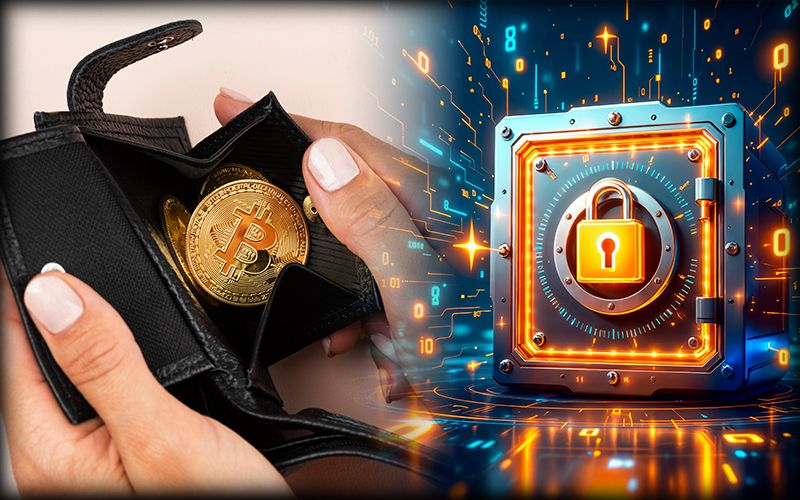
1. Revoke Smart Contract Permissions:
Use specialized tools to revoke spending permissions for smart contracts you do not use, especially after completing any "Airdrop" operation.
2. Use Hardware Wallets:
For high-value assets, use cold wallets, and be sure to use hardware wallets like "Ledger" that are not connected to the internet.
3. Dedicate a wallet for interaction (Burner Wallet):
Do not connect your main wallet, which contains your savings, to new websites. Use a secondary wallet that contains only small amounts to interact with airdrops.
4. Enable Two-Factor Authentication (2FA):
Enable two-factor authentication, preferably using apps rather than SMS, on all platforms.
5. Beware of direct technical support messages:
Do not communicate with anyone claiming to be technical support on social media, as most of them are scammers.
But if you do not pay attention to the vulnerabilities, nor the warnings, and what happened happens—falling into the trap—what should you do if you fall into the trap of fake airdrops?
Read on the WEEX platform: From Cold Wallets to Hot Wallets: How to choose the right cryptocurrency wallet for you?
What to do if you fall into the trap of fake airdrops?
1. Isolate assets:
Immediately transfer any remaining assets to a completely new wallet.
2. Revoke permissions:
You must immediately use websites like Revoke.cash to revoke the malicious contract's authorization.
3. Report:
You must immediately report the malicious contract on blockchain explorers like "Etherscan" to help warn others and avoid as much loss as possible for others. And don't forget that if something looks too good to be true, it's likely a scam.
Preemptive protection against fraud in the cryptocurrency world:
Fraud operations are based on speed, momentum, and emotion, but skepticism and verification are means of defense. Do not get carried away by fraud operations, and above all, question the reality of the advertisements that appear, as they are often an entry point for an unclear fraud process.
Individual caution is not enough, as fraud prevention is the most effective method. The cryptocurrency industry is resisting the phenomenon of fraud by using multiple technologies such as Know Your Transaction (KYT) protocols, which work to analyze on-chain data in real-time to detect risky transfers and illicit activities.
If you, dear reader, are a client of the WEEX platform, how do you avoid phishing scams in cryptocurrencies?
Avoiding phishing scams in cryptocurrencies for WEEX platform users:
Staying safe in cryptocurrencies depends on two things: smart habits and using the security tools built into WEEX. Phishing attacks have become more advanced, especially with AI-powered fraud, but there are some practical steps that significantly reduce the risks.
1. Maintain personal vigilance:
A. Save official websites in bookmarks:
By always accessing the WEEX platform through the official website of the platform; Chainalysis has noted that thousands of victims lose their money after clicking on phishing links disguised as login or free distribution pages. Saving them in bookmarks eliminates this risk.
B. Use strong and unique passwords:
Many cryptocurrency breaches begin when scammers reuse passwords leaked from unrelated websites. Security researchers warn that reused passwords are a significant cause of exchange account takeovers. Dear trader, use a password manager to create and store complex passwords.
C. Enable Two-Factor Authentication (2FA):
Turning on two-factor authentication blocks most unauthorized logins, especially automated bot attacks and credential stuffing. Industry reports also show that accounts with two-factor authentication are over 90% less likely to be hacked.
D. Keep devices updated:
Unfortunately, the world of communications has made it easier for scammers to exploit users. Old phones, browsers, and apps are easier to exploit, but software updates often include security patches that close vulnerabilities and block new phishing tools.
E. Stay away from public WI-FI or use a VPN:
Public networks are among the easiest to monitor, and scammers can intercept login data. If you must use public WI-FI, you should simultaneously use a trusted VPN to encrypt your traffic.
2. Use the security features of the WEEX website:
The WEEX platform provides various layers of protection to help stop phishing attacks, even if scammers obtain your password. This is done through the following:
A. Set up an anti-phishing code:
When you activate your account, a personal code appears in all official WEEX emails. If the email lacks the code, it is likely fake. You can activate this in Account & Security via the anti-phishing code.
B. Enable withdrawal whitelisting:
This feature allows for pre-approval of secure wallet addresses. Even if someone gains access to your account, they cannot withdraw to a new or unknown address. All you have to do is go to Account & Security and select withdrawal whitelist to turn it on.
C. One-click account lock:
If you notice strange login attempts or unauthorized actions, the WEEX platform allows you to freeze your account immediately. This stops withdrawals, API usage, and active sessions.
D. Verify official channels:
Download the WEEX app only from the official website or Google Play or Apple App Store. If you need to confirm whether a page, domain, or social media account is real, all you have to do is use WEEX Verify, a tool designed to identify official URLs and support portals.
3. Benefit from WEEX authentication at the platform level:
The WEEX platform relies on advanced email security protocols, including DKIM, SPF, and DMARC. These standards help prevent scammers from impersonating the platform to send messages via @WEEX.com and ensure that official messages actually come from the platform.
With all this technology, it is not enough on its own. You, dear trader, have the biggest role, as you must always verify URLs again and again, and be cautious with direct messages or urgent account alerts.
"Airdrop" operations may be a real opportunity to build digital wealth, but they are also considered one of the primary entry points for fraud in the fast-growing cryptocurrency market. Especially with the expansion of the user base, scammers are becoming smarter. Therefore, you only need to protect yourself through awareness, patience, and smart tools.
And pay attention, dear trader, for all you need to benefit from "Airdrop" operations is to start from a simple and basic rule in the world of trading: only connect your wallet to official websites, never send money, and never sign anything you do not understand.
Frequently Asked Questions:
What is an airdrop?
The first use of an airdrop dates back to 2014, with the launch of the "Auroracoin" currency in Iceland. It became more popular with projects like Uniswap, and in 2021, the "Ethereum Name Service" airdrop represented one of the most successful experiments, where users of .eth domains received thousands of dollars worth of Ethereum Name Service currency for free.
Why do scammers target airdrop operations?
Because it combines three things ideal for fraud: human greed, difficulty of tracking when fraud occurs, and the simplicity and ease of the process.
What are the warning signs that reveal a fake airdrop?
1. Absence of an official announcement from trusted sources.
2. Requesting a private key or "Seed Phrase".
3. Requesting upfront fees or currency transfers.
4. Imitated and suspicious URLs.
5. Incorrect language or urgent messaging.
6. Fake comments or false testimonials on social media.
7. Absence of information about the project or team.
8. Token Approval Traps.
9. Redirecting to malicious "Wallet Drainers" websites.
How to protect your digital wallet in 2026?
1. Use a secondary "Burner Wallet".
2. Verify the authenticity of the website.
3. Never send upfront fees.
4. Do not disclose your private key or "Seed Phrase".
5. Beware of hidden "Token Approvals".
6. Monitor community feedback.
7. Use additional protection tools.
Disclaimer:
The WEEX platform and its affiliates provide digital asset trading services, including derivatives and margin trading, only where legal for eligible users. All content is general information, not financial advice - please seek independent advice before trading. Cryptocurrency trading involves high risks and may result in total loss. By using WEEX services, you accept all related risks and terms.
Never invest more than you can afford to lose. Review our Terms of Use and Risk Disclosure for more details.