
The End and Rebirth of NFTs: How the Meme Coin Craze Ended the PFP Era?

 Prefer us on Google


Original Article Title: "The Final Chapter and Reboot of NFT"
Original Article Author: Zeke, YBB Capital Researcher
Chapter One: The Demise of NFT
The final whimper of NFT culminated in the release of Pudgy Penguins, and the recent token launch of Doodles on Solana only caused a small ripple. Yuga Labs' subtraction is still ongoing, this time even affecting the most iconic IP, Cryptopunks. Those BitCoin NFTs from the last wave of NFT revival also plummeted to near zero, once-crazed narratives have indeed fallen into oblivion, with no one showing interest anymore.

The vision of 10k PFPs was once beautiful, a moderately sized community helping a bottom-up IP project go global, which is completely different from traditional IP projects that invest heavily in content upfront. For example, IPs under Disney such as the Marvel Universe, Star Wars, various animated characters, often require years of accumulation and countless funds to deeply embed these IPs in people's hearts, eventually turning them into gold mines.
However, NFTs are entirely different; their barrier to entry is extremely low, shaping an IP and monetizing IP assets at a rapid pace. Creators only need to pay some Gas fees to list their artwork on OpenSea for sale, no galleries, no toy companies, movie studios, or any professional teams are needed, an IP, a new artist is born. Three to four years ago, we also witnessed grassroots IPs becoming popular in the top entertainment circles in Europe, America, Japan, and South Korea. An amateur artist could also achieve a NFT-powered counterattack. For me, as a member of the Z generation who grew up watching Japanese anime, being able to participate in IP investment and incubation through Crypto that ordinary people could not touch on in the past is quite a dreamlike experience.
However, after the "crazy nesting dolls" of BAYC, and the disastrous Elemental subseries release of Azuki. The ambiguous position of NFT gradually became clear; it is not like equity or investment but more like an expensive luxury item with membership benefits. And the project team hopes we can continue to buy subseries to support their continuous investment in the IP's core value roadmap. The seeds of contradiction were sown from here; the project team knows that creating content is expensive, but without content, the IP will die. The bi-monthly subseries releases continue to drain the original series holders, tormenting every member of the community, waiting for feedback from the content that may take many years, or perhaps the feedback will never come. Cracks are constantly widening; the beautiful fantasies are beginning to shatter with the drop in floor price, leaving only various conflicts.
2. IP Industry's Ace MCN - PoP MART
If we view NFTs as luxury trend toys for Generation Z, the reasons for their success or failure become clearer. In the fast-food era, having no content is not necessarily a bad thing. After all, being able to quickly attract buyers based solely on appearance is a valuable trait. For example, Azuki's art style aligns well with the Asian aesthetic. Under consensus, this grassroots NFT series quickly followed BAYC to become the third-largest blue-chip NFT. Similarly, in the real world, well-known trend toys like Bearbrick, B.Duck, and Molly have no content support but rely on their unique appearances to become popular.
However, trends are fleeting, and IPs without a core value based on content may quickly become outdated. Constrained by the culture of the crypto world and the low success rate of NFTs, project teams often continuously iterate around an IP. But the reality is that if the core value has not taken shape yet, the trend will pass.
Of course, PFP projects also include a type with substantial content support, such as Japanese-style NFTs. I have seen at least four or five projects in the past that hold well-known anime IPs and aim to make a mark in the NFT market. However, they seem to have overlooked the fact that the fanbase of IP and the NFT community are largely incompatible. Moreover, Japanese anime merchandise is already abundant, so why would fans want to pay hundreds of times the price for a small image? Most importantly, this small image can only be an image, with no room for future empowerment. Even if you purchase a Gundam NFT, you can only gain access to the Gundam metaverse "SIDE-G." Profits from models, games, or animations related to Gundam have no connection to you, and the community will not be part of IP incubation, making you an anomaly within the Gundam fanbase. In this regard, GameFi faces a very similar pain point.
Thus, PFP projects have become a fallacy, with only the pragmatic spark of the little penguin continuing to strive. So, is there another way out for small images? I believe PoP MART may provide a different answer.
Originating from the Beijing Oriental Plaza Shopping Center's small grid store, PoP MART achieved a turnaround through its partnership with Sonny Angel. With just this one series, it contributed nearly 30% of PoP MART's sales at the time. The envious copyright holder reclaimed exclusive agency rights a year later, but this move inadvertently led to the birth of an IP empire.
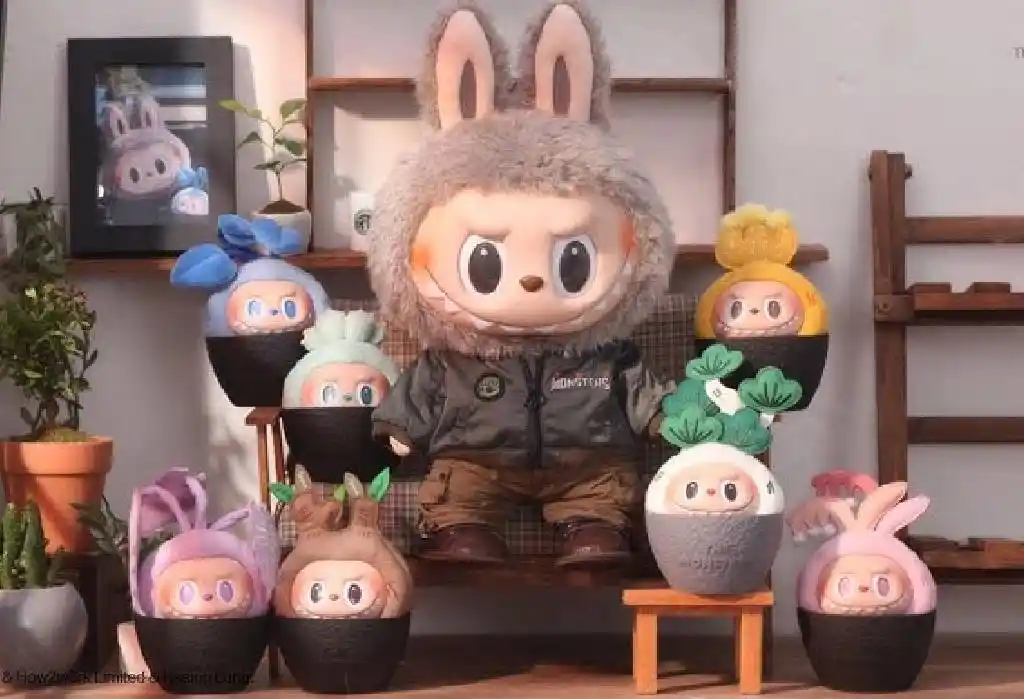
At that time, Wang Ning, the co-founder of PoP MART, had a simple idea: to create their IP, an IP that others couldn't take away. In 2016, PoP MART collaborated with Hong Kong designer Kenny Wong to launch its first independent trend toy series - Molly. This image of a pouting little girl instantly became a nationwide sensation, driven by the uncertainty of blind box play and dopamine rush. PoP MART began its first rocket-like ascent, and by 2019, Molly's single IP had an annual sales revenue of 456 million RMB, becoming PoP MART's core source of income at that time.
This approach, which combines Japanese gashapon with high-end designer toys in a collaboration, has also become common during the NFT boom in recent years. Artists design basic elements which are then handed over to the project team to be combined into a series of images for sale and operation. NFTs in their initial release phase are generally also in blind box format, where the project team releases various rare combinations of images to enhance player's desire to purchase. The only difference between the two is the sales format, but tens of thousands of NFT projects and various blue-chip projects have generally failed. Yet, PoP MART is experiencing a revival, but why?
I once attributed the reason to implementation difficulties and high purchase thresholds. The former seems to have no problem at present, while the latter is not actually the case. NFTs also had a Free Mint "junk" period, where Goblintown and MIMIC SHHANS were the "gold mines" of that era, and creators earned a fortune solely through transaction fees. Many NFTs in the era of inscriptions took this one step further in terms of decentralization, but this did not prevent the decline of NFTs. It is very easy to form and join an IP community, but what's difficult is continuity.
Therefore, I believe that we may have the wrong model. After the rapid rise in the first phase, Molly did not immortalize PoP MART, and the entire company's stock price fell from 2021 to 2024 just like NFTs. But PoP MART turned profitable by relying on a complete IP wall. Today, PoP MART has 12 proprietary IPs including Molly, DIMOO, BOBO&COCO, YUKI, and Hirono, 25 exclusive IPs including THE MONSTERS (including Labubu), PUCKY, and SATYR RORY, and over 50 non-exclusive co-branded IPs such as Harry Potter, Disney, and League of Legends.
Human preferences are always fickle, and the lifespan of IPs is limited. But what if I have hundreds of choices in my hands? Labubu is currently gaining immense popularity in Europe, America, and Southeast Asia, and the collectible value of its peripheral plush toys is comparable to that of luxury alcohol brands. Yuga Labs' ideal state is finally realized in Web2, but this was not accidental. We should reconsider what IP business is, what the roadmap for NFTs is, and why PoP MART can achieve such a height without content support.
Three, Pudgy Penguins
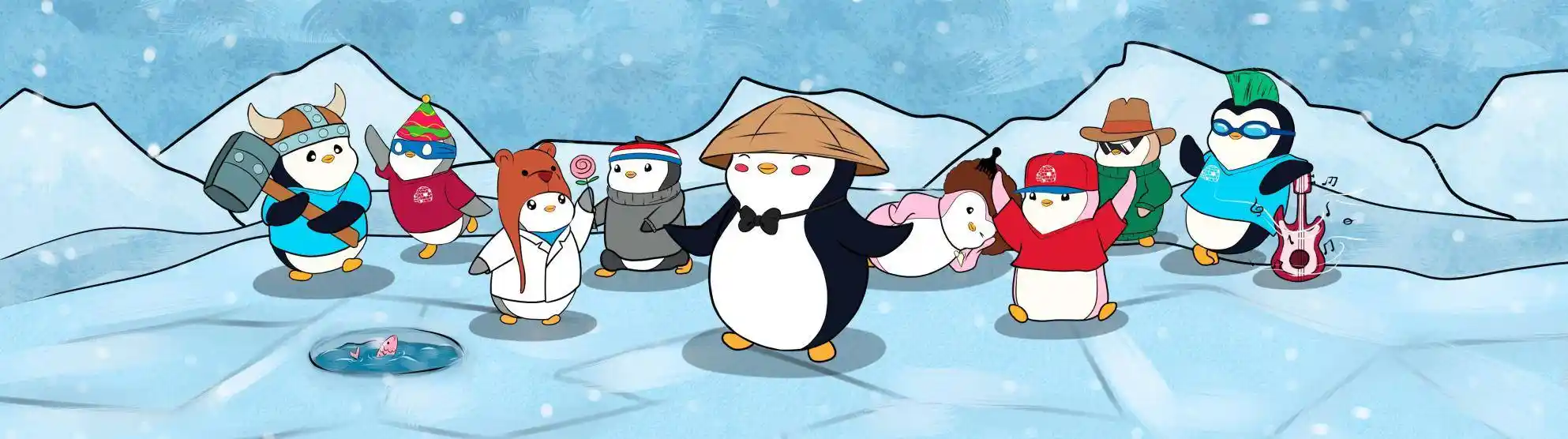
Last year, I even attended an event hosted by Little Penguin Hong Kong, and this NFT project has always been so enthusiastic about the community. The success of Pudgy Penguins lies in being practical, practical, and still practical. The NFT itself does not reveal any technological differences, no matter how cleverly the minting process is designed, it ultimately remains a JPG. The difficulty of NFTs lies in the implementation of IP, a difference that is hundreds of times greater than creating 10K PFPs. Yuga Labs wants to do Metaverse, Azuki wants to do anime. OK, these are all cool, but these projects, with initial costs in the billions, will only ask the community's members for money.
This highly compressed world is too restless, with everyone eager to get rich quick. Holders want to make big money, and project teams want to skyrocket overnight. Few blue-chip projects are willing to compromise, and the more impatient they are, the harder they fall. The original team behind Pudgy Penguins was once such a restless grassroots team. After facing a reputation crisis, they sold the little penguins at a low price.
It was only then that the little penguins met their true owner, Luca Netz. Luca Netz, a worker with years of offline marketing experience, brought the little penguins back to their rightful place. Luca Netz is truly building a brand; he runs a company for NFT holders. From marketing to plush toys to future games, every step of the little penguins is solid. The company is profitable, and holders can also profit. There's nothing special about all this; it's just doing what it's supposed to do. Therefore, bottom-up IP has proven to be viable in Web3; it's just that too many project teams can't set aside their pride.
That's why I really dislike the word "debunk," as if certain things were never meant to exist. Electric cars used to be silly, and Siri on my phone used to be dumb. But that didn't stop the entire city from being filled with green license plate cars today, not to mention AI. Many so-called debunked tracks will still be explored in the future by Web3, but it lacks a suitable project team.
-- Price
Four, Path
The path to success is simple yet difficult. The next destination for PFPs will eventually have to break free from some of crypto's inherent logic and require a significant accumulation to become the next Web3 Disney. Whether scarcity in NFTs has had a counterproductive effect as it moves towards the mainstream is something I have discussed in my previous articles. If it is defined as trendy collectibles, then the limitation of 10K may be too restrictive. If it is defined as a unique asset and fundraising method specific to Web3, the IP must eventually be realized as physical consumer goods to fulfill the community's commitment, rather than a bunch of strange sub-series.
Due to the peculiar culture of the crypto world and the inherent attributes of NFTs, it is indeed a dilemma to hold onto an IP forever. How can we further develop these PFPs? How can a project expand into an IP factory? This may require us to accept some new ideas and introduce more technology and gameplay.
Five, Is Coin Issuance the Final Stop?
I still don't understand the meaning of NFT coin issuance. This situation seems more like a form of exploitation of the lower ranks by the upper ranks and a dilution of the value of OG NFTs. I can only understand it as the project seeking a convenient liquidity exit strategy. From APE to DOOD, without exception, they all seem like variants of meme coins. Their empowerment is often in the form of staking to receive on-chain transaction dividends, in-game item purchases in the Metaverse, governance rights, and the like. Ideally, it is a perfect cycle of holder, staker, and developer. However, in reality, it appears more like a form of air, caught in a vicious cycle of NFT price drops, rug pulls, and token depreciation.
As for OG NFT holders, although the Token has taken away some dividends and rights. However, most of them will also receive a large number of airdrops at the TGE, so no one complains. But in the long run, as mentioned in the fourth paragraph, this is a kind of dilution, and distribution like Azuki's Anime is even more of a blatant grab. Short-term hype is important, but the project's long-term existence is more important; don't let issuing tokens be the final stop.
Conclusion
In this fast-paced, dopamine era, we have witnessed the rise of many Web2 emerging IPs, and NFTs should thrive in this era as it has many irreplaceable features. Four years ago, I regarded it as a Cyber Maotai, but the reality is a Cyber Tulip. There are few people willing to manage ruins, but I believe that beneath the ruins, the next Labubu must be hidden.
This article is contributed content and does not represent the views of BlockBeats.
This content is provided for general informational purposes only and doesn't constitute financial, investment, legal, or tax advice. Any events, rewards, online promotions, or related information mentioned herein should not be considered a recommendation, solicitation, or invitation to purchase, sell, trade, or otherwise deal in any crypto assets. Crypto assets are highly volatile and may result in loss. The availability of WEEX services, products, and related events may vary by region. You are responsible for ensuring that your participation is in accordance with applicable local laws and regulations.
You may also like
The Future of the Crypto Industry May Resemble Revolut in the Next Decade

Will the Logic of CapEx and Tech Stocks Change After AI Slows Down?

Debunking the Ethereum 'Abandoning' ETH Argument: What Does It Mean to Pay Gas Without ETH?

IEA cuts 2026 oil supply forecast, expects Gulf recovery in 2027

AI Agent Payments: How Far Has Korea Come?
Understanding the Tokenomics of Crypto Projects and Why It Matters
What is Bifrost (BFC)? The Reason 40.79% of the Supply is in the Burn Address
Ethereum EIP-8141 Proposes Transaction Fee Payment Structure Without ETH
Ukraine Seeks $91 Billion for Energy in Canada
The New Crypto Tycoon’s Gold Rush: Coinbase Co-Founder’s Venezuelan Oil Field Adventure
Robinhood Chain Projects $365 Million Revenue by 2027
Ethereum Tentatively Sets Test Implementation Date for Glamsterdam

Poverty in France: What Bitcoin Will Not Change
Coinbase Co-founder Fred Ehrsam Moves to Venezuela to Pursue Oil
MetaMask Reaches 100 Million Downloads, Unrelated to ETH Demand
Solana Launches Prediction Market Amid Technical Hurdles
Canada to Provide Ukraine with CAD 757 Million for Gas and Energy Projects

Wirex Integrates Tempo to Support Corporate Stablecoin Card Settlements
Russians Attack 'Ukrnafta' Gas Station in Kyiv

Arctic LNG 2 Increases Exports to 500,000 Tons per Month

Global Coal Demand to Rise to 8.94 Billion Tons by 2026
South Korea Announces Over $100 Billion Energy Investment to Support AI Development in the U.S.

Reassessing NEAR's Investment Logic: Has Trading Volume Taken Off, and Can Token Value Keep Up?
South Korea Announces Over $100 Billion Energy Investment in the U.S.
Coinbase expands AI access to stocks and crypto
The Era of AI Spending Money... Will Stablecoins Become the Payment Network for the 'Agent Economy'?
EU Faces Setbacks in Phasing Out Russian Energy Resources

Fidelity brings FIDD stablecoin to on-chain finance
Ethereum to Allow Gas Fee Payments Without Holding ETH, Considered for 2027 Upgrade
Trump's Investment Account Revealed to Have Perfectly Timed Trades, Surpassing $1 Million in Unrealized Gains
The Future of the Crypto Industry May Resemble Revolut in the Next Decade
Will the Logic of CapEx and Tech Stocks Change After AI Slows Down?
Debunking the Ethereum 'Abandoning' ETH Argument: What Does It Mean to Pay Gas Without ETH?
IEA cuts 2026 oil supply forecast, expects Gulf recovery in 2027
AI Agent Payments: How Far Has Korea Come?
Understanding the Tokenomics of Crypto Projects and Why It Matters
Contents
Latest articles


Latest coin listings on WEEX


