
- Buy Crypto
- Markets
 Futures
- Spot
- Copy Trade
- Earn
- More
South Korea’s Presidential Candidates Advocate for Bitcoin ETFs, But Regulatory Change Remains Uncertain
By: bitcoin ethereum news|2025/05/15 03:00:14
0
Share
South Korea’s push for Bitcoin ETFs aligns with global trends, but historical regulatory hesitations raise questions about real progress. The eagerness of political leaders to support crypto is met with industry skepticism, especially regarding implementation timelines. “Political promises often face challenges during execution,” remarked a local financial expert, emphasizing the need for cautious optimism. South Korea’s leading candidates advocate for Bitcoin ETFs, but past delays cast doubt on timely regulatory changes. What’s next for the crypto landscape? Political Support for Bitcoin ETFs: A New Era? The recent endorsements from prominent South Korean presidential candidates for Bitcoin ETFs signal a shift in attitude towards digital assets. As discussions around spot crypto ETFs gain momentum, analysts are left contemplating the implications for investors and the broader market. In a promising move, Lee Jae-myung of the Democratic Party outlined plans to legalize spot ETFs and reduce transaction fees, thereby fostering a more favorable environment for crypto investments. However, the real question remains: can these promises translate into actionable policy? Historical Context: Regulatory Reluctance Despite the optimistic rhetoric from candidates, historical precedents regarding crypto regulation in South Korea indicate a cautionary tale. The previous administration’s stalled initiatives, including the one-exchange-one-bank rule, have instilled skepticism among industry insiders about whether current candidate pledges will lead to tangible outcomes. Anndy Lian, a well-respected author and blockchain adviser, noted that while the political landscape appears to be shifting, “the historical reluctance of regulators to embrace innovation often hampers progress.” He further emphasized that, although a supportive government could align South Korea with the growing global acceptance of Bitcoin ETFs, it remains to be seen if these aspirations can withstand the regulatory reality. The Potential Impact on Market Dynamics If South Korea does proceed with the legalization of Bitcoin ETFs, it could potentially unlock new avenues for institutional investment. This change could diversify an investment landscape currently dominated by retail buyers, as noted by Ki Young Ju, founder of CryptoQuant. “Currently, 100% of the volume comes from retail. Institutional participation could significantly shift market dynamics,” Ju expressed. Moreover, with the success of Bitcoin ETFs in the U.S., where demand has surged, South Korea stands at a crossroads. The country could either embrace this trend or risk lagging behind as Hong Kong moves ahead with its own ETFs, albeit with mixed results thus far. Looking Forward: Regulatory Outlook and Investor Sentiment The future of Bitcoin ETFs in South Korea hinges on the actions of its emerging political leaders. Although there are discussions of regulatory reforms, a sound strategy will be critical to ensuring that ambitions do not falter. Investors are encouraged to stay informed about ongoing developments and to approach potential investments in Bitcoin ETFs prudently. As highlighted earlier, the Financial Services Commission’s recent statements suggest a more inviting attitude towards cryptocurrency. However, achieving consistency in regulatory policies will be vital for fostering investor confidence. Conclusion In summary, the fervent backing from South Korea’s presidential candidates for Bitcoin ETFs is a positive sign for the crypto community. Nevertheless, the historical context of regulatory challenges raises valid concerns about the feasibility of these promises. As stakeholders in the crypto ecosystem watch closely, the path ahead will require not only political will but also coordinated efforts to translate promises into actionable regulations. Until then, a cautious approach remains advisable for potential investors. Source: https://en.coinotag.com/south-koreas-presidential-candidates-advocate-for-bitcoin-etfs-but-regulatory-change-remains-uncertain/
You may also like

Particle Founder: The entrepreneurial insights I have gained the most from in the past year
Stop lean startup, stop lightning entrepreneurship, and think carefully about what your product aspirations are.

Huang Renxun's latest podcast transcript: The future of Nvidia, the development of embodied intelligence and agents, the explosion of inference demand, and the public relations crisis of artificial intelligence
The competition in the future is not just about whose model is larger or whose computing power is stronger, but also about who understands the industry better, who can embed AI more deeply into real processes, and who can organize these capabilities into a runnable and scalable system.

OKX Ventures Research Report: AI Agent Economic Infrastructure Research Report (Part 1)
The existing infrastructure is hostile to the Agent economy. Agents can think and act independently at the "capability level," but at the "economic level," they are still locked into infrastructure designed for humans.

The migration of settlement rights: B18 and the institutional starting point of on-chain banks
In the traditional system, banks decide the settlement; in the on-chain system, code begins to take over this responsibility.

From Tencent and Circle: Looking at the Simple and Difficult Questions of Investment
The AI narrative continues to ferment, but the recent performance of related stocks varies, with some in the midst of summer and others as if in winter.

The second half of stablecoins no longer belongs to the crypto circle
What Coinbase doesn't want, Mastercard is eager to buy.

Cursor "Shell" Kimi Controversy Reversed: From Copyright Infringement Allegations to Authorized Collaboration, China's Open Source Model Once Again Becomes a Global AI Foundation
Cursor was accused of being based on Kimi K2.5, which sparked controversy, and was later confirmed to be compliant through Fireworks AI due diligence.

The Real Reason Tokens Don't Sell: 90% of Crypto Projects Overlook Investor Relations
Provide an Investor Relations Best Practices Guide for Crypto Projects.

Is the income of pump.fun real, earning a million dollars a day despite the market downturn?
If it can really earn this much, what is the reason for the low price of $PUMP?

The real reason why tokens are not selling: 90% of crypto projects neglect investor relations
Investor Relations Practice Guide for Cryptocurrency Projects.

Who is the true winner of the "Tokenization" narrative?
Virtually everyone benefits, but the reason for the benefit, the timing, and the underlying logic are completely different.

Moss: The Era of AI-Traded by Anyone | Project Introduction
AI Trading Agent is rapidly growing its infrastructure.

Chip Smuggling Case Exposes Regulatory Loophole | Rewire News Evening Update
AI chips have become a strategic asset more sensitive than missiles

How a Structured AI Crypto Trading Bot Won at the WEEX Hackathon
Ritmex demonstrates how disciplined risk control and structured signals can make an AI crypto trading bot more stable and reliable on WEEX, highlighting the importance of combining execution discipline with scalable AI trading systems.

Old Indicator Fails, Three Major New Signals Emerge: BTC True Bottom May Still Be Below $60K
When the grocery shopping auntie on the subway, or Tony the hairdresser, start asking you about BTC, crypto, and cryptocurrency investments, selling immediately will be the only best option.

Meeting OpenClaw Founder at a Hackathon: What Else Can Lobsters Do?
Imperial College London MetaGame: AI Agent × Web3 Landing Three Major Directions.
Huang Renxun's Latest Podcast Transcript: NVIDIA's Future, Embodied Intelligence and Agent Development, Soaring Demand for Inferencing, and AI's PR Crisis
The future of competition is not only about whose model is bigger, whose computing power is stronger, but also about who understands the industry better, who can more deeply integrate AI into real processes, and who can organize these capabilities into a set of executable, scalable systems
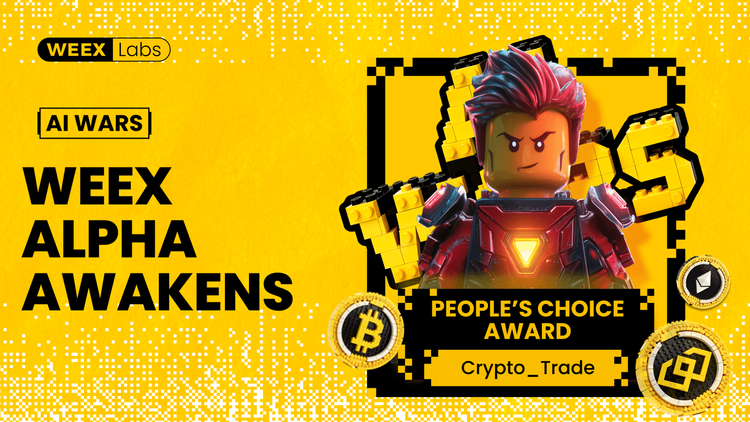
How a Structured AI Crypto Trading Bot Won at the WEEX Hackathon
Crypto_Trade shows how structured inputs and controlled adaptability can build a more stable and reliable AI crypto trading bot within the WEEX AI Trading Hackathon, highlighting a practical path toward scalable AI trading systems.
Particle Founder: The entrepreneurial insights I have gained the most from in the past year
Stop lean startup, stop lightning entrepreneurship, and think carefully about what your product aspirations are.
Huang Renxun's latest podcast transcript: The future of Nvidia, the development of embodied intelligence and agents, the explosion of inference demand, and the public relations crisis of artificial intelligence
The competition in the future is not just about whose model is larger or whose computing power is stronger, but also about who understands the industry better, who can embed AI more deeply into real processes, and who can organize these capabilities into a runnable and scalable system.
OKX Ventures Research Report: AI Agent Economic Infrastructure Research Report (Part 1)
The existing infrastructure is hostile to the Agent economy. Agents can think and act independently at the "capability level," but at the "economic level," they are still locked into infrastructure designed for humans.
The migration of settlement rights: B18 and the institutional starting point of on-chain banks
In the traditional system, banks decide the settlement; in the on-chain system, code begins to take over this responsibility.
From Tencent and Circle: Looking at the Simple and Difficult Questions of Investment
The AI narrative continues to ferment, but the recent performance of related stocks varies, with some in the midst of summer and others as if in winter.
The second half of stablecoins no longer belongs to the crypto circle
What Coinbase doesn't want, Mastercard is eager to buy.


 App
App