
- Buy Crypto
- Markets
 Futures
- Spot
- Copy Trade
- Earn
- More
How AI Reshapes Internships And Entry-Level Jobs
By: bitcoin ethereum news|2025/05/15 04:00:13
0
Share
For students, internship experience is everything when it comes to their education and being ready for their careers. getty There’s a lot of talk about AI taking jobs away from people, and before you say it’s not happening, turns out it is . How widespread this becomes is still up for debate, but it’s just a matter of how long it takes and what jobs are affected. To find out more, I wanted to talk to a good friend of mine. Dr. Eugene Kutcher III (I call him Gene) is the Dean of the Norm Brodsky College of Business at Rider University. Gene and I have been working on a project that touches on AI, internships, and jobs, so I wanted to sit down with him, ask a few questions, and see where it went. Q&A with Dr. Kutcher Joe: How do you see internships being valuable within an organization? Gene: I’m going to start with how internships are valuable for us on the education side of things. At Rider, we call it engaged learning. We have a requirement that every student, by the time they graduate, they engage in a number of what we call “high-impact practices.” Things that evidence has told us connect students more with their learning, so it’s a more personal experience for them. In a business school, front and center, and priority is internships because one of our key mandates is to get them jobs when they graduate and have them be comfortable, competent, and have some confidence when they go into those positions. For the students, it means everything when it comes to their education and being ready for their careers. Joe: Now that AI is doing more entry-level jobs, have you seen a change in the number of internships that are available or a shift in attitude about internships? Gene: I’m going to take a step back a little bit. Even through COVID-19, when everything went remote for students and they were suddenly getting internships that were completely virtual, we realized that things are going to be a little bit different from this point forward. Some of those internships have never really come back. And yes, a lot of those internships were remote, but some of them disappeared altogether. We know some of these opportunities were there before and are not there now, and that goes for internships for our current students, as well as entry-level jobs for our graduates. We have to work a little harder and prepare them a little bit more. But also, we have to figure out what critical thinking looks like for those positions that are requiring human beings to work with AI. It’s refocusing a little bit about what those skills are. Joe: This is where the AI Accelerator program comes into play, right? Let’s get companies that are already connected with Rider in some way more deeply engaged. We can create this place at Rider where an organization can say, “I’ve got this idea how we might be able to apply AI in a brand new way, but we have no idea what to do about it.” Rider has great students and faculty, and we have alumni that run an entire organization around doing this stuff with enterprise customers. They can mentor the students on the project that company is looking to accomplish. This isn’t the standard internship at all now. It’s literally a big four consulting company—a proof of concept whereby we can create an experiential learning experience the way you described. Rider is not only helping figure out this technology journey, but also allowing students to experience it. Gene: And it cuts right to the chase. Students would have the problem ready to go. A lot of times with internships, so much of it is about a program, and a lot of firms might not have anything ready for interns to do yet. We see that a lot—and that’s always been the case, even when I was an intern back in the day. It’s that, “OK, now we have interns, now what do we do with them?” Where in this case, it’s almost like, “We’ve identified something we need, and now let’s bring the students on board.” Joe: That’s where traditional internships break down, is people say, “We need an intern because we’ve always had an intern.” And then they get there and they say, “I don’t know what we do with these people.” Gene: Right. And it matches what they need. It’s a win-win. Students realize they need to pick up some skills with AI and they’re thirsting for a story to tell about what they’ve learned on the job. Because one thing that we try to instill in them is that today it’s AI, but no matter what, you could pick them up out of today and drop them in a hundred years from now, and adaptability is going to have just to be the one thing that they always are ready for; to quickly learn on the spot with whatever it is that’s needed right now. The idea that you need to be ready for something, you need not be comfortable with it. You have to just quickly figure out what’s needed in the moment and figure out what your resources are, who’s on your team that you’re working with, who you can get mentoring from, what the problem is that needs a solution, and you don’t have any time to waste. You have to figure it out as you go. But Wait, There’s More If you want to hear more, check out the article on my website, A Deep Dive into the Rider AI Assistant Accelerator Program . Also, check out my new book, The AI Ecosystems Revolution , available right now on Amazon, Bookshop.org, Barnes and Noble, or your local bookseller. Source: https://www.forbes.com/sites/forbesbooksauthors/2025/05/14/how-ai-reshapes-internships-and-entry-level-jobs/
You may also like

Particle Founder: The entrepreneurial insights I have gained the most from in the past year
Stop lean startup, stop lightning entrepreneurship, and think carefully about what your product aspirations are.

Huang Renxun's latest podcast transcript: The future of Nvidia, the development of embodied intelligence and agents, the explosion of inference demand, and the public relations crisis of artificial intelligence
The competition in the future is not just about whose model is larger or whose computing power is stronger, but also about who understands the industry better, who can embed AI more deeply into real processes, and who can organize these capabilities into a runnable and scalable system.

OKX Ventures Research Report: AI Agent Economic Infrastructure Research Report (Part 1)
The existing infrastructure is hostile to the Agent economy. Agents can think and act independently at the "capability level," but at the "economic level," they are still locked into infrastructure designed for humans.

The migration of settlement rights: B18 and the institutional starting point of on-chain banks
In the traditional system, banks decide the settlement; in the on-chain system, code begins to take over this responsibility.

From Tencent and Circle: Looking at the Simple and Difficult Questions of Investment
The AI narrative continues to ferment, but the recent performance of related stocks varies, with some in the midst of summer and others as if in winter.

The second half of stablecoins no longer belongs to the crypto circle
What Coinbase doesn't want, Mastercard is eager to buy.

Cursor "Shell" Kimi Controversy Reversed: From Copyright Infringement Allegations to Authorized Collaboration, China's Open Source Model Once Again Becomes a Global AI Foundation
Cursor was accused of being based on Kimi K2.5, which sparked controversy, and was later confirmed to be compliant through Fireworks AI due diligence.

The Real Reason Tokens Don't Sell: 90% of Crypto Projects Overlook Investor Relations
Provide an Investor Relations Best Practices Guide for Crypto Projects.

Is the income of pump.fun real, earning a million dollars a day despite the market downturn?
If it can really earn this much, what is the reason for the low price of $PUMP?

The real reason why tokens are not selling: 90% of crypto projects neglect investor relations
Investor Relations Practice Guide for Cryptocurrency Projects.

Who is the true winner of the "Tokenization" narrative?
Virtually everyone benefits, but the reason for the benefit, the timing, and the underlying logic are completely different.

Moss: The Era of AI-Traded by Anyone | Project Introduction
AI Trading Agent is rapidly growing its infrastructure.

Chip Smuggling Case Exposes Regulatory Loophole | Rewire News Evening Update
AI chips have become a strategic asset more sensitive than missiles

How a Structured AI Crypto Trading Bot Won at the WEEX Hackathon
Ritmex demonstrates how disciplined risk control and structured signals can make an AI crypto trading bot more stable and reliable on WEEX, highlighting the importance of combining execution discipline with scalable AI trading systems.

Old Indicator Fails, Three Major New Signals Emerge: BTC True Bottom May Still Be Below $60K
When the grocery shopping auntie on the subway, or Tony the hairdresser, start asking you about BTC, crypto, and cryptocurrency investments, selling immediately will be the only best option.

Meeting OpenClaw Founder at a Hackathon: What Else Can Lobsters Do?
Imperial College London MetaGame: AI Agent × Web3 Landing Three Major Directions.
Huang Renxun's Latest Podcast Transcript: NVIDIA's Future, Embodied Intelligence and Agent Development, Soaring Demand for Inferencing, and AI's PR Crisis
The future of competition is not only about whose model is bigger, whose computing power is stronger, but also about who understands the industry better, who can more deeply integrate AI into real processes, and who can organize these capabilities into a set of executable, scalable systems
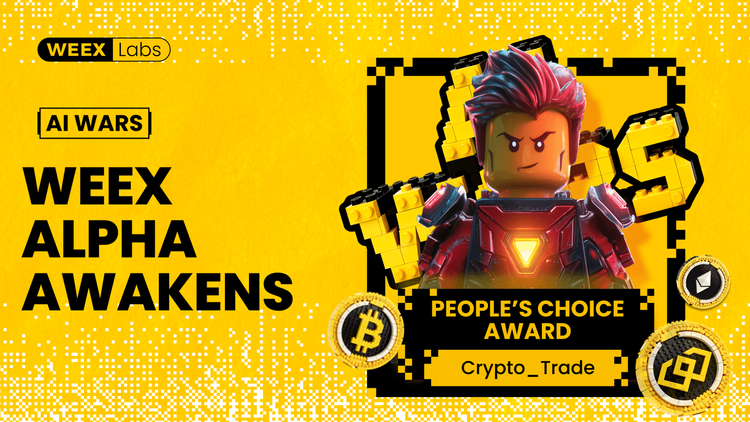
How a Structured AI Crypto Trading Bot Won at the WEEX Hackathon
Crypto_Trade shows how structured inputs and controlled adaptability can build a more stable and reliable AI crypto trading bot within the WEEX AI Trading Hackathon, highlighting a practical path toward scalable AI trading systems.
Particle Founder: The entrepreneurial insights I have gained the most from in the past year
Stop lean startup, stop lightning entrepreneurship, and think carefully about what your product aspirations are.
Huang Renxun's latest podcast transcript: The future of Nvidia, the development of embodied intelligence and agents, the explosion of inference demand, and the public relations crisis of artificial intelligence
The competition in the future is not just about whose model is larger or whose computing power is stronger, but also about who understands the industry better, who can embed AI more deeply into real processes, and who can organize these capabilities into a runnable and scalable system.
OKX Ventures Research Report: AI Agent Economic Infrastructure Research Report (Part 1)
The existing infrastructure is hostile to the Agent economy. Agents can think and act independently at the "capability level," but at the "economic level," they are still locked into infrastructure designed for humans.
The migration of settlement rights: B18 and the institutional starting point of on-chain banks
In the traditional system, banks decide the settlement; in the on-chain system, code begins to take over this responsibility.
From Tencent and Circle: Looking at the Simple and Difficult Questions of Investment
The AI narrative continues to ferment, but the recent performance of related stocks varies, with some in the midst of summer and others as if in winter.
The second half of stablecoins no longer belongs to the crypto circle
What Coinbase doesn't want, Mastercard is eager to buy.


 App
App